




Rustic Elm Trunk
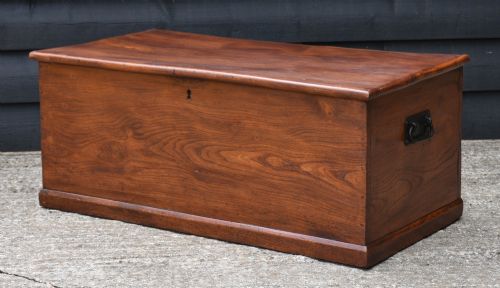
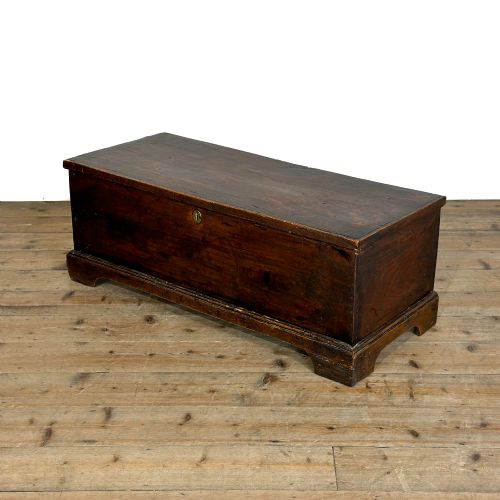
These rustic elm trunks are solid country storage pieces built to last centuries, combining robust timber with practical utility.
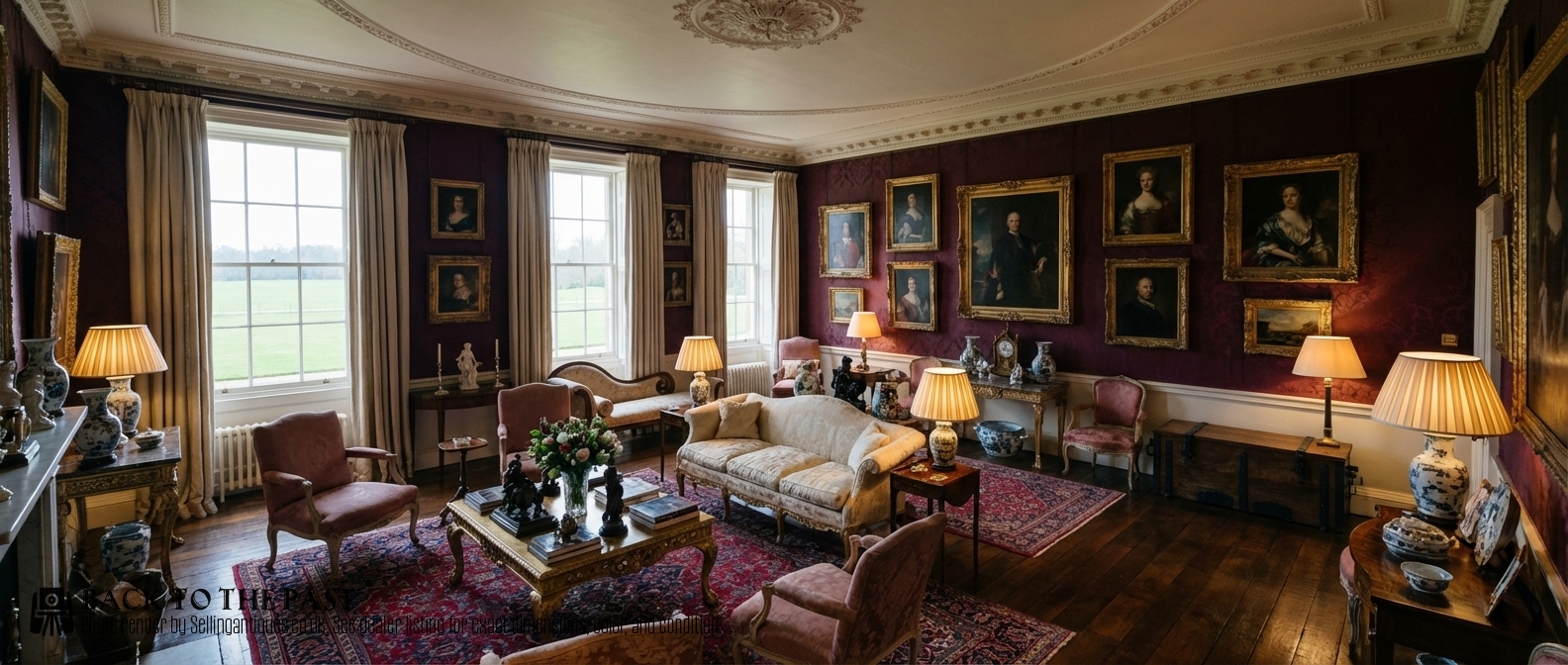
Rustic Elm Trunk
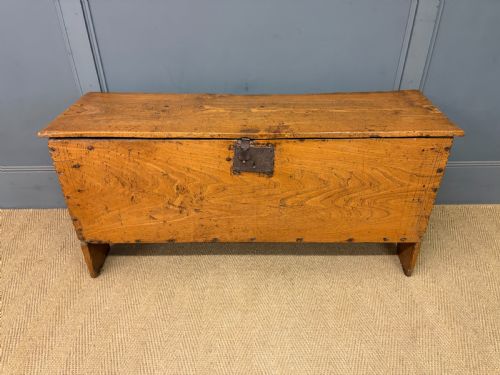
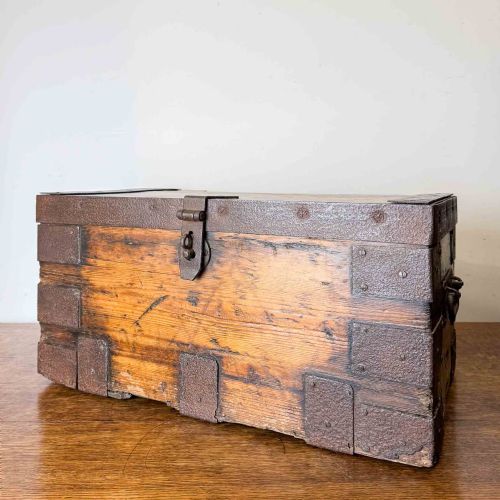
Buyers on this page most frequently encounter Georgian and George III examples alongside nineteenth-century country pieces. Forms range from simple blanket boxes and heavy toolboxes to iron-bound strongboxes and specialised cannonball boxes.
How they were made
Carpenters constructed these trunks using solid elm timber, occasionally complemented by oak panels, pine linings, or burr elm accents. The joinery relies on thick planks secured to withstand heavy daily use in domestic and workshop settings.
Metal reinforcement defines much of the construction, utilising iron bands, wrought iron straps, brass fittings, and iron hasps. These durable metallic additions provided essential security and structural stability for travel and storage.
One French elm trunk arrived equipped with carrying hoops designed specifically for hauling cannonballs.
What varies in quality
Quality rests in the selection of the timber and the integrity of the original construction, distinguishing simple utilitarian boxes from finer cabinet-made examples. Grain figure, such as burr elm panels, elevates the visual presence of a piece.
The survival of original ironwork, brass fittings, and locking mechanisms dictates the desirability of each trunk. Trunks retaining untouched surfaces and functional hardware command greater appreciation among collectors.
The Rustic Elm Trunk Glossary
- Coffer
- A heavy wooden chest traditionally used for storing valuables or documents. These sturdy receptacles often feature six-plank construction.
- Blanket box
- A deep chest designed specifically for holding linens and bedding. They frequently appear in domestic bedrooms throughout the eighteenth and nineteenth centuries.
- Vernacular country
- A style of furniture made by local craftsmen using regional materials without high-style academic influence. This approach prioritises function and local timber availability.
- Strongbox
- A heavily reinforced chest built to secure money or precious items. They typically incorporate robust iron banding and locking mechanisms.
Rustic Elm Trunk: Frequently Asked Questions
What is a rustic elm trunk?
A rustic elm trunk is a sturdy wooden storage chest made from domestic elm timber during the eighteenth and nineteenth centuries. These practical boxes served various household and workshop functions.
Craftsmen built them to store blankets, tools, or valuables using straightforward regional techniques. Their enduring appeal lies in their honest construction and rich wooden grain.
How were these trunks used originally?
Households utilised these chests primarily for storing textiles, blankets, and bedding away from dust and pests. Workshops and travellers also employed them as heavy-duty toolboxes or secure strongboxes.
Their robust construction made them suitable for transporting personal possessions safely. Over time, many transitioned into static living room or bedroom furniture.
How do I date a rustic elm trunk?
Dating relies on examining the construction methods, nail types, hinge styles, and overall vernacular design. Eighteenth-century examples often display simpler six-plank construction or Georgian stylistic traits.
Nineteenth-century versions frequently incorporate heavier iron binding or specific locking hardware. Comparing the timber patination and wear patterns also helps establish the age.
How do I care for antique elm furniture?
Protect antique elm by keeping it away from direct heat sources and sudden humidity changes. This prevents the heavy timber from splitting or warping.
Apply traditional beeswax occasionally to nourish the dry wood and maintain its natural lustre. Avoid harsh chemical cleaners that strip the historic surface patination.