





French Country Coffer
These french country coffer pieces are sturdy storage chests built by provincial cabinetmakers from local timbers to hold domestic provisions.
French Country Coffer
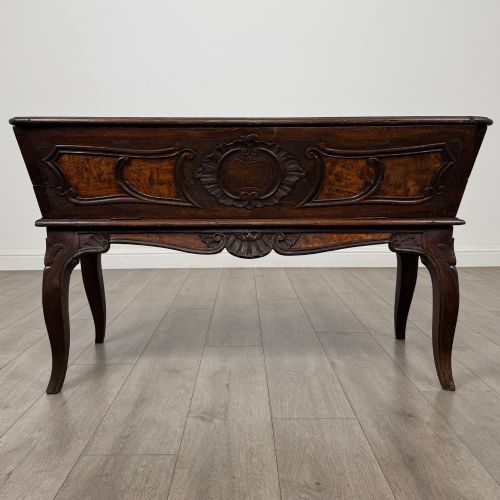
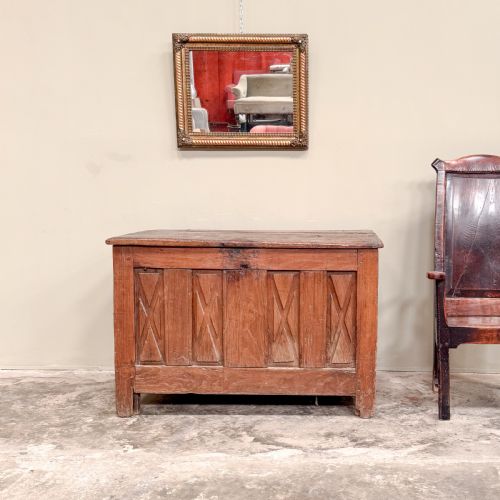
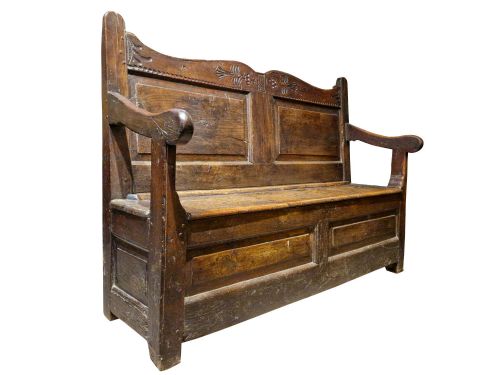
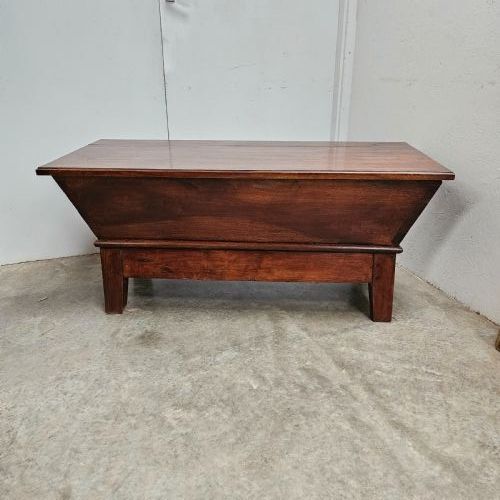
When you search for a french country coffer, you encounter solid timber storage pieces spanning the seventeenth through to the nineteenth century. These forms include provincial coffers, blanket boxes, dough bins, and box-seated settles.
The versions you meet most frequently on this page date from the eighteenth and nineteenth centuries, constructed in regional workshops across France. They display the straightforward utility and honest construction typical of rustic farmhouse and provincial design.
Makers utilised whatever strong local woods were available to create these functional items for daily domestic life. Consequently, you find straightforward chests of drawers, lift-top commodes, and specialised proving boxes alongside traditional coffers.
How they were made
Provincial cabinetmakers built these pieces using solid timbers such as walnut, oak, elm, cherrywood, fruitwood, pine, and occasional sections of iron and brass for structural hardware. These materials were worked by hand using traditional joinery methods suited to heavy daily domestic use.
Metal components like iron hasps, hinges, and carrying hoops were forged by local blacksmiths to secure the lids and reinforce the corners of heavy elm and oak boxes. Such hardware provides both functional strength and visual contrast against the dark grains of the wood.
Some elm cannonball boxes retain their original iron hasps and carrying hoops designed for heavy rural transport.
What varies in quality
The distinction between standard utility items and finer provincial pieces rests upon the choice of timber and the restraint of the carved detail. Dense hardwoods like walnut and mature oak command attention for their durability and grain depth compared to simpler pine or mixed fruitwood variants.
Proportion and the handling of regional styles define the better examples, where subtle serpentine shaping or clean lines replace heavy, untutored bulk. The integration of blacksmith-made ironwork, such as robust hasps and carrying hoops, further elevates the integrity of the piece.
The French Country Coffer Glossary
- Dough bin
- A specialised provincial wooden box or trough with a lid, utilised for proving bread dough in rural households. They often double as practical cupboards or tables.
- Settle
- A wooden bench with high backboards, solid arms, and a box seat that lifts for storage. It provides both seating and capacity in rustic interiors.
- Serpentine commode
- A chest of drawers or storage unit featuring an undulating, curved front profile. This form combines decorative movement with functional domestic storage.
- Hasps
- A slotted metal plate that fastens over a staple and is secured with a pin or padlock. They provide essential security for heavy wooden storage chests.
French Country Coffer: Frequently Asked Questions
What is a french country coffer?
A french country coffer is a sturdy wooden storage chest made by provincial cabinetmakers in France. These pieces were built for everyday rural life to hold household goods, textiles, or provisions.
They reflect the straightforward construction and regional styles of seventeenth, eighteenth, and nineteenth century domestic interiors. Today they serve as practical storage items that double as focal points in rustic rooms.
How were these coffers used?
Households utilised these heavy wooden chests primarily for storing household linens, woolens, and dried provisions away from damp floors and pests. Specialised versions like dough bins held bread dough during the proving process.
Over time their robust flat lids also served as extra surface space for working or displaying objects in modest rural homes. Box-seated settles combined this internal storage with seating around the fireside.
Which woods are most common?
Makers relied on durable timbers native to the French provinces, particularly oak, walnut, elm, cherrywood, and various fruitwoods. Pine also appears in less demanding internal components or regional variations.
The choice of timber usually reflects what grew locally around the workshop, giving each piece a distinct regional character and natural grain pattern.
How do I date these pieces?
Dating relies on examining the construction methods, tool marks, timber shrinkage, and the style of any iron hardware. Earlier pieces from the seventeenth and early eighteenth centuries often feature pegged joinery and hand- cleft boards.
Later nineteenth century examples show more uniform sawing techniques and occasional machine assistance while retaining provincial forms. Comparing the specific regional style and hardware helps place the piece within its historical period.
How do I live with a coffer?
These chests integrate easily into modern spaces by serving as coffee tables, blanket storage at the foot of a bed, or hallway benches. Their neutral wood tones and honest construction complement both rustic and contemporary interiors.
To care for them, simply keep them away from direct heat sources and treat the wood with appropriate natural waxes to maintain the surface condition.