
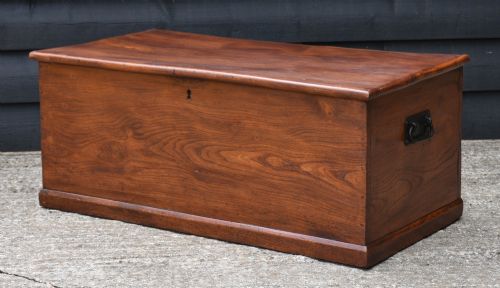
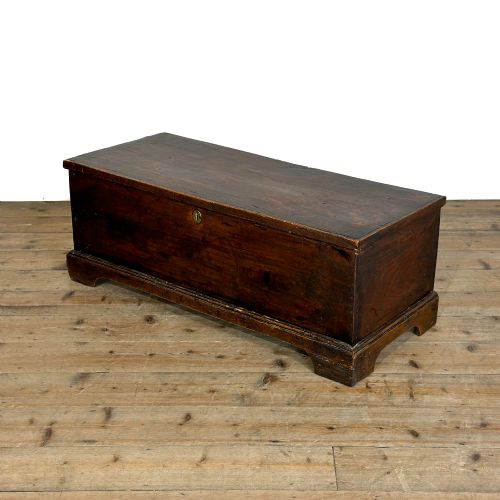

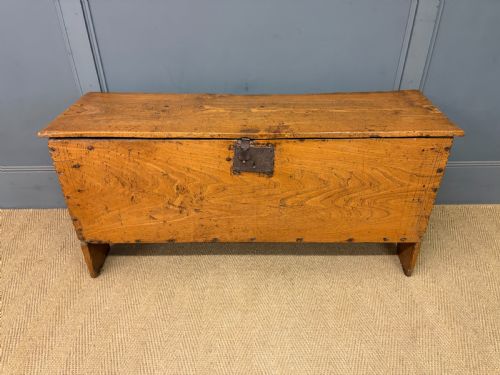
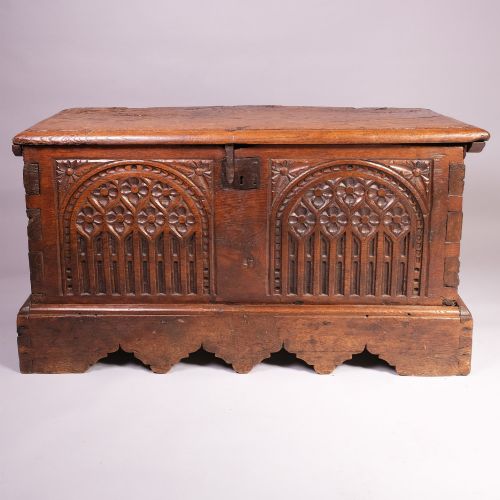
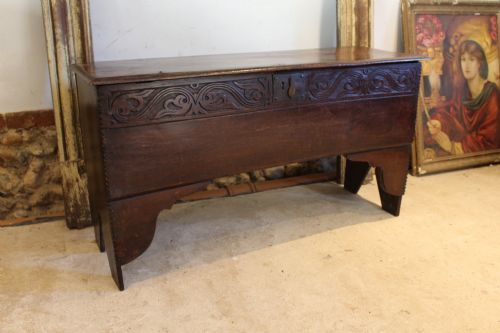

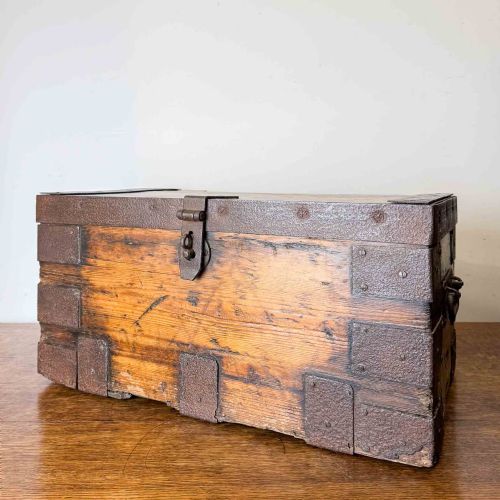


Elm Storage Trunk
An elm storage trunk brings honest vernacular grain and robust domestic timber into a modern interior.
Elm Storage Trunk
When you search for an elm storage trunk, you encounter a hardy lineage of domestic and regional containers spanning several centuries. These pieces encompass blanket chests, six-plank coffers, and heavy strongboxes designed for utilitarian service.
The versions most frequently met on this page date from the Georgian period through to the nineteenth century. They range from simple provincial blanket boxes to fitted travelling chests and toolboxes.
Makers shaped these trunks for practical storage in rural homes, workshops, and transit. Their robust construction allowed them to survive generations of hard domestic or professional use.
Materials and construction
Makers built these pieces primarily from solid elm, often selected for its tough interlocking grain and resistance to splitting. Secondary timbers such as oak and pine appear in internal framing or structural supports.
Hardware played an essential structural role, utilising iron and wrought iron for corner straps, hinges, and hasps. Brass mounts appear on more refined travelling pieces alongside fitted internal compartments.
French cannonball boxes in elm remind us that domestic timber occasionally went to war.
Evaluating quality
Quality rests in the integrity of the timber selection and the honesty of the construction. Figured elements like burr elm panels elevate a piece visually above standard utility boards.
The survival of original iron or brass hardware distinguishes superior examples. Retained locks, handles, and strapwork preserve the original character and function of the trunk.
The Elm Storage Trunk Glossary
- Six-plank coffer
- A simple box constructed from six distinct boards of timber joined at the edges. This represents one of the earliest and most direct forms of chest making.
- Mule chest
- A storage chest featuring one or more drawers beneath the main internal compartment. This form developed during the Georgian era to improve accessibility.
- Bandaji
- A traditional Korean chest used for storing garments and bedding. These pieces display distinct regional framing and metal reinforcement.
- Strongbox
- A heavily reinforced trunk designed to secure valuables or documents. They typically incorporate robust iron straps, heavy hinges, and secure locking mechanisms.
- Vernacular
- Objects made by local craftsmen for everyday use rather than high-style urban production. This style prioritises practical utility over decorative convention.
Elm Storage Trunk: Frequently Asked Questions
How old is my elm trunk?
Dating relies on examining construction methods, timber preparation, and hardware styles. Early pieces often feature hand- cleft boards and wrought iron work.
Later nineteenth-century examples display more uniform machine-sawn timber and standardised brass or iron mounts.
What were these trunks used for?
These trunks served primarily to store textiles, blankets, and household linens away from dust and pests. Strongboxes and travelling chests held documents, money, or personal belongings during transit.
Specialist boxes also functioned as robust transport containers for tools or specialised equipment.
How do I care for elm timber?
Elm responds best to stable room temperatures away from direct heat sources and strong sunlight. Regular application of a traditional beeswax feed maintains the moisture and natural lustre of the grain.
Avoid excessive moisture and wipe surfaces with a dry cloth.
Are all elm trunks British?
While many pieces reflect British regional traditions such as Welsh vernacular styles, the inventory also encompasses continental European and Asian examples. Korean Bandaji chests and French cannonball boxes utilise local elm alongside distinct regional hardware.
Each origin dictates the specific framing and decorative detailing of the trunk.