
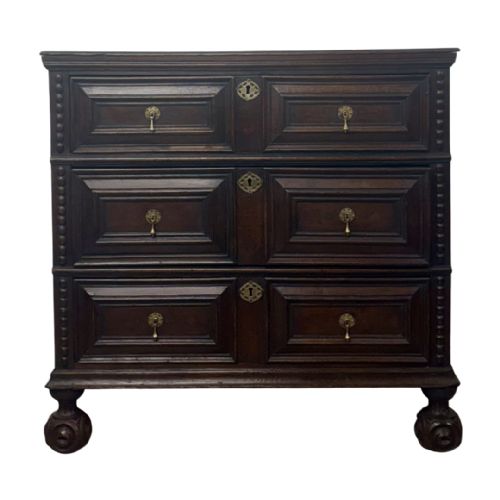
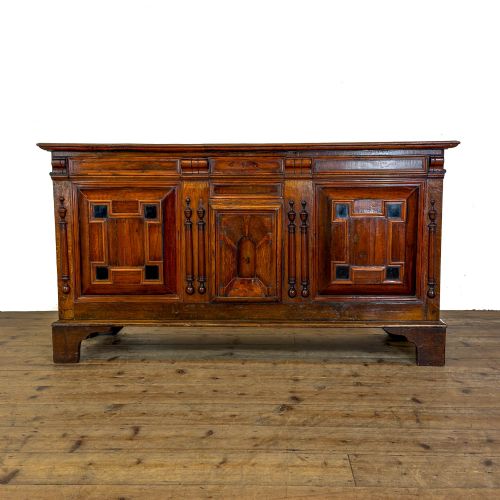
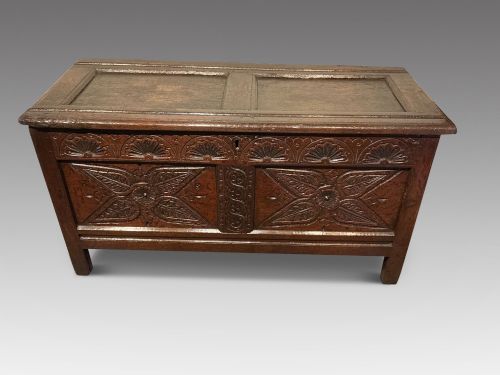


Heavy Dark Oak Chest
A heavy dark oak chest anchors a room with its solid timber and centuries of use, offering practical storage with genuine character.
Heavy Dark Oak Chest
A heavy dark oak chest serves as a robust storage piece, encompassing centuries of craftsmanship from the sixteenth century onwards through the Victorian era and into the early twentieth century. These items appear in various forms on this page, including early joined coffers, panelled trunks, silver chests bound in iron or steel, and occasionally drawer configurations or campaign trunks.
Buyers seek these items for their substantial presence and utility in modern interiors, where dark timber brings depth to a hallway or living space. The selection spans distinct eras, from seventeenth century carved examples to nineteenth century metal-banded trunks, each carrying the marks of its original purpose.
Materials and construction
Construction relies heavily on solid oak timber, sometimes complemented by secondary woods such as fruitwood or snakewood for decorative inlay and moulded details. Iron, steel and brass feature prominently as structural reinforcement, appearing as heavy straps, corner brackets and carrying handles on travel trunks and silver chests.
Joinery methods range from traditional pegged mortise and tenon frames in earlier coffers to iron banding and dovetailing in later nineteenth century boxes. Surfaces often show the natural grain darkened through age and wax finishing, whilst specific examples incorporate carved panels or applied mouldings.
Listings feature oak combined with iron, steel, brass, ebonised wood, and fruitwood across pieces spanning the sixteenth to the twentieth century.
Evaluating the standard
Quality rests in the integrity of the timber and the original condition of the metal mounts, hinges and locks. Pieces retaining their early iron banding, working brass or iron hardware, and untouched timber surfaces command greater interest from collectors.
The sophistication of the joinery and carving distinguishes standard utility boxes from superior commissions. Finer items display crisp mouldings, well-figured oak panels, and harmonious proportions that reflect the aesthetic of their respective period.
H D Dean
The Heavy Dark Oak Chest Glossary
- Coffer
- A traditional timber storage box with a hinged lid, often constructed with heavy panelled sides and used for household valuables.
- Silver chest
- A robustly built trunk reinforced with iron or steel bands, designed for the secure transport and storage of heavy plate and cutlery.
- Campaign chest
- Portable furniture built in sections with recessed brass handles, intended for military officers on the move.
- Mortise and tenon
- A traditional woodworking joint where a projecting tenon fits tightly into a matching mortise hole, secured with wooden pegs.
- Ebonised wood
- Timber treated with a dark stain or chemical process to imitate the appearance of expensive ebony.
Heavy Dark Oak Chest: Frequently Asked Questions
How do I date an oak chest?
Dating relies on observing construction methods, such as hand-cut dovetails, pegged joints, and the style of any surface carving or mouldings.
Material choices like wrought iron versus steel and the presence of specific hardware also help place a piece within its historical period.
What were silver chests used for?
Silver chests were heavy storage trunks reinforced with metal bands, designed to protect valuable silverware and heavy tableware during transport or at home.
Their sturdy construction and secure locking mechanisms kept precious household goods safe from theft and damage.
Where should I place a heavy oak chest?
These substantial pieces work well in hallways as seating and storage, or as focal points in living rooms beneath a window or against a plain wall.
Their robust timber and dark finish suit spaces that require a grounding architectural element.
How do I maintain dark oak wood?
Maintenance involves applying quality beeswax periodically to nourish the dry timber and preserve the natural patina developed over centuries.
Avoid placing the chest near direct heat sources or strong sunlight to prevent the timber from splitting or warping.