

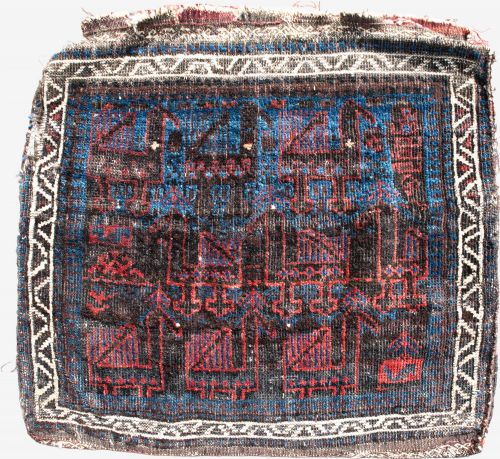


Dark Wool Tribal Bag
A dark wool tribal bag brings tangible nomad craft into a room, offering rich natural dyes and durable structure.
Dark Wool Tribal Bag
A dark wool tribal bag encompasses utilitarian storage pieces and decorative textile faces created by nomadic and village weavers across Central Asia and Persia. These pieces include torba faces, chuval faces, vanity bags, and saddle-bag fronts produced during the nineteenth and early twentieth centuries.
The selection here draws heavily from Turkmen and Baluch tribal traditions, alongside Persian groups such as the Qashqa'i and Afshars. Collectors encounter smaller bag faces designed for tent storage alongside complete double-sided vanity and grain bags utilising traditional formats.
Makers fashioned these textiles for practical tent utility, storing possessions, grain, or personal items during migration. Survival across generations relies on dense wool construction and strong flatweave backs designed to withstand heavy camp use.
Materials and Construction
Weavers relied primarily on hand-spun wool for the pile and foundation, often incorporating cotton for structural contrast and silk for specific highlights. Natural dyes provided deep palettes, yielding dark tones enriched by madder, indigo, and other plant or insect extracts.
Nomadic workshops employed pile knotting alongside flatweave techniques, securing edges with sturdy selvedges and occasionally adding cowrie shells for ornamentation. Structures range from standard asymmetric and symmetric knots to plain weave backs, with hanging loops preserved on specific bag faces.
Materials appearing across these textile records include wool, cotton, silk, and cowrie shells.
Assessing Quality and Execution
Quality rests upon knot density, handle, and the precision of traditional tribal motifs such as guls, herati patterns, or hooked designs. Finer weaves display tighter structural discipline and crisper rendition of geometric layouts.
The depth and preservation of natural dyes govern visual appeal, separating standard commercial pieces from works with exceptional coloration. Intact elements like original hanging loops, complete backs, and secondary materials such as silk or cotton accents elevate historical completeness.
The Dark Wool Tribal Bag Glossary
- Torba
- A small Turkmen storage bag traditionally hung inside a tent. These pieces often feature wide horizontal proportions and intricate medallion repeats.
- Chuval
- A large Turkmen tent bag used for household storage. They typically display multiple rows of primary guls and robust woolen construction.
- Gul
- A repeating primary medallion motif used across Turkmen and Central Asian carpet design. Each tribal group utilised distinct gul variations to denote lineage.
- Mafrash
- A rectangular tribal storage container or bedding bag. They frequently appear as flatwoven or pile-knotted panels removed from their original box-like structures.
- Baluch
- A designation for rugs and bags woven by Baluchi nomadic and village groups. These works are noted for dark indigo, brown, and madder palettes combined with geometric motifs.
Dark Wool Tribal Bag: Frequently Asked Questions
How were dark wool tribal bags used?
Nomadic families utilised these textiles inside tents for storing clothing, bedding, and grain. Smaller bag faces functioned as personal vanity containers or saddle equipment during migrations.
Over decades, many larger storage sacks were separated into individual collector faces. Today, these textiles transition easily into wall hangings or decorative interior elements.
How do I date a tribal bag?
Dating relies on examining material wear, wool quality, and the chemical composition of natural dyes. Pieces produced before synthetic aniline dyes became widespread typically exhibit softer, more integrated colour transitions.
Structural characteristics, such as knot type and selvedge finish, further help place items within the nineteenth and early twentieth-century eras recorded in our evidence.
Are backs usually attached?
Many examples on the market survive as bag faces rather than complete containers. Weavers often removed the plain weave backs when storage pieces became worn, preserving the decorated front.
Complete pieces featuring original flatweave backs, side seams, or hanging loops remain available for collectors seeking structural integrity.
How do I care for antique wool?
Gentle vacuuming with a low suction attachment prevents dust accumulation within the wool pile. Avoid exposing antique natural dyes to direct, prolonged sunlight to prevent fading.
Professional textile conservation specialists should handle any deep cleaning or structural repairs to preserve the original materials safely.