
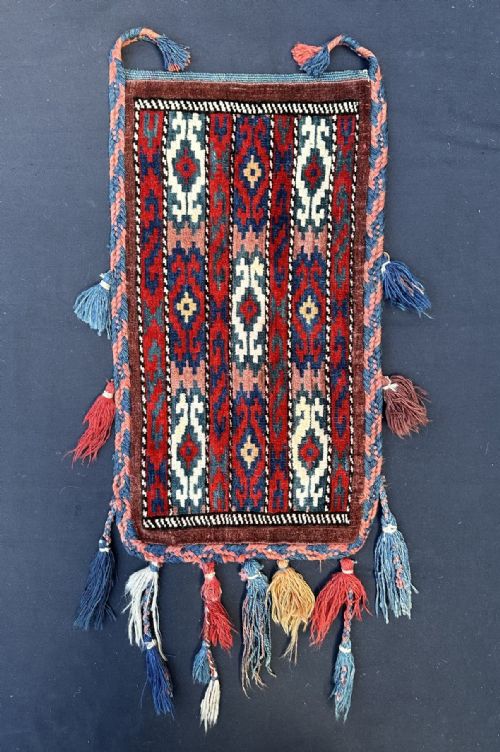
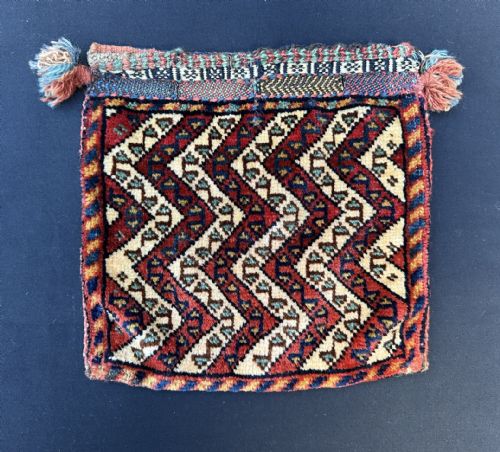
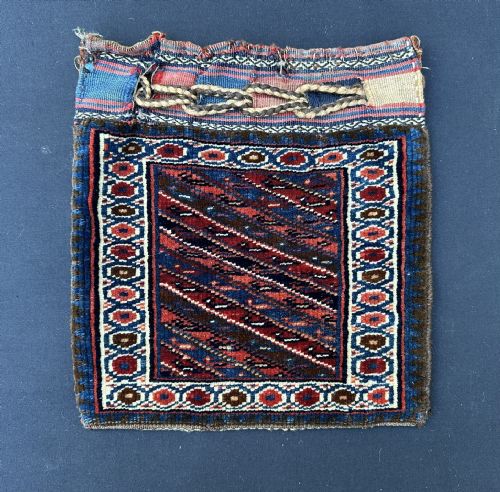
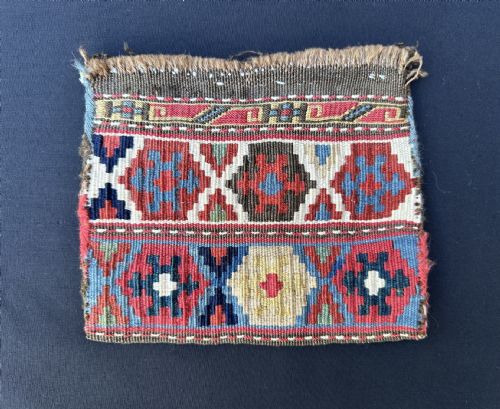





Woven Wool Pouch
A woven wool pouch is a portable tribal textile shaped for utility, offering a direct link to the nomadic weaving traditions of Persia, Afghanistan, and Central Asia.
Woven Wool Pouch
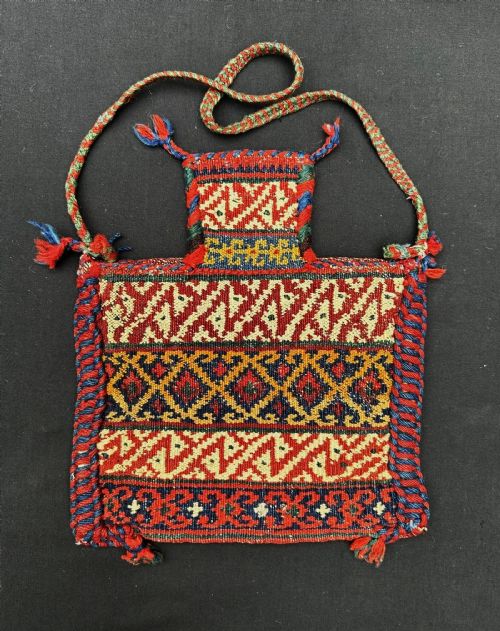
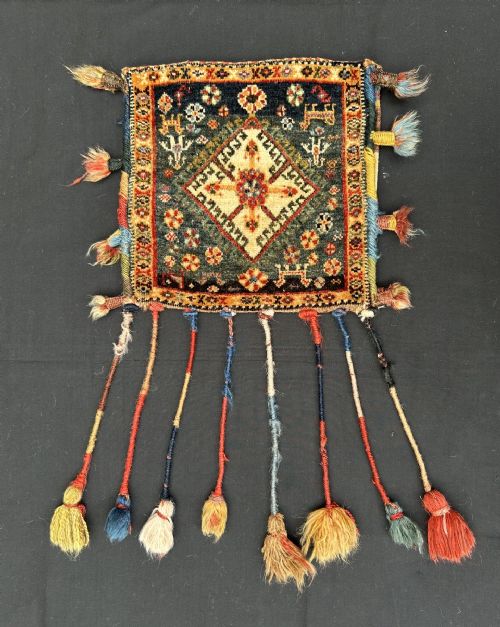
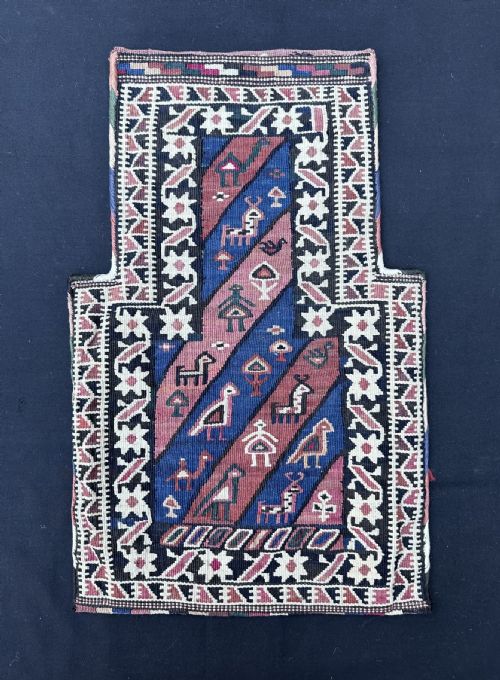
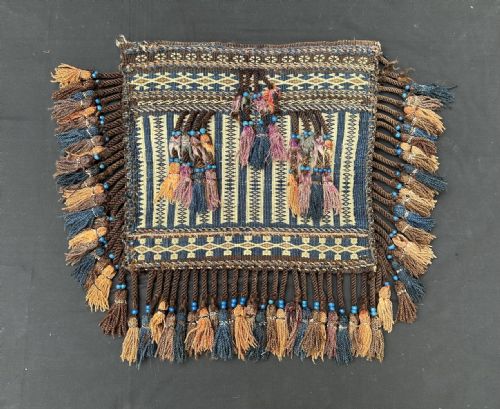
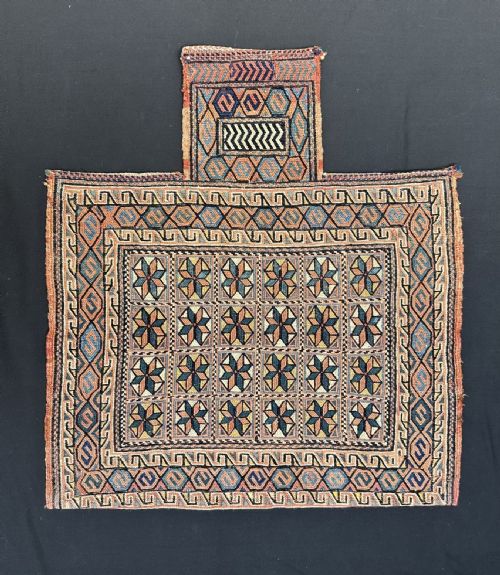
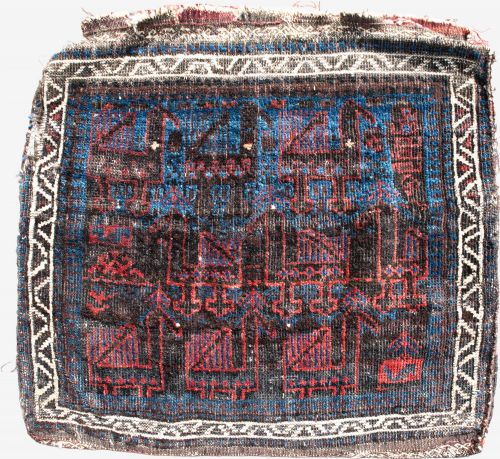
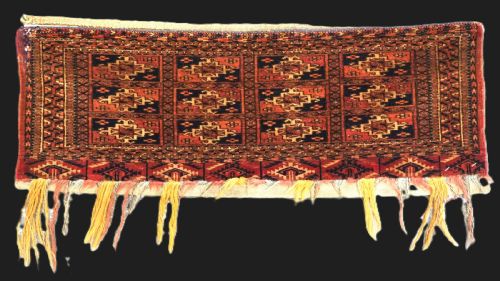
The selections on this page span the mid-nineteenth century to the early twentieth century, originating from groups such as the Qashqa'i, Afshar, Baluch, Yomut, and Tekke Turkmen. Each item served a specific domestic or nomadic function, ranging from holding salt to carrying personal items or pipe equipment.
What Varies in Quality
Quality in these nomadic textiles rests on the tightness of the weave, the clarity of the tribal motifs, and the richness derived from natural dyes. Finer examples display precise geometry and balanced proportions that reflect the weaver's individual skill within established tribal traditions.
The survival of original structural elements, such as complete backs on torbas or chantehs, significantly elevates an example. The crispness of design execution and the handling of supplementary materials like shells or beads also separate standard utility pieces from exceptional works of textile art.
Cowrie shells and glass beads occasionally join the wool, ensuring your tiny pouch once had a very glamorous journey.
The Woven Wool Pouch Glossary
- Chanteh
- A small personal bag or vanity pouch woven by Persian nomads. These miniature textiles were often utilised for carrying personal possessions.
- Torba
- A small utilitarian bag produced by Turkmen tribes, typically featuring a wide face with geometric guls. They were hung inside nomadic tents for storage.
- Namakdan
- A specialised salt-bag with a narrow neck and bottle-like profile, woven by tribal groups to store rock salt. Their distinctive shape protected the contents during migration.
- Soumak
- A flat-weave technique where coloured weft threads are wrapped over and under the warp threads. This method creates a durable fabric with a braided texture on the face and loose threads on the reverse.
- Gul
- A primary medallion or repeating motif found across Turkmen and Central Asian weaving traditions. Each tribal group utilised distinct forms of these floral or octagonal emblems.
Woven Wool Pouch: Frequently Asked Questions
What were woven wool pouches used for?
Nomadic tribes utilised these containers for daily storage, holding items such as salt, tobacco, pipes, spindles, and personal vanity articles.
Their specific shapes corresponded directly to their contents, allowing families to transport necessities easily across pastoral landscapes.
How do I identify tribal origins?
Origins are determined by examining the specific structural patterns, colour combinations, and characteristic motifs associated with groups like the Afshar or Yomut.
Regional weaving signatures and material choices often point directly to specific confederacies or sub-tribes.
Are backs usually original?
Many surviving examples retain their original plain-weave wool backs, which protected the contents from dust and wear during transit.
Complete backs add considerable interest for collectors who value untouched textile integrity.
How should I care for a textile pouch?
Protect these wool textiles from direct sunlight to prevent natural dye fading, and keep them away from excessive moisture.
Gentle vacuuming through a mesh screen helps remove dust without disturbing the delicate hand-spun fibres.