





Antique Woven Pouch
When you search for an antique woven pouch, you are looking at small tribal bags made for utility and personal use by nomadic groups.
Antique Woven Pouch
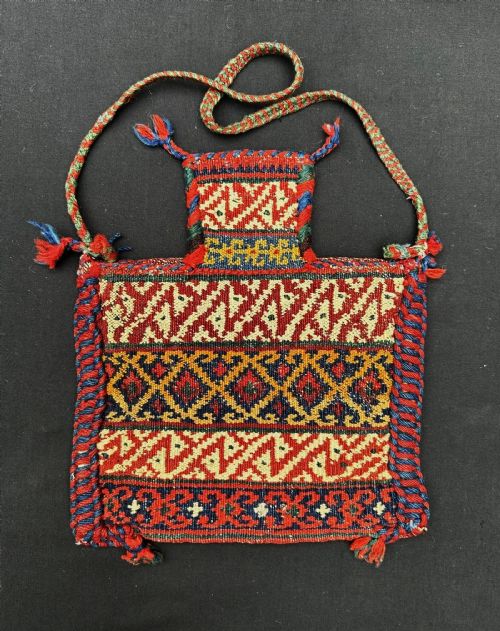
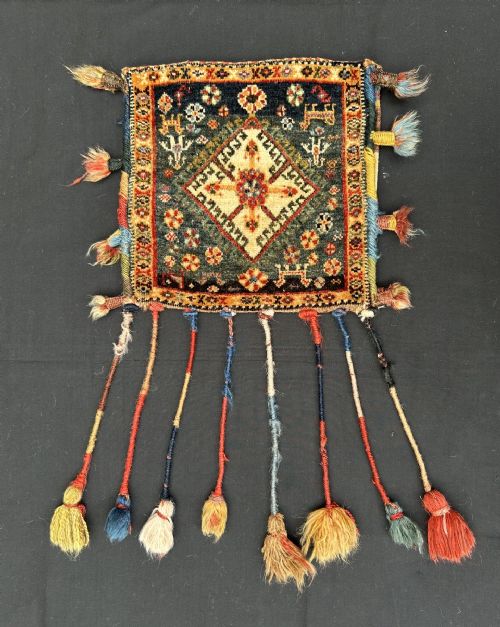
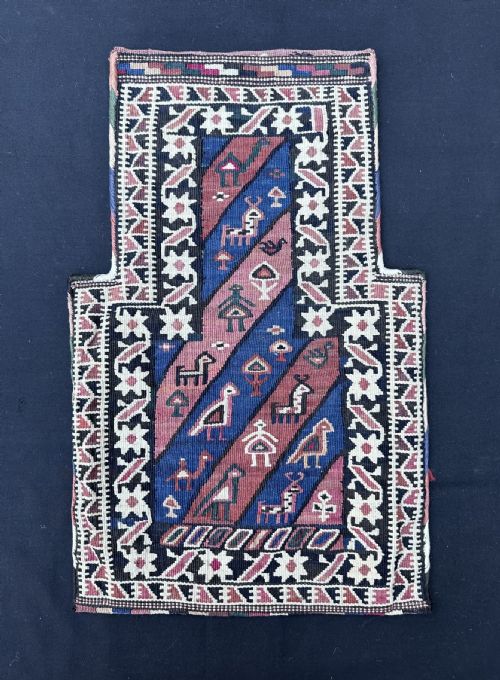
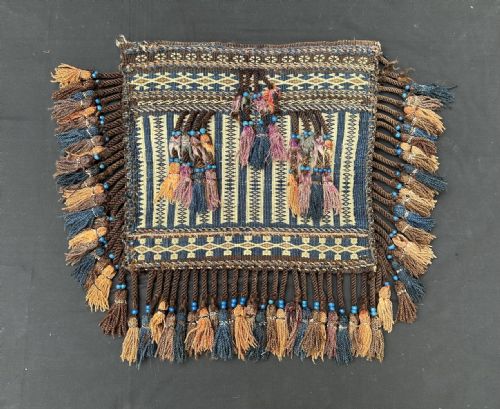
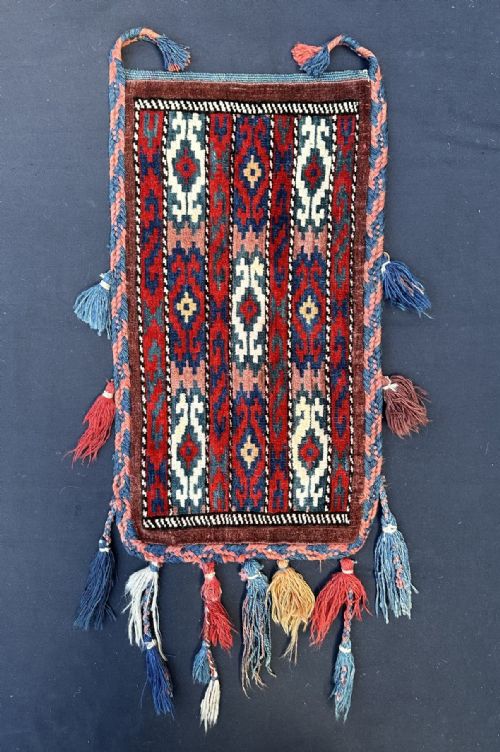
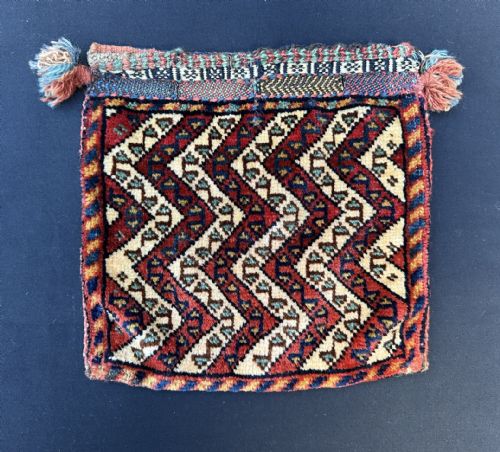
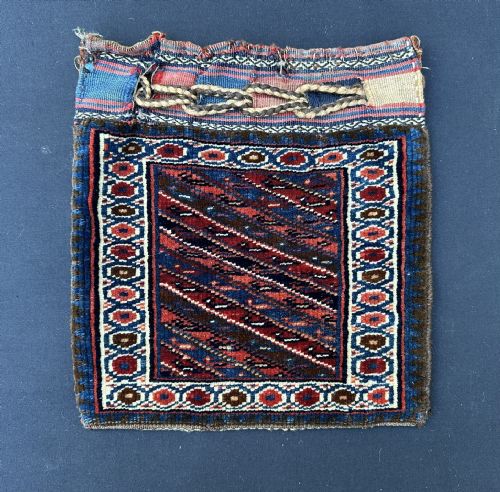
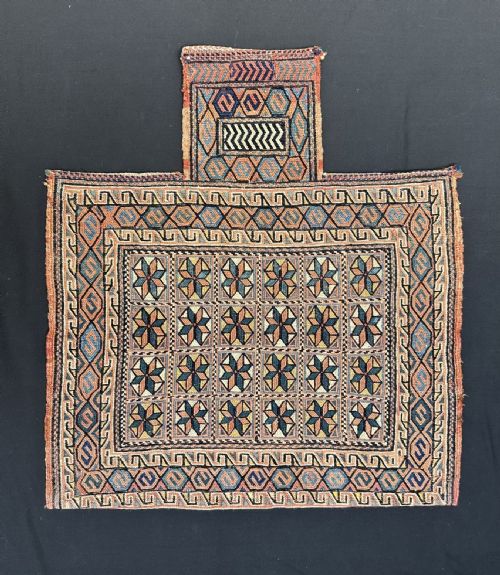
The pieces grouped under the term antique woven pouch originate from tribal and nomadic weavers across Persia, Central Asia, and the Caucasus during the nineteenth and early twentieth centuries. These objects served specific everyday functions within pastoral communities, ranging from holding salt and tobacco to containing spindle equipment and personal vanity items.
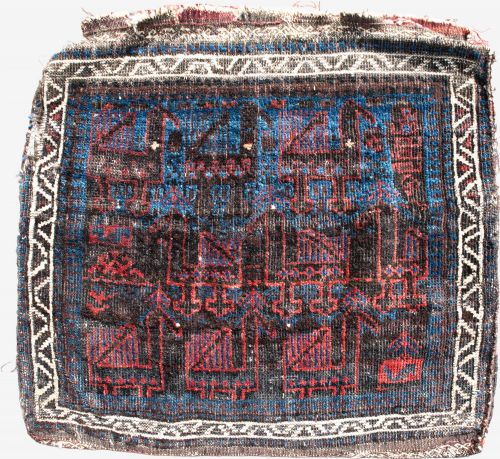
You will frequently encounter specialised forms such as salt bags, spindle bags, and vanity bags, often identified by the specific confederation or tribe that produced them. Examples attributed to the Qashqa'i, Afshar, Baluch, and Yomut groups dominate the selection, showing distinct regional patterns and weave structures.
Materials and construction
Weavers utilised hand-spun wool and cotton foundations, often dyed with natural colourants to achieve deep reds, blues, and earth tones. Silk and dyed yarn appear in select examples, alongside functional embellishments such as glass beads and cowrie shells.
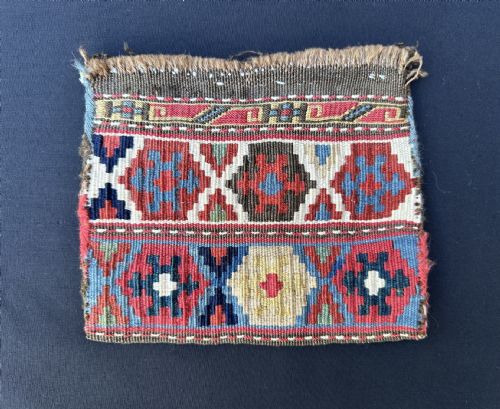
Construction techniques include soumak work, banded weft designs, and plain weave backs that provide durability to pieces originally subjected to regular handling and travel.
Listings span several decades from the mid-nineteenth century to the early twentieth century, featuring wool, cotton, natural dyes, and glass beads.
Judging quality and integrity
Quality rests in the tightness of the weave, the clarity of the tribal motifs, and the preservation of original backs and hanging loops. Pieces retaining their structural entirety demonstrate superior craftsmanship from nomadic makers.
The vibrancy and depth achieved through natural dyes separate standard utility items from finer examples that display exceptional artistic control within traditional tribal geometry.
The Antique Woven Pouch Glossary
- Chanteh
- A small tribal personal bag or vanity bag used by nomadic peoples.
- Torba
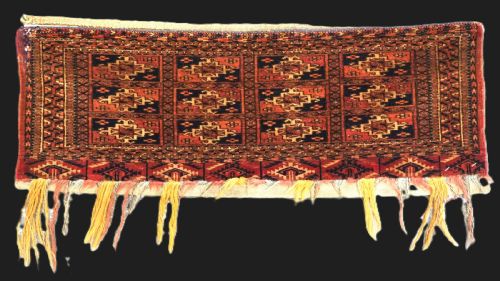
- A wide tribal bag, often used for storage or tent decoration.
- Soumak
- A flat-weave technique where coloured weft threads wrap around the warp threads to create a textured surface.
- Namakdan
- The traditional term for a salt bag woven by nomadic tribes.
- Igsalyk
- A specific Yomut Turkmen designation for a spindle bag.
Antique Woven Pouch: Frequently Asked Questions
What were antique woven pouches used for?
These small bags served practical purposes in nomadic daily life, holding household salt, tobacco, pipes, spindles, and personal items. They were designed for transport and storage within portable tents.
Many bags hung inside the tent structure or travelled with families during seasonal migrations, combining utility with decorative tribal identity.
How do I identify different tribal origins?
Tribal attribution relies on specific structural traits, colour palettes, and motif arrangements unique to groups like the Afshar, Baluch, or Qashqa'i. Regional weaving centres and confederations left distinct signatures in their geometry.
Consulting reference details regarding specific sub-tribes and provinces helps distinguish between Persian, Caucasian, and Central Asian pieces.
Are these bags complete with their original backs?
Many surviving examples retain their original plain weave or decorated backs, which provides important evidence of their complete original form. Some pieces exist as front panels only due to wear.
Listings specify whether a back or hanging loop remains attached to the structure.
How should I care for an antique textile bag?
Keep textile bags away from direct sunlight to protect natural dyes from fading, and avoid hanging heavy objects from fragile loops. Gentle vacuuming through a mesh screen removes surface dust safely.
Consult a textile conservator if cleaning becomes necessary, as water and modern detergents can damage historic wool and cotton fibres.