





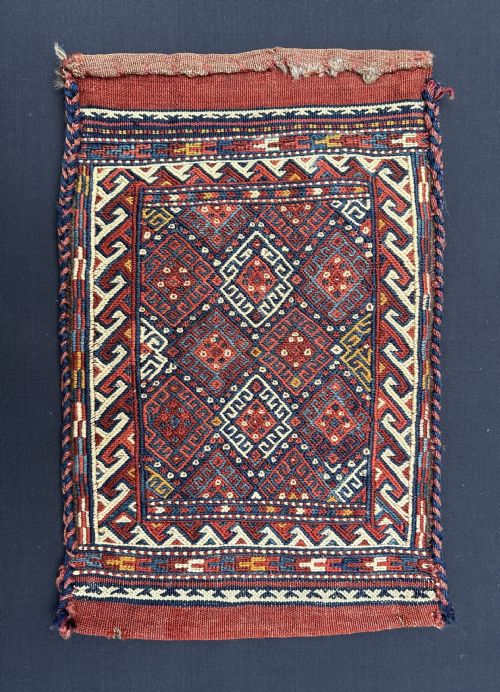
Persian Flatweave Bag
When you handle a genuine persian flatweave bag, you hold the utilitarian textile art of nomadic weavers.
Persian Flatweave Bag
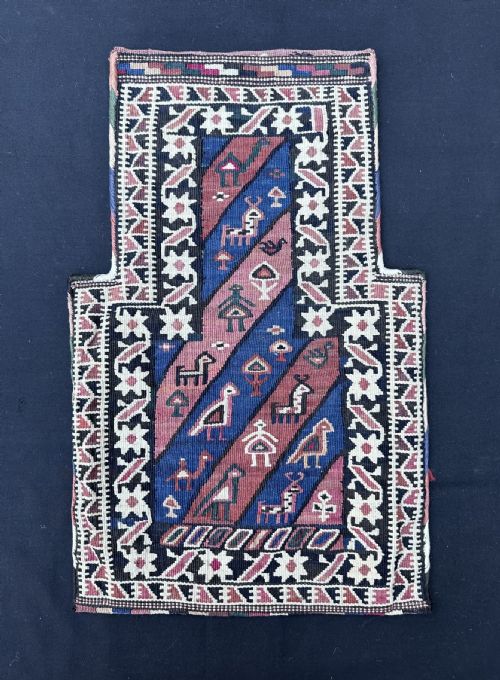
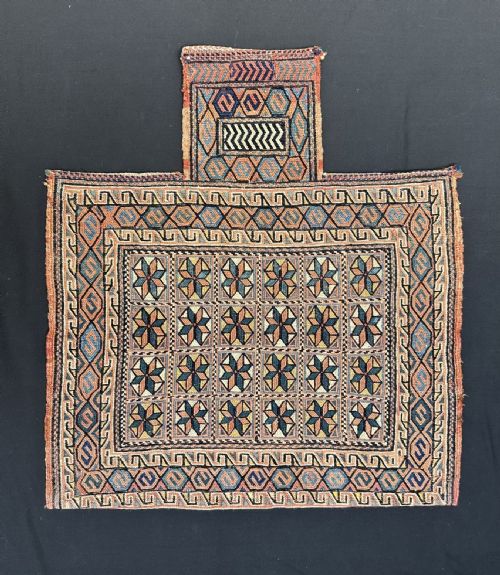
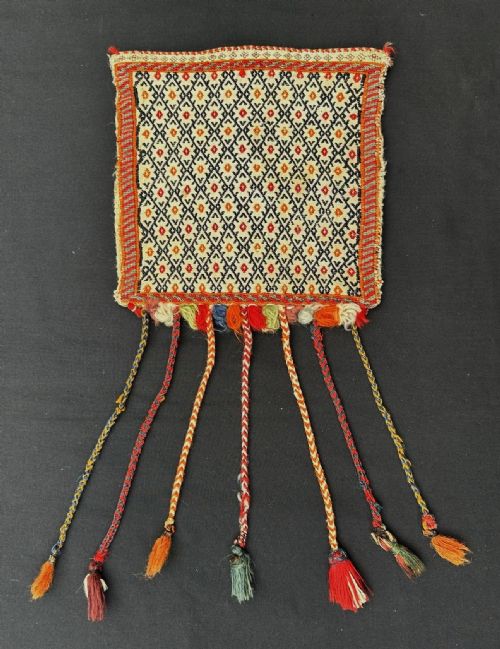
A persian flatweave bag encompasses functional woven containers created by various tribal confederacies across different regions of Persia. Collectors encounter specific utilitarian forms such as salt bags, wheat sacks, vanity bags, and saddlebags originating from groups like the Shahsavan, Qashqa'i, Bakhtiari, and Afshar.
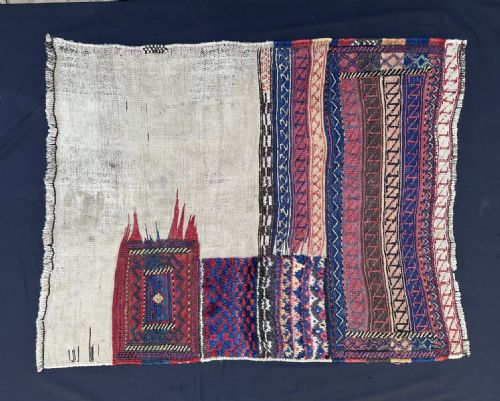
These nomadic textiles served practical daily purposes for transport and storage within pastoral camps before entering the antique market. Pieces range from complete paired saddlebags with original plain weave backs to individual bag faces and specialised small containers.
How They Were Made
Weavers utilised hand-spun wool and cotton, frequently incorporating goat hair for structural durability and leather or metal elements for reinforcement and ornamentation. Natural dyes provided the colour palette across flatweave and soumak techniques.
Nomadic makers structured these containers using warp-faced plain weave or intricate soumak wrapping techniques to create geometric patterns, animal motifs, and banded designs.
Cowrie shells occasionally appear stitched into these utilitarian containers, offering ancient tribal protection against the evil eye.
What Varies in Quality
Quality rests in the tightness of the weave, the complexity of the technical execution, and the crispness of the tribal motifs. Finer examples display precise soumak work and well-balanced natural dye palettes that hold visual depth.
The survival of original structural components like plain weave backs, closure systems, and side cords elevates a textile's integrity. Condition relies on the preservation of the original fibre rather than cosmetic repair.
The Persian Flatweave Bag Glossary
- Soumak
- A brocade-like flatweaving technique where coloured pattern wefts wrap over and under the warp threads. This method creates a textured surface resembling embroidery on the front and loose floats on the reverse.
- Khorjin
- The traditional Persian term for a double saddlebag used by nomadic tribes for transport on pack animals. These pieces typically feature two storage pouches joined by a central web.
- Tacheh
- A large flatwoven container or wheat sack utilised by Lori and Bakhtiari nomads for grain storage and transport. They often double as bedding bags within tribal tents.
- Chanteh
- A small personal bag or vanity pouch woven by tribal women for holding small possessions. These miniature items frequently showcase the weaver's finest technical skill and design repertoire.
Persian Flatweave Bag: Frequently Asked Questions
What were persian flatweave bags used for?
Nomadic tribes utilised these woven containers for daily survival, transporting salt, grain, personal items, and household goods across seasonal migration routes. Double saddlebags hung across pack animals while smaller salt bags and vanity pouches hung inside tents.
Specific forms suited specific contents, from heavy wheat sacks to delicate personal bags. Their construction provided durable storage that could withstand the rigours of pastoral life.
How should I display a bag face?
Bag faces with intact pictorial designs or complex soumak work lend themselves well to mounting and framing behind conservation-grade glass or fabric backing. Proper mounting distributes the weight evenly across the textile without placing stress on ancient wool fibres.
Keeping textiles away from direct sunlight preserves the natural dyes used by the original nomadic makers. Gentle rotation and low-intensity lighting protect the wool from fading over time.
Are complete saddlebags rare?
Complete pairs joined by their original connecting webs survive less frequently because many sets were separated during decades of use and trade. Finding a set with both pouches and the original plain weave back intact represents a notable survival from the nineteenth century.
Separated bag faces remain much commoner in the antique market than fully intact double saddlebags. The survival of closures and hanging loops further elevates the completeness of any surviving set.