





Nomadic Woven Pouch
A nomadic woven pouch brings tactile historical artistry into a contemporary interior through regional tribal textiles made for functional daily transport.
Nomadic Woven Pouch
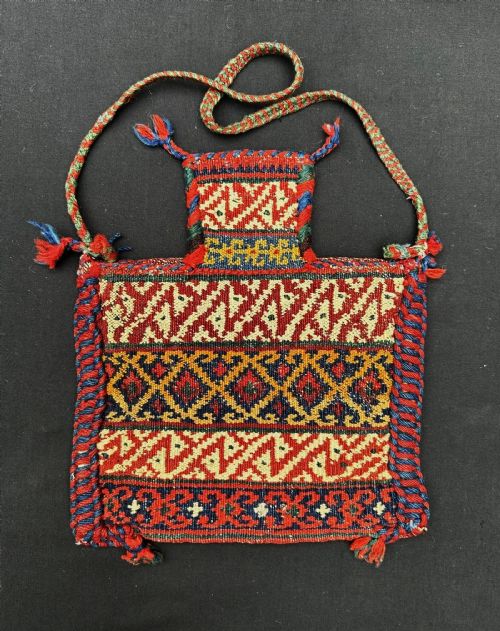
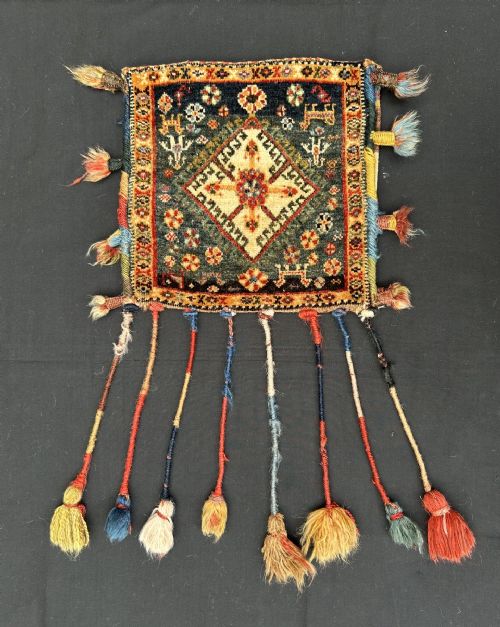
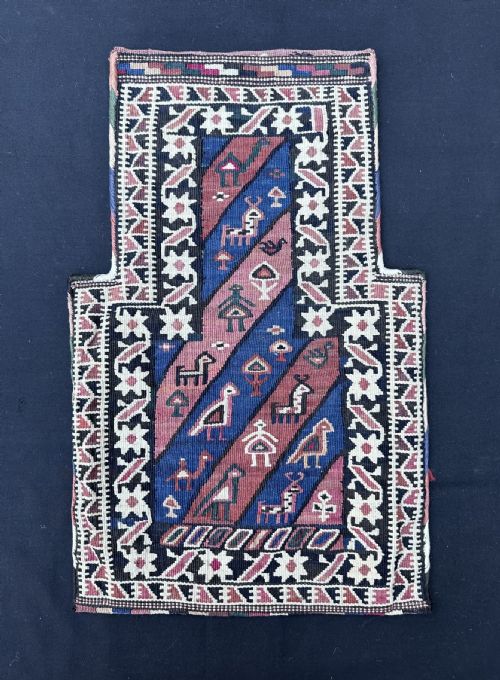
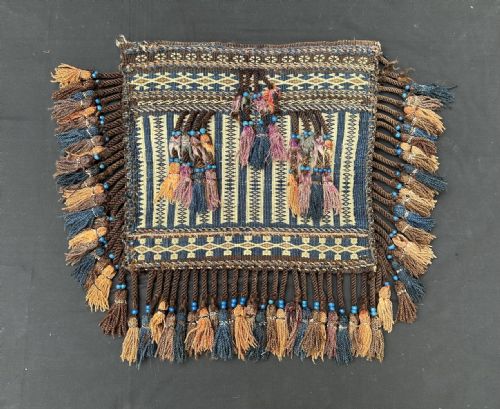
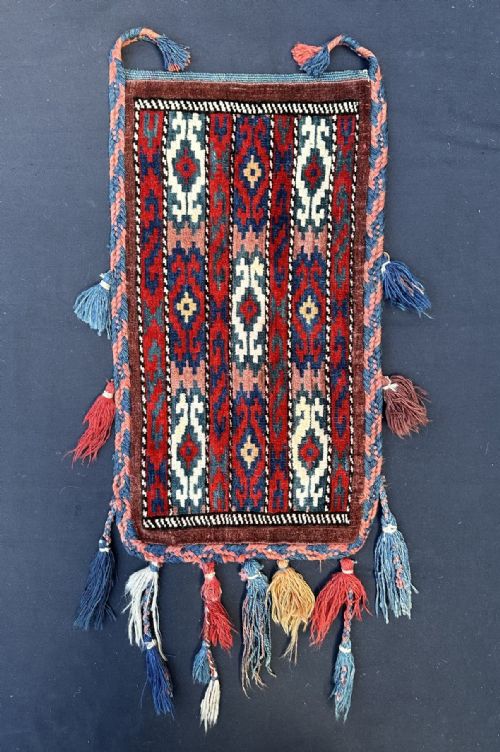
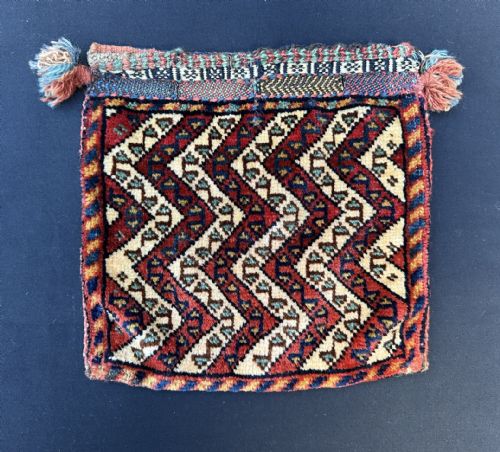
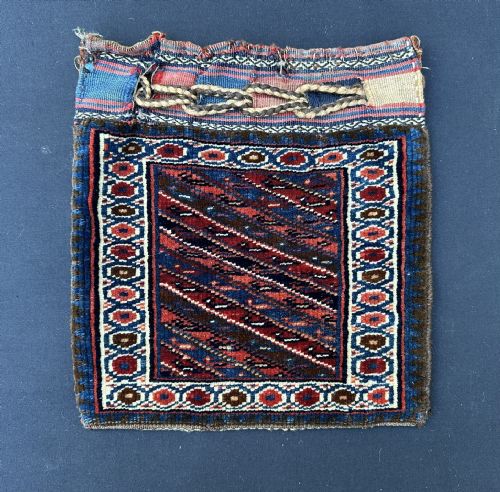
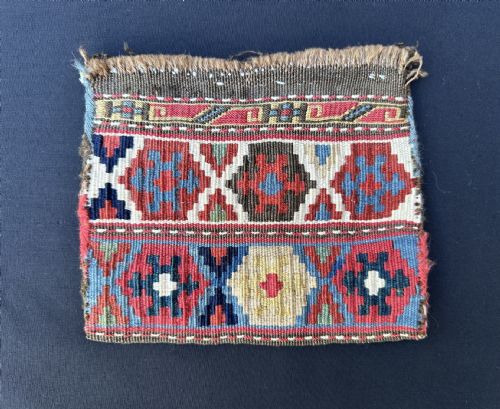
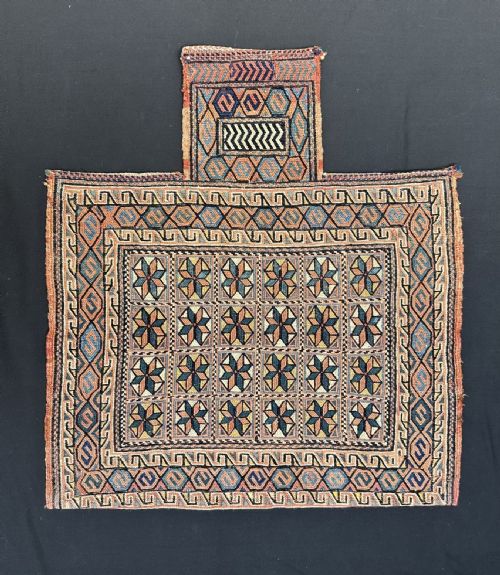
A nomadic woven pouch encompasses small utilitarian containers created by tribal groups across Persia, Central Asia, and Afghanistan during the nineteenth and early twentieth centuries. These textile items served specific domestic purposes, functioning as salt bags, vanity bags, spindle bags, and pipe containers for pastoralists on the move.
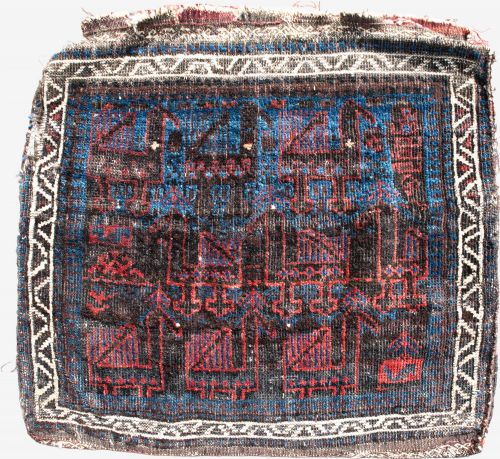
The pieces on this page emerge from regional confederacies and tribes including the Qashqa'i, Afshar, Baluch, Shahsevan, and Yomut Turkmen. Formats range from single face chantehs to complete double-sided pouches featuring original flatweave backs.
Makers designed each pouch for portable utility, combining structural flatweave construction with piled wool faces. Collectors encounter diverse tribal idioms reflecting the distinct geographic origins of the weavers.
Materials and construction
Weavers relied principally on hand-spun wool and cotton foundations, utilising natural dyes derived from local plants and minerals to colour the yarn. Artisans incorporated supplementary decorative elements such as cowrie shells and glass beads to embellish specific utilitarian forms.
Production techniques combined pile knotting for tactile surface patterns with durable plain weave backs designed to withstand physical transit. Natural dye absorption varied across batches, yielding rich variations in hue across wool and dyed yarn.
Listings span nineteenth and early twentieth century periods, featuring wool and cotton materials across Persian, Caucasian, and Central Asian tribal forms.
Evaluating textile execution
Quality hinges upon the precision of the weave density and the integrity of the original construction, including the presence of intact flatweave backs and closures. Pieces retaining their full structural elements demonstrate superior historical preservation compared to truncated fragments.
Artistic execution appears in the depth of natural dye palettes and the complexity of tribal motifs. Tighter knot counts and balanced proportions distinguish finer examples produced within regional weaving centres.
The Nomadic Woven Pouch Glossary
- Chanteh
- A small tribal personal bag or pouch used by nomads for carrying personal items. These woven pieces typically display pile fronts and plain weave backs.
- Torba
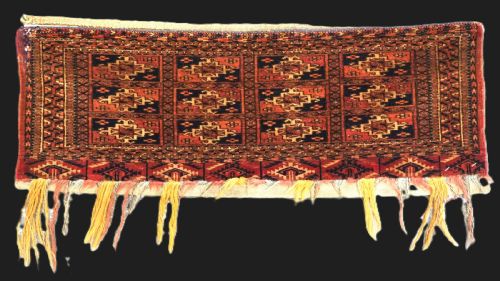
- A utilitarian storage bag produced by Turkmen tribes, often featuring gul motifs. These rectangular containers hung inside tents for household storage.
- Namakdan
- A traditional salt bag characterised by a narrow neck and expanding base. Nomads utilised these specific pouches for transporting and storing coarse salt.
- Igsalyk
- A specialised Turkmen spindle bag designed to hold spinning tools and raw wool fibres. These tapering containers reflect the domestic occupations of tribal weavers.
- Kilim
- A flatweave textile construction lacking pile, created by tightly interlocking warp and weft threads. Shahsavan makers frequently utilised this technique for durable transport bags.
Nomadic Woven Pouch: Frequently Asked Questions
What were nomadic woven pouches used for?
Nomadic groups utilised these woven containers to transport and store essential personal belongings during seasonal migrations. Specific forms accommodated salt, tobacco, pipes, vanity items, and spinning tools.
Each pouch correlated directly to a practical domestic function within the tribal camp. Their portable nature demanded robust materials and secure construction.
How do you identify tribal origins on bags?
Attribution relies on distinctive structural traits, chromatic preferences, and specific motif arrangements associated with particular regional groups. Baluch, Afshar, Qashqa'i, and Turkmen weavers each employed recognisable design vocabularies.
Examining the palette of natural dyes and the specific knotting technique offers further clues to geographic provenance. Regional weaving centres maintained distinct traditions passed down through generations.
How should these textile pouches be displayed?
Mounting smaller pouches securely on neutral fabric backings allows them to be displayed safely as wall art. Alternatively, placing them flat on stable surfaces highlights their structural textures.
Direct exposure to harsh sunlight should be avoided to protect natural wool dyes from fading. Gentle rotation prevents uneven environmental wear over time.
What distinguishes complete bags from fragments?
Complete examples retain their original flatweave reverse panels, side seams, and sometimes suspension loops or closures. These intact structures provide a holistic view of the maker's original intent.
Fragments often show losses to the outer edges or missing backing materials due to heavy historical use. Intact pouches command greater interest from collectors focused on historical textiles.