


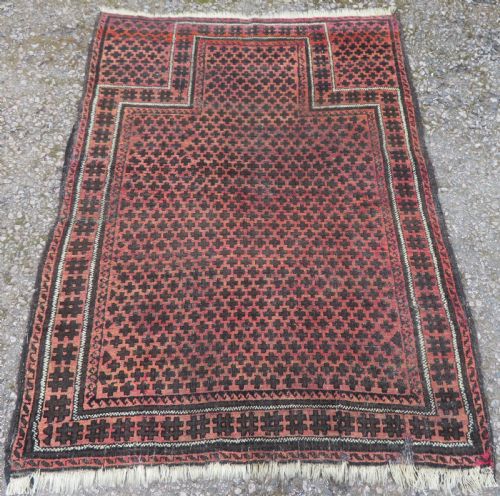


Red Wool Baluch Rug
These red wool baluch rug pieces are hand-woven tribal textiles offering rich deep colour and geometric pattern for everyday interior spaces.

Red Wool Baluch Rug
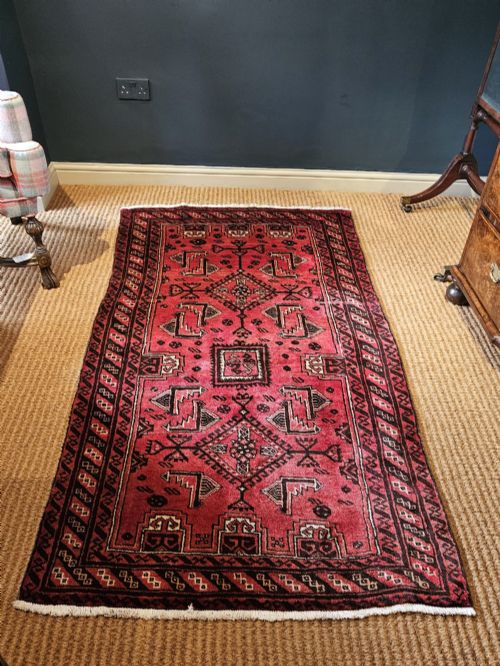
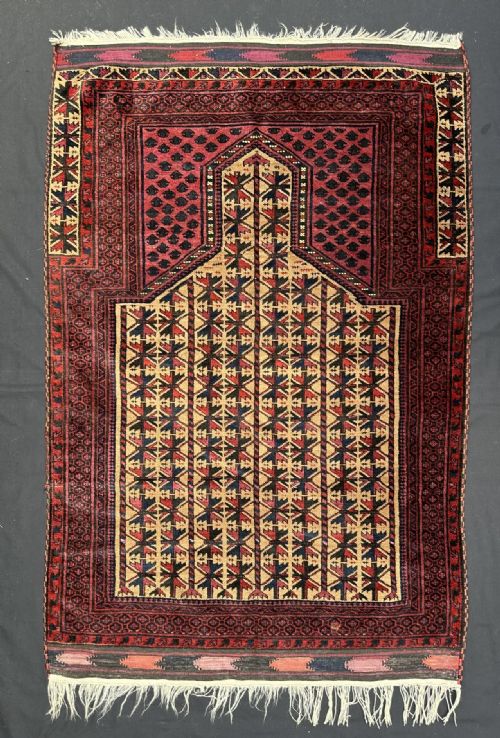
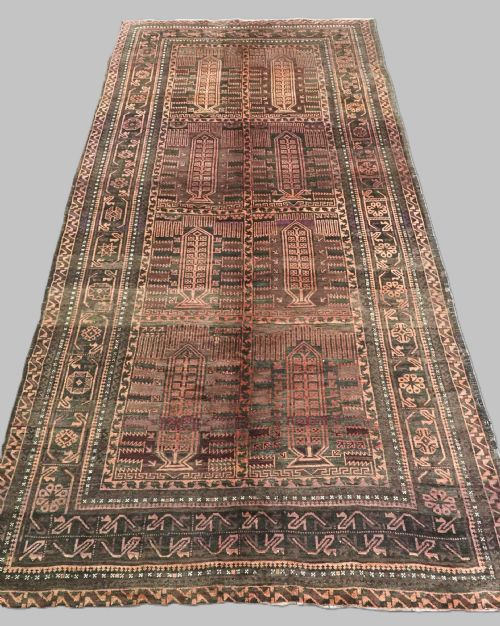
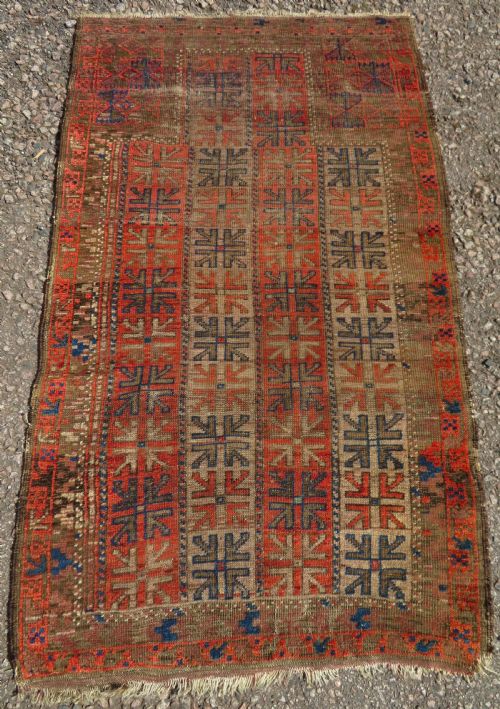
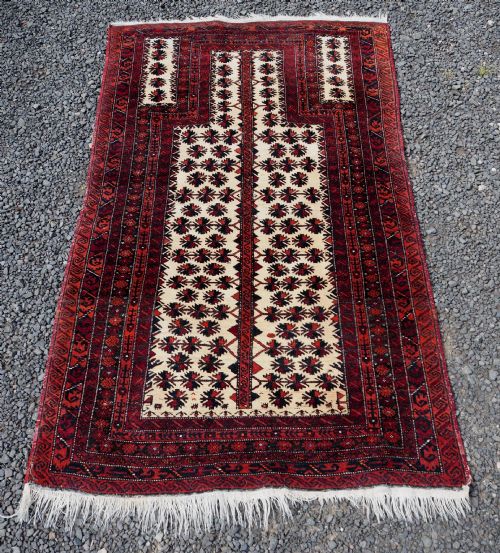
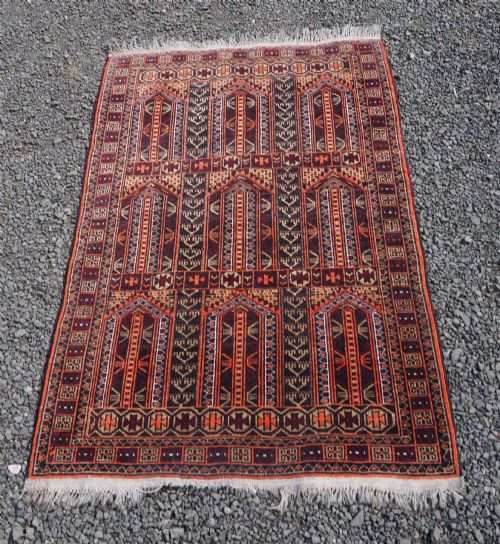
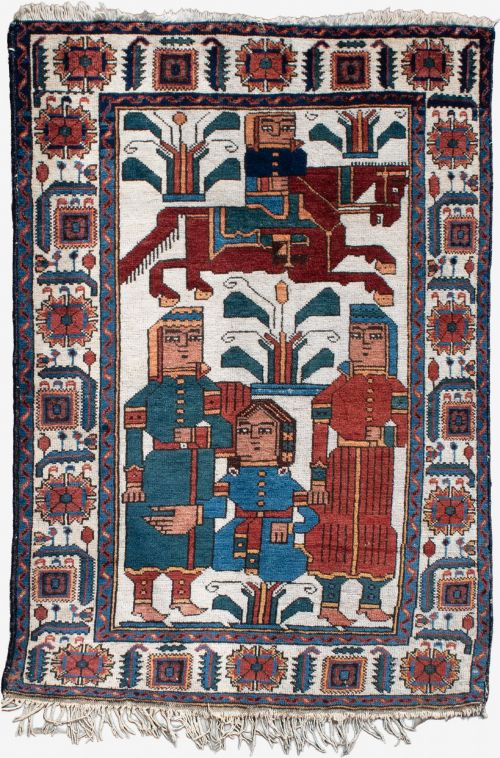
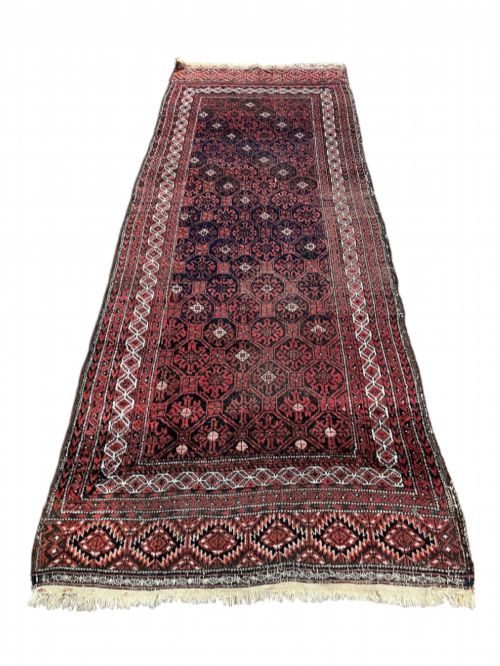
When you search for a red wool baluch rug, you encounter traditional tribal textiles originating from nomadic and semi-nomadic groups. These pieces include rugs, carpets, area rugs, prayer rugs, and salt bags.
The objects on this page span several decades and centuries, with dates ranging from the late nineteenth century up to the 1930s. Styles encompass Baluch tribal, Afghan tribal, Persian tribal, and specific regional attributions such as Khorasan and Timuri.
You are most likely to meet rectangular formats featuring traditional tribal designs like calyx lattices and prayer rug formats. These textiles served both practical flooring and functional storage purposes within nomadic camps.
How They Were Made
These textiles utilise natural animal fibres including hand-spun wool and goat hair. Cotton also appears in the construction, whilst decorative elements incorporate cowrie shells.
Weavers constructed these pieces using traditional hand-woven techniques characteristic of tribal production. The combination of hand-spun wool and goat hair provided durable surfaces suited to nomadic use.
Red Wool Baluch Rug Retail Price Guide 2026
Typical asking prices for red wool baluch rug among the pieces listed under this phrase on Sellingantiques today, from the lower quarter to the upper quarter. They describe what is for sale here now, not the wider market.
The listings show dates ranging from 1880 to 1930, featuring materials such as wool, hand-spun wool, goat hair, cotton, and cowrie shells.
What Varies in Quality
Quality rests upon the fineness of the hand-spun wool and the tightness of the weave. Finer construction yields sharper definition in traditional motifs like the calyx lattice.
The nuance of natural dye colours and the integrity of early materials distinguish the finer examples. Exceptional pieces also feature unusual designs and specialist forms such as salt bags.
The Red Wool Baluch Rug Glossary
- Baluch Tribal
- A designation for rugs and textiles woven by Baluch nomads. These pieces often feature geometric motifs and dark red or blue ground colours.
- Namakdan
- A traditional salt bag utilised by nomadic groups for storage. These bags display distinctive tribal weaving and decorative details.
- Calyx Lattice
- A repeating geometric floral pattern found in traditional carpets. This design structures the field of the rug with stylised plant motifs.
- Prayer Rug
- A textile featuring a mihrab or niche design used for ritual prayer. These rugs are typically smaller in format for portability.
Red Wool Baluch Rug: Frequently Asked Questions
What is a baluch rug?
A baluch rug is a hand-woven textile produced by nomadic tribes in the border regions of Persia, Afghanistan, and Balochistan. These pieces traditionally feature dark red or blue wool.
They served nomadic households as floor coverings, tent furnishings, and practical storage bags.
How old are these rugs?
The pieces listed span from the late nineteenth century through to the 1930s. Dating relies on stylistic analysis, material wear, and structural evidence.
Earlier examples often exhibit hand-spun wool and specific regional dye palettes characteristic of nineteenth-century production.
What materials are used?
Construction relies primarily on wool and hand-spun wool for the pile and foundation. Goat hair and cotton also appear in various structural components.
Some pieces incorporate organic decorative additions such as cowrie shells along the borders or edges.
How do I care for one?
Protect these antique textiles by placing them in low-traffic areas away from direct sunlight. Gentle vacuuming without a beater bar maintains the wool pile.
Professional textile cleaning is recommended for deep maintenance to preserve the integrity of the hand-spun fibres.