

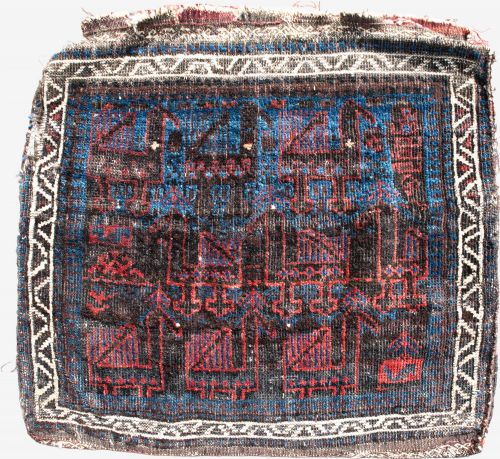
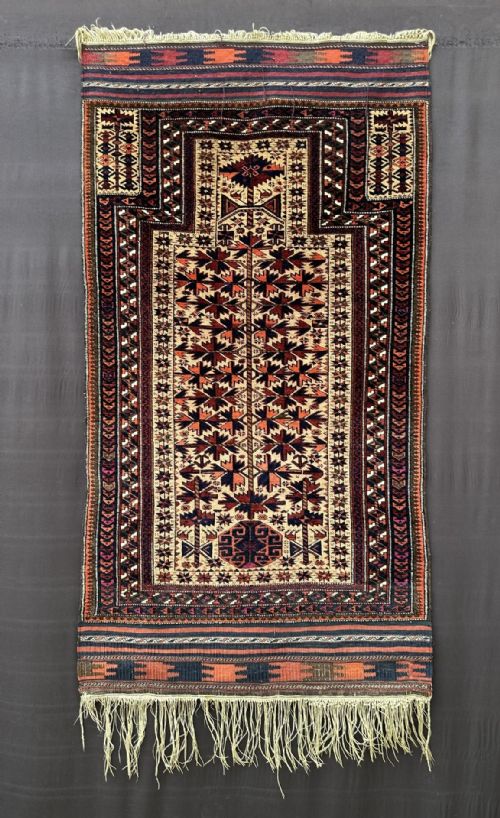


Afghan Baluch Rug
An Afghan Baluch rug brings the rich nomadic heritage of Central Asian borderlands into a room through deeply saturated tones and tribal motifs.
Afghan Baluch Rug
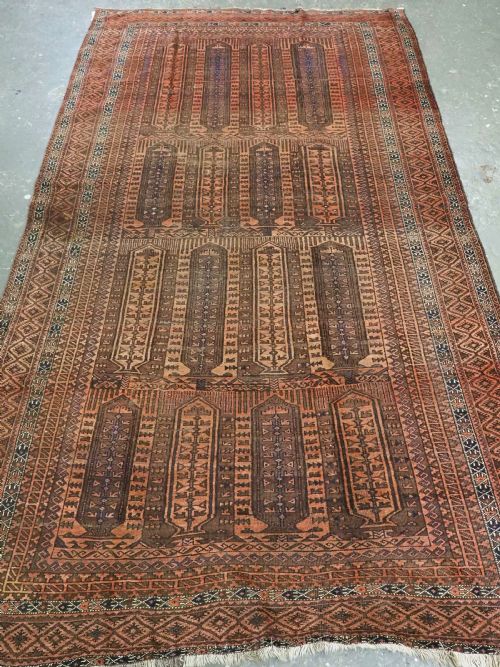
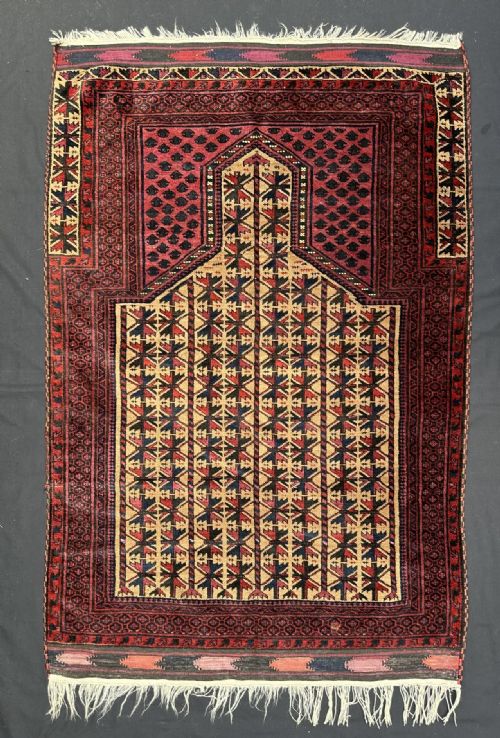
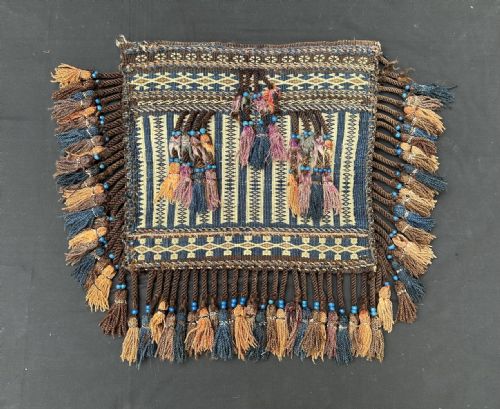
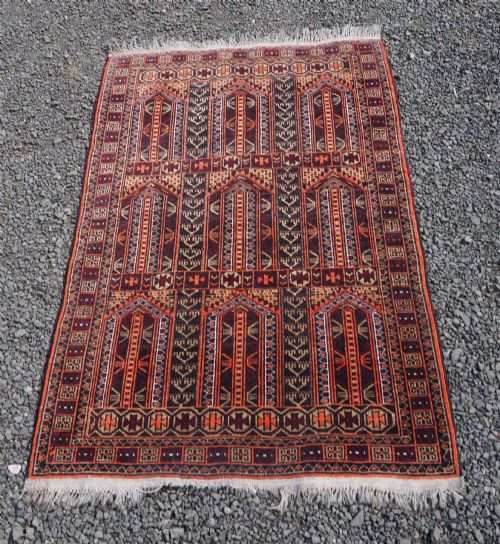
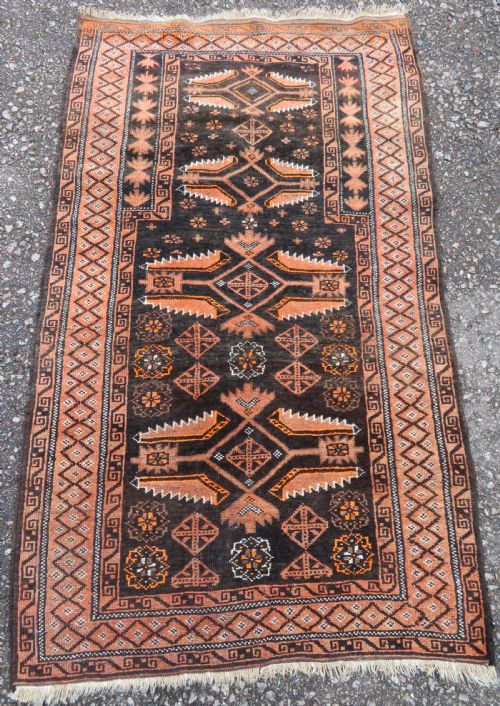
When searching for an afghan baluch rug, collectors encounter handwoven tribal floor coverings originating from the borderlands of Afghanistan and Persia. These pieces typically display traditional formats such as prayer designs, featuring single, double, or multiple mihrabs, alongside larger main carpets and smaller formats like grain bag faces.
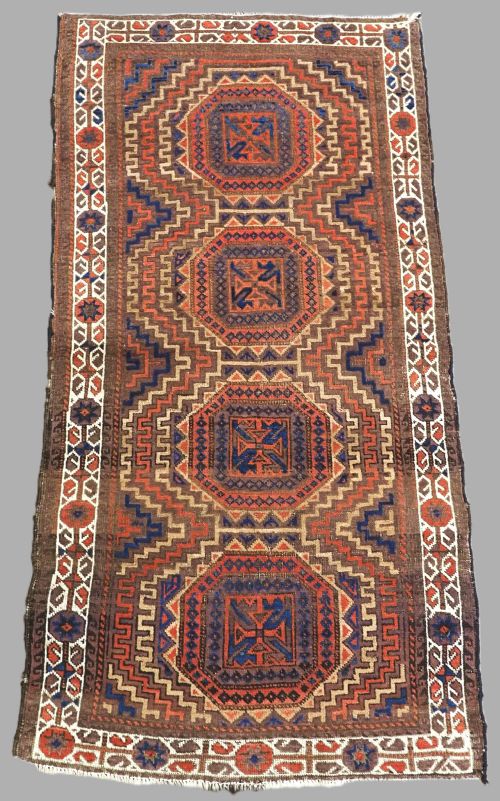
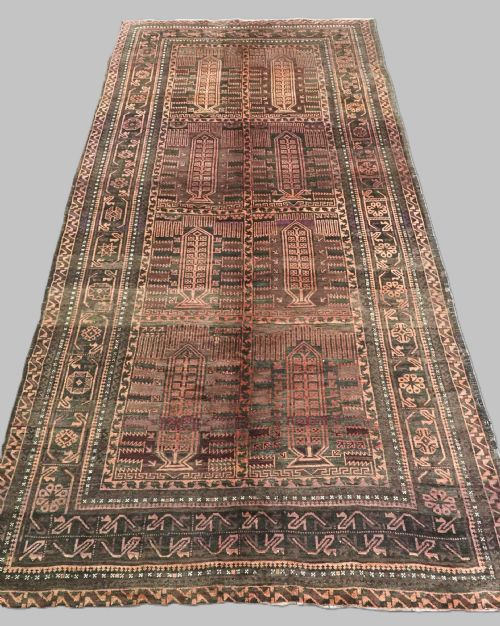
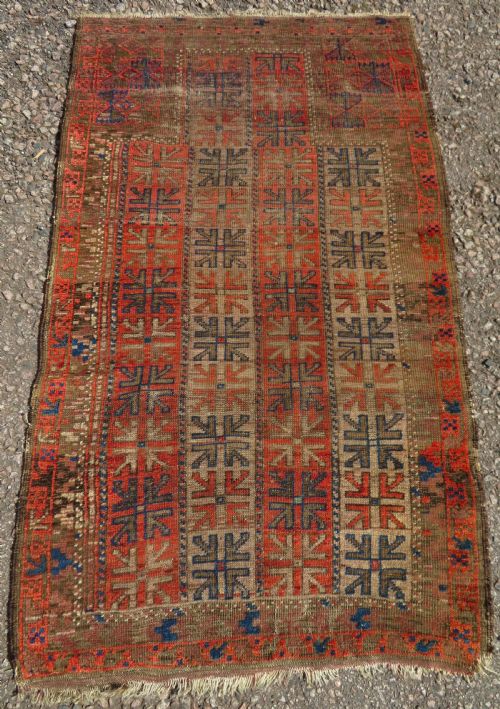
The aesthetic is rooted in nomadic traditions, often incorporating recurring motifs including trees of life, lattice patterns, shrub designs, and star guls. Many examples reflect the specific artistry of related tribal groups such as the Taimani, Timuri, and Sistan subtwigs.
Most pieces date from the late nineteenth century into the early decades of the twentieth century, bridging nineteenth-century tribal weaving and early twentieth-century domestic production. Buyers will find both compact prayer formats and larger room-sized carpets suited to varied interior spaces.
Materials and Construction
These floor coverings are handwoven primarily using wool, utilising traditional techniques passed down through generations of nomadic weavers. The pile and foundation rely on durable animal fibres suited to the practical demands of tribal life.
Colour comes from natural dyes, which yield the rich, deep tones characteristic of nineteenth and early twentieth-century nomadic textiles. Over time, these vegetable and insect colorants develop a harmonious, mellow patina across the surface of the wool.
Afghan Baluch Rug Retail Price Guide 2026
Typical asking prices for afghan baluch rug among the pieces listed under this phrase on Sellingantiques today, from the lower quarter to the upper quarter. They describe what is for sale here now, not the wider market.
The archived and active listings demonstrate that these tribal weavings span the late nineteenth century through the 1920s, utilising handspun wool and natural dyes.
Judging Quality
The hierarchy of quality in these tribal pieces rests on the precision and fineness of the weave relative to the format. Tighter knotting allows complex geometric lattices, shrub patterns, and star motifs to render with greater clarity and structural integrity.
Another differentiator is the depth and complexity of the palette achieved through natural dyes. Examples that retain vibrant yet balanced shades across camel grounds and dark fields demonstrate superior mastery of the dyepot by the weaver.
The Afghan Baluch Rug Glossary
- Mihrab
- A niche design symbolising the prayer arch, commonly found pointing toward Mecca on Islamic prayer rugs. Single, double, and triple variations appear frequently in Baluch weaving.
- Gul
- A repeating medallion or floral motif central to many oriental and tribal carpet designs. These octagonal or polygonal stamps identify specific tribal origins.
- Tree of life
- A symbolic botanical motif representing eternal life, ascending from a base to branches filled with leaves or birds. It forms the central axis of many prayer rugs.
- Kilim
- A flatwoven textile produced without a pile, often created using slit-weave techniques. Pieces combining flatwoven sections with knotted pile offer structural variety.
Afghan Baluch Rug: Frequently Asked Questions
How do I date an old Baluch rug?
Dating relies on stylistic markers, wool quality, and the specific composition of natural dyes. Pieces from the nineteenth century generally exhibit softer wool handling and deeper, more complex vegetable dye palettes.
Later examples from the early twentieth century often display crisper synthetic influences or simpler repeat patterns. Comparing structural formats against documented archival pieces helps narrow down the decade of production.
What is a prayer rug?
A prayer rug is a smaller format textile featuring a distinctive architectural arch, known as a mihrab, at one or both ends. Historically, these pieces served as portable prayer spaces for nomadic or village weavers.
The directional design guides the user during daily devotions. Today, their compact scale makes them ideal for hanging on walls or placing in focused interior settings.
Where were these rugs made?
Production centred in the borderlands between Afghanistan and Persia, spanning regions inhabited by various nomadic tribes. Weavers belonged to groups such as the Baluch, Timuri, and Taimani living across western and northern Afghanistan.
Geographic isolation within these tribal territories preserved distinct regional motifs and weaving techniques. Consequently, individual pieces often reflect the specific visual vocabulary of a localized clan.
How should I care for a tribal wool rug?
Proper maintenance requires gentle vacuuming without a rotating power brush to protect the handwoven wool pile. Keeping the textile away from direct, harsh sunlight prevents the natural dyes from fading prematurely over the years.
Professional cleaning tailored to antique oriental carpets ensures the fibres remain nourished. Allowing adequate airflow underneath prevents moisture accumulation in the foundation.