

Dark Rosewood Console Table
A dark rosewood console table brings deep timber grain and formal proportion to a hallway or drawing room.

Dark Rosewood Console Table
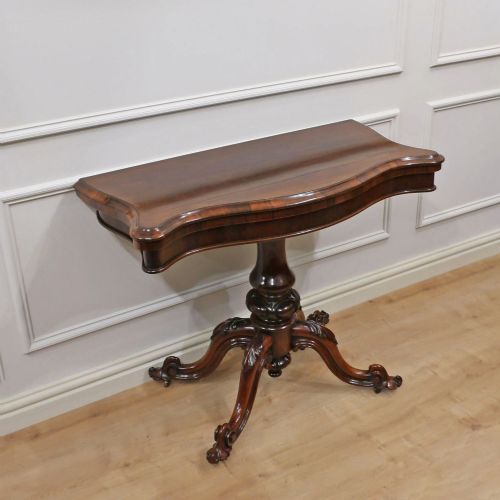
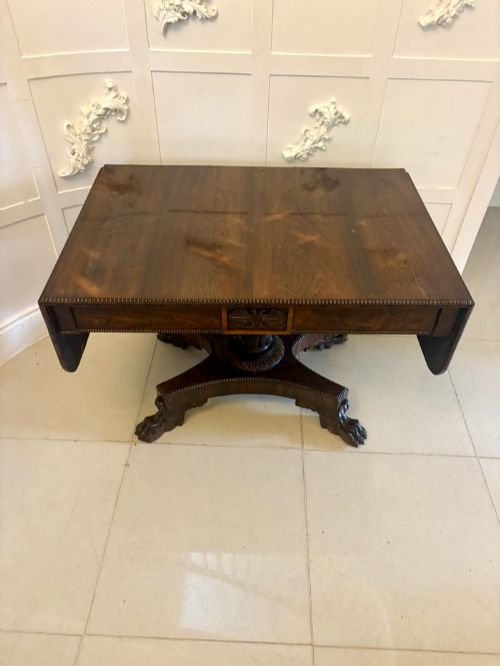
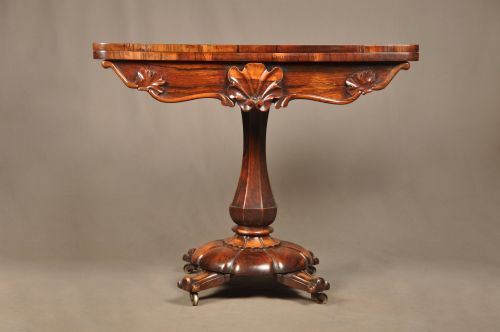
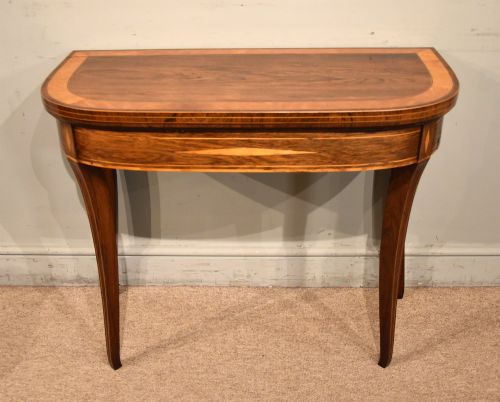
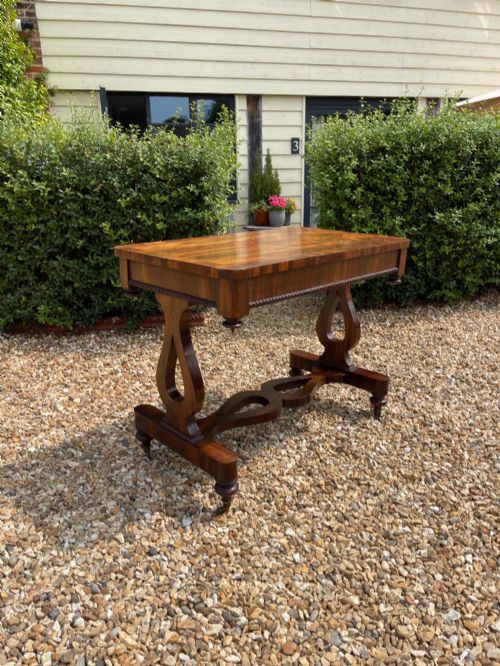
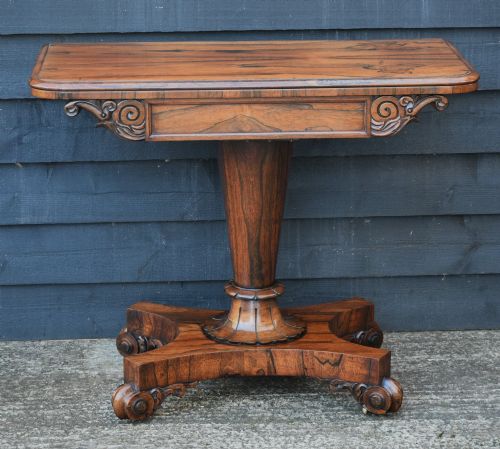
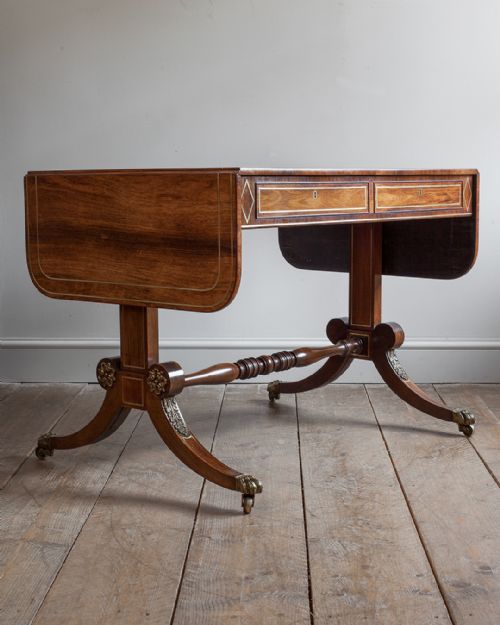
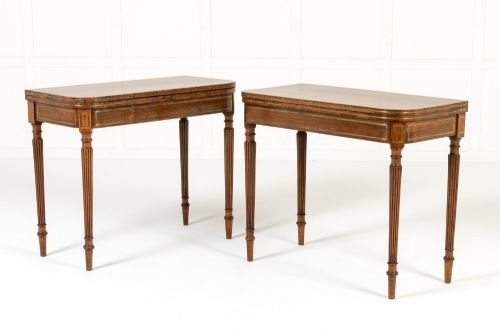
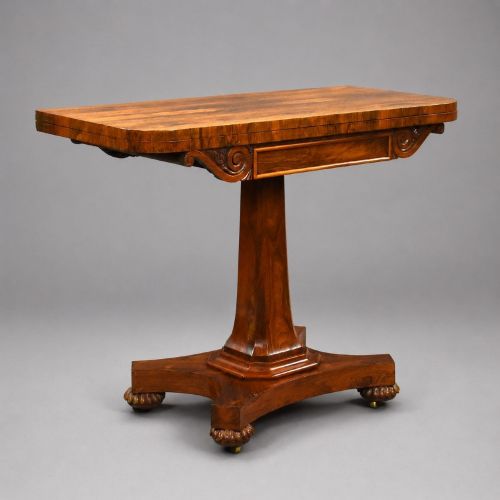
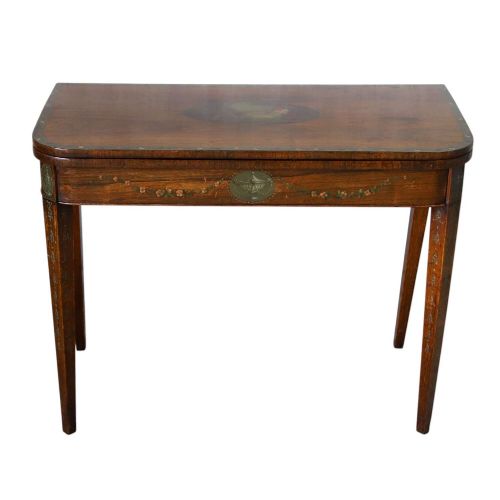
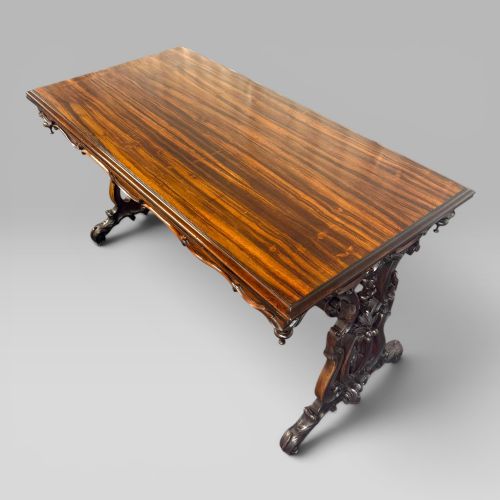
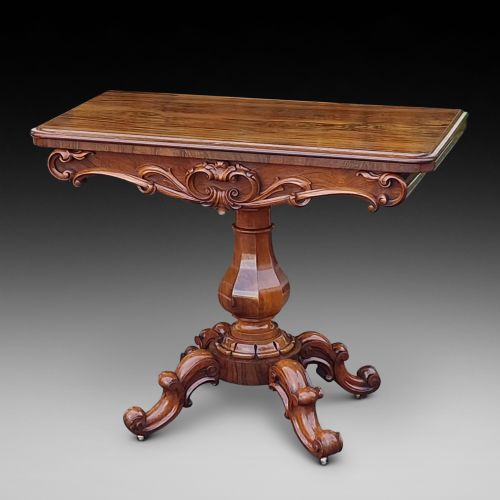
A dark rosewood console table sits against the wall, sharing its lineage with card tables, side tables and games tables found across the nineteenth century. These pieces emerge from Regency, William IV and Victorian eras, often taking the form of fold-over tops or freestanding architectural supports.
Materials and construction
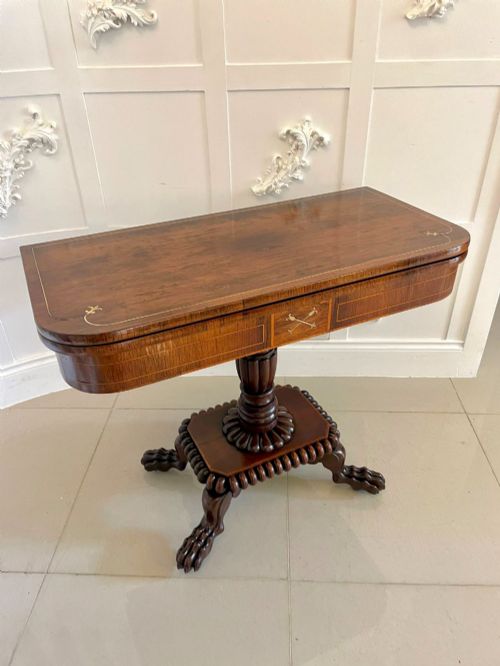
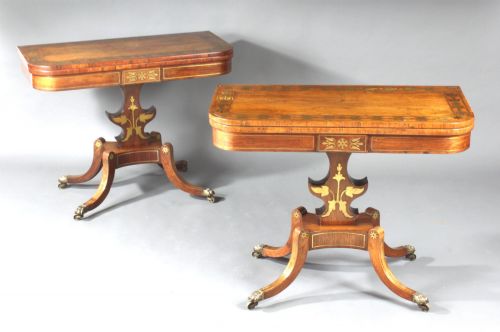
Cabinet makers utilised dense rosewood, frequently paired with secondary timbers like mahogany and accented with satinwood or zebrawood banding. Brass inlay and marquetry appear across Regency examples, catching the light against the dark grain.
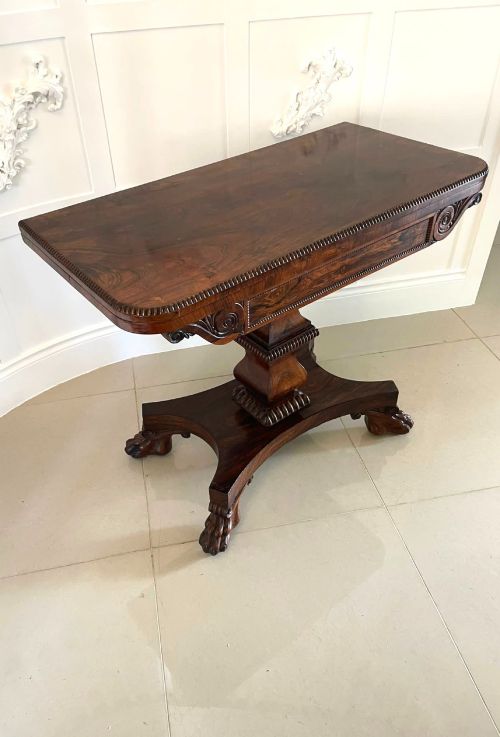
Structural support relies on carved pedestals, lyre bases, dolphin motifs and concave legs. Tops incorporate baize lining for games or inset marble panels in specific overseas variants.
Some nineteenth-century makers carved wooden sea mammals directly into the structural supports, leaving heavy tables resting on the backs of polished dolphins.
Craft and finish
Quality rests in the depth of the rosewood grain and the precision of brass inlay work. Finer pieces display crisp carving on pedestals and smooth mechanisms on fold-over table tops.
Proportion and stability separate standard production from exceptional cabinet work. The crispness of carved dolphin bases or barley twist columns indicates the skill of the original workshop.
George Bullock·Gillows·Robert Strahan·James Mein
The Dark Rosewood Console Table Glossary
- Console table
- A table designed to stand against a wall, frequently secured to the architectural structure. These pieces anchor entrance halls and formal reception rooms.
- Sofa table
- A rectangular table traditionally placed in front of or beside a sofa, featuring drop leaves at either end. They often stand on twin pedestals joined by a stretcher.
- Card table
- A folding table intended for parlour games, featuring a hinged top that opens to reveal a baize-lined playing surface. Many incorporate a hidden well for storage beneath the top.
- Crossbanding
- A border technique where thin strips of veneer are laid perpendicular to the grain of the main surface. This frames the top of a table with contrasting timber figure.
- Lyre base
- A furniture support shaped like the ancient musical instrument, popular in Regency design. It utilises carved timber scrolls to hold the central column.
Dark Rosewood Console Table: Frequently Asked Questions
What is a dark rosewood console table?
A dark rosewood console table is a heavy timber furnishing designed for wall placement, emerging predominantly during the Regency and Victorian periods. These pieces combine rich grain patterns with classical forms such as carved pedestals and brass inlay.
They served formal functions in reception rooms and hallways, often doubling as card or games tables through clever folding mechanisms. The dense tropical hardwood provides durability and a distinct deep colour that defines the style.
How do I date a rosewood table?
Dating relies on examining the structural style, leg configuration and secondary timbers used in the construction. Regency pieces often feature brass inlay and lyre bases, whereas Victorian examples tend towards heavier carved rosewood or triple barley twist columns.
Hardware, hinge types and internal construction methods also offer clues to the exact decade of manufacture. Comparing the decorative motifs against known period designs helps narrow the timeline.
How were these tables used originally?
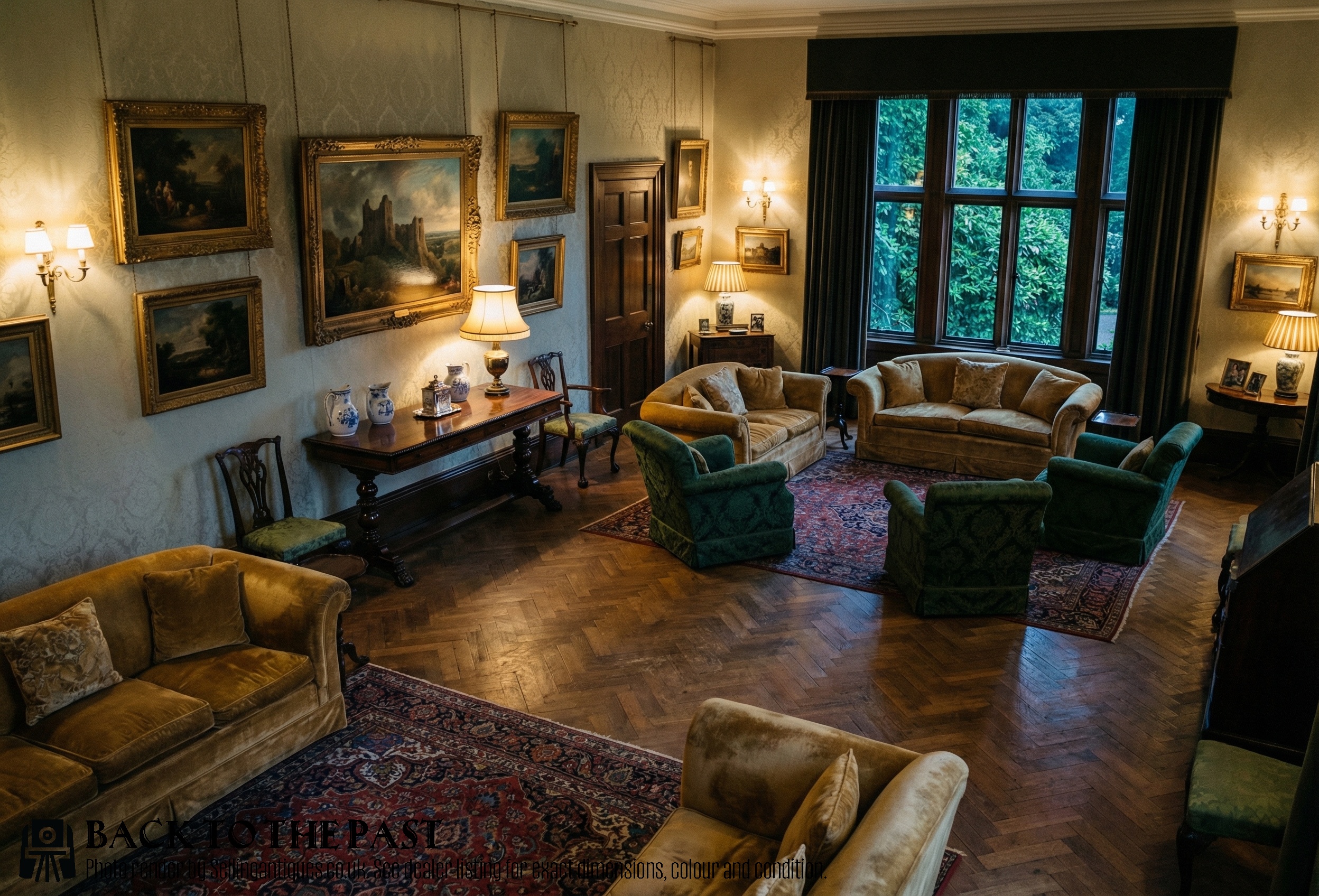
These tables occupied central positions in nineteenth-century drawing rooms, libraries and halls. Console and side variants held decorative lamps and ornaments against the wall.
Fold-over versions transformed easily from side tables into gaming surfaces for cards. Writing and library tables provided stable, dedicated surfaces for correspondence and reading.
How do I care for antique rosewood?
Maintenance requires keeping the timber away from direct sunlight and sudden temperature shifts to prevent the wood from drying out. Routine dusting with a soft, dry cloth preserves the finish without harming the grain.
Applying a traditional wax polish occasionally maintains the lustre of the rosewood surface. Avoid using modern liquid sprays that can penetrate old finishes and soften the timber.