



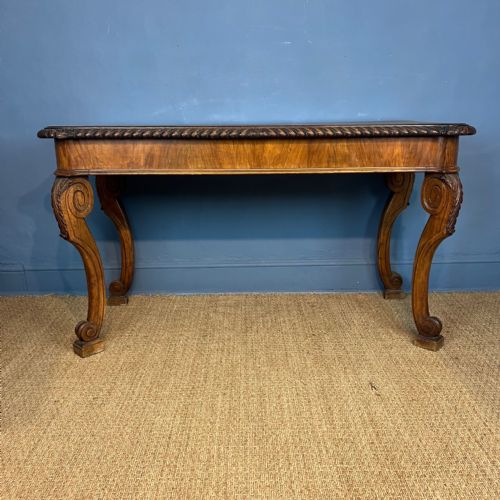


William IV Pier Table
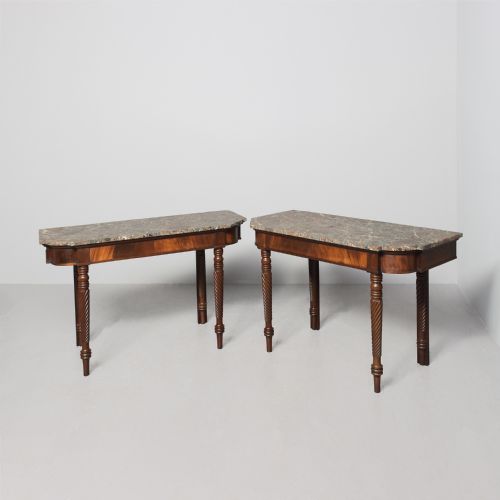
A william iv pier table brings architectural presence to a hallway, pairing rich timber with cool marble.
William IV Pier Table
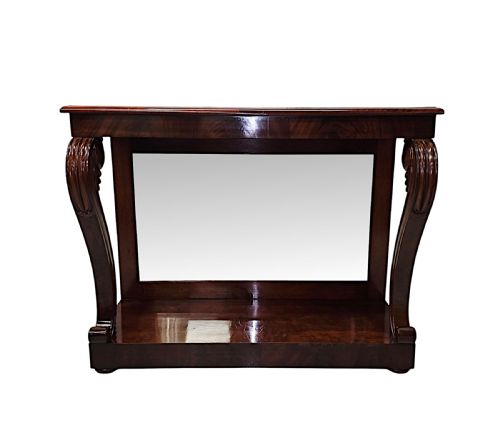
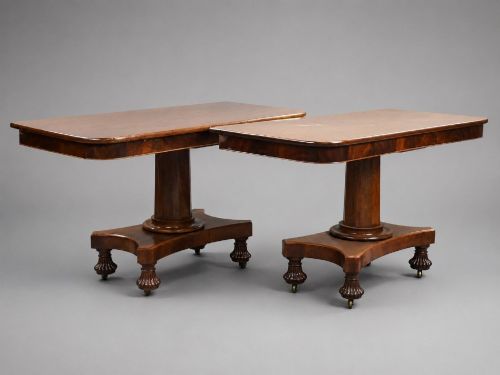
A william iv pier table sits flush against a wall beneath a mirror or window, designed during the nineteenth century to anchor a room's decorative scheme. The pieces seen here span console tables, hall tables, cabinets and occasional tables, often sharing the heavy classical architectural inspiration of the period.
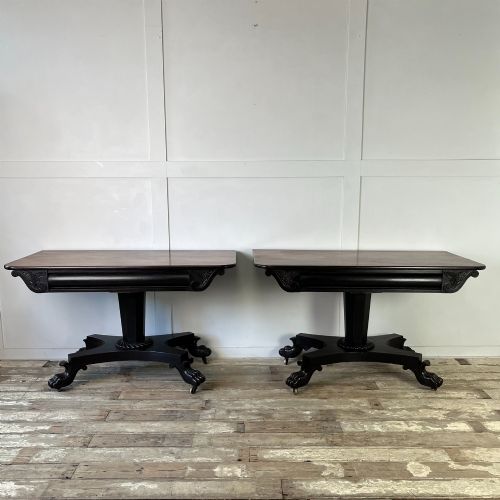
Mahogany and rosewood dominate the selection, frequently paired with marble tops and mirror backs that reflect light into darker corners of a nineteenth-century interior. Walnut, oak, glass and brass also appear, sometimes rendered in pairs or styled with ebonised details and parcel gilt.
While the dominant style is William IV, related pieces on this page draw on Regency, Victorian, Irish Regency and Grand Regency aesthetics. Makers or designers like Gillingtons of Dublin, Freeman and Gillows emerge in specific attributions within the evidence.
How they were made
Cabinetmakers utilised dense timbers such as mahogany and rosewood, often applying flame mahogany veneer over secondary woods to create dramatic figured surfaces. Structural elements balance solid construction with decorative veneers, supported by brass hardware and glass mirror plates.
Heavy marble slabs form the tops of many tables, requiring robust timber frames to bear the weight of the stone. Carved details, ebonised finishes and parcel gilt enhance the architectural lines of these classical console and hall tables.
William IV Pier Table Retail Price Guide 2026
Typical asking prices for william iv pier table among the pieces listed under this phrase on Sellingantiques today, from the lower quarter to the upper quarter. They describe what is for sale here now, not the wider market.
Listings on this site demonstrate that nineteen-century pier and console tables frequently combine mahogany with marble tops and mirror backs.
What varies in quality
Quality rests upon the selection of timber veneers and the crispness of architectural carving. Flame mahogany surfaces with deep, active grain patterns distinguish the finest pieces from plainer iterations.
The integration of materials determines the standing of a table, particularly the weight and polish of the marble top relative to the timber base. Evidence of attribution to workshops like Gillows or Gillingtons elevates certain examples above standard nineteenth-century production.
Gillingtons of Dublin·Gillows·Freeman
The William IV Pier Table Glossary
- Pier table
- A table designed to stand against the pier or wall space between windows. These pieces often feature mirror backs to reflect light.
- Console table
- A table supported against a wall by consoles or legs. They frequently feature marble tops and share characteristics with pier tables.
- Flame mahogany veneer
- A sliced layer of mahogany timber displaying a distinctive flame-like figure. Cabinetmakers utilised this to create decorative visual movement on table surfaces.
- Parcel gilt
- Part gilt, where specific carved details or mouldings are highlighted with gold leaf. This technique contrasts against ebonised or polished timber.
- Break-front
- A piece of furniture whose facade projects forward in sections. This architectural arrangement creates depth and shadow on larger console tables.
William IV Pier Table: Frequently Asked Questions
What is a william iv pier table?
A william iv pier table is a heavy, architectural table designed to stand against a wall, typically beneath a mirror. They frequently feature marble tops and rich mahogany or rosewood timbers.
These tables date from the nineteenth century and reflect classical Regency and Victorian design influences, serving both decorative and functional roles in grand hallways and reception rooms.
How do I style a pier table?
Place your table flat against a wall in a hallway, drawing room or dining space where it can command attention without blocking walkways. Pair it with a wall mirror above to recreate its traditional architectural placement.
Keep decorative objects on the marble top minimal to let the timber grain and stone texture remain the focal point of the arrangement.
Are these tables made of solid mahogany?
Many tables utilise solid mahogany for structural components, while others incorporate flame mahogany veneer over secondary woods. This technique allowed cabinetmakers to display striking grain patterns across broad surfaces.
Marble tops are standard on many examples, resting unattached or secured upon the timber base to provide a durable and cool working surface.
How do I tell william iv from regency?
William IV furniture tends to be heavier and bolder in its classical architectural inspiration than earlier Regency pieces. Carvings are often more robust and proportions heavier.
Overlap in styles is common in nineteenth-century pieces, with makers drawing on both design vocabularies across console and hall tables.