

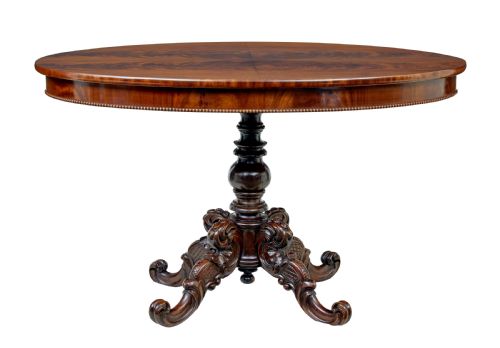


Flame Mahogany Hall Table
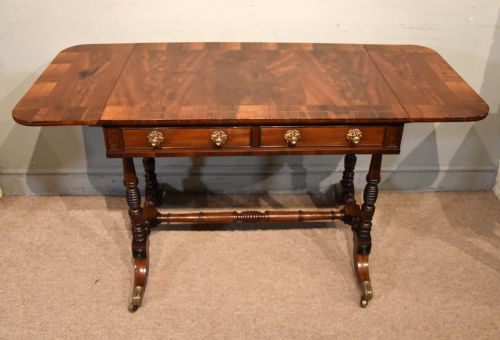
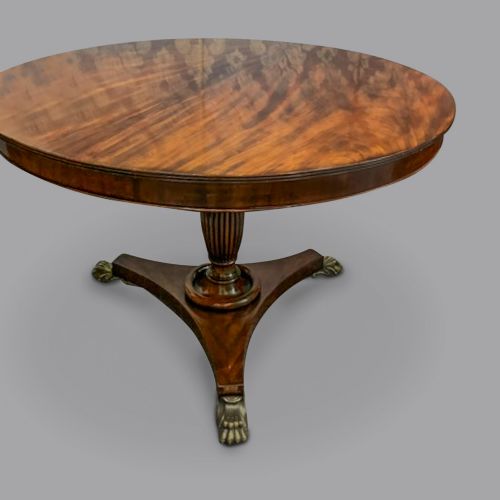
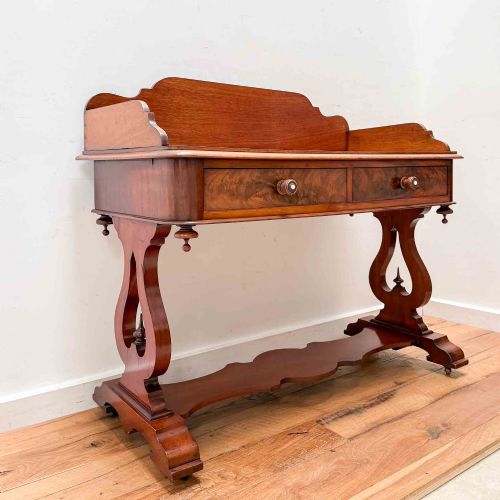
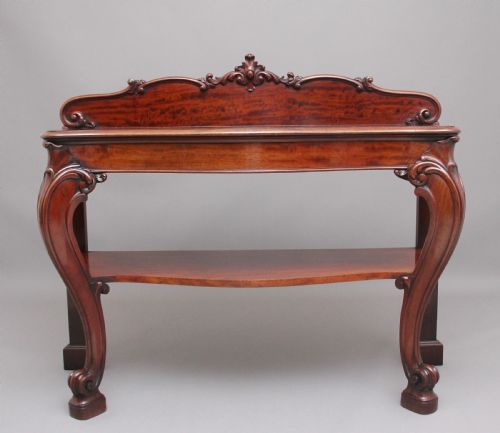
A flame mahogany hall table brings striking figured timber and linear elegance into an entranceway, offering a functional surface shaped by Georgian, Regency and Victorian cabinetmakers.
What these pieces are
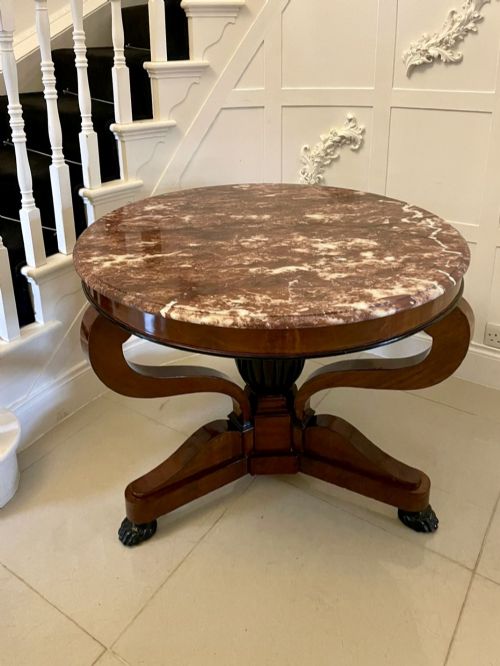
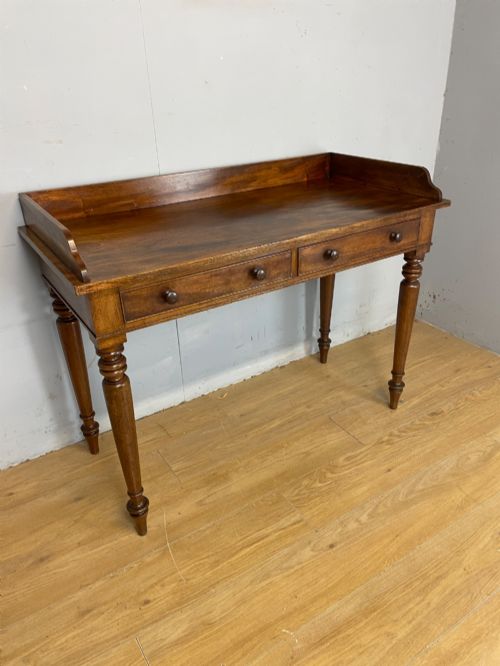
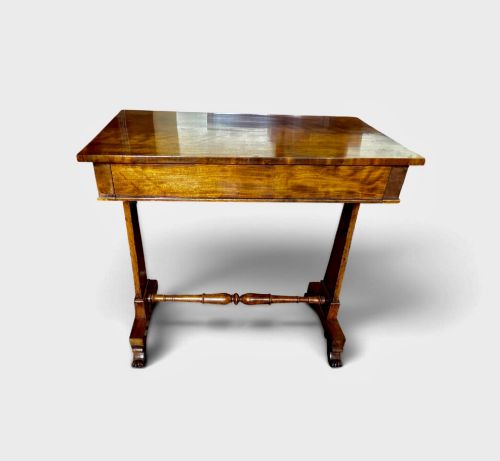
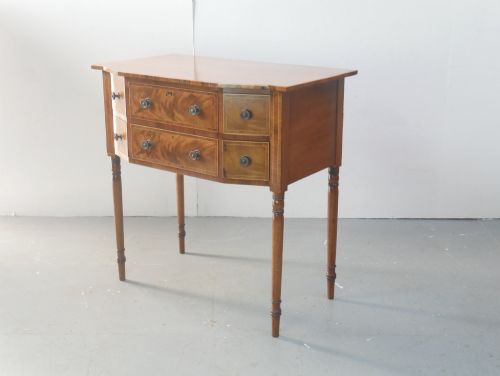
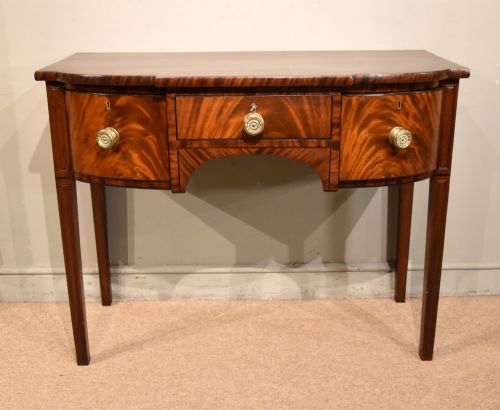
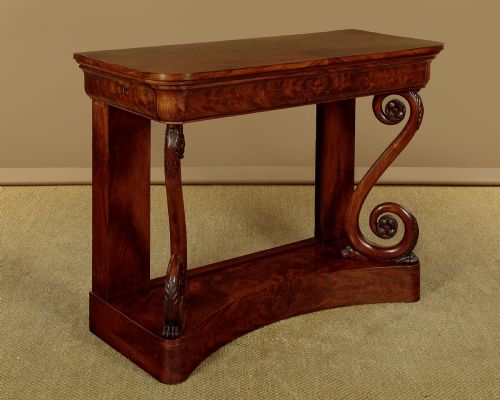
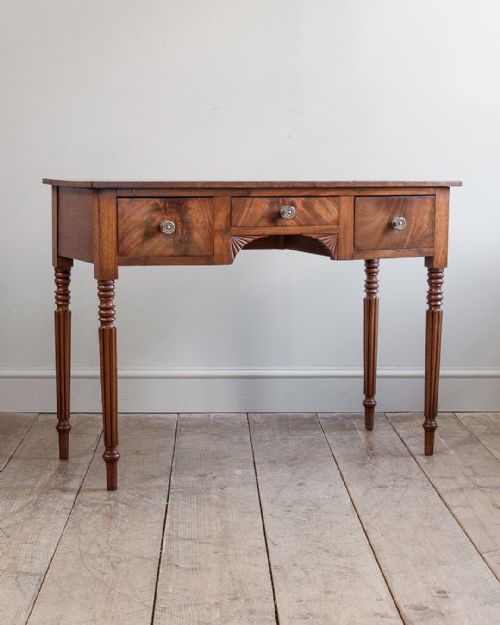
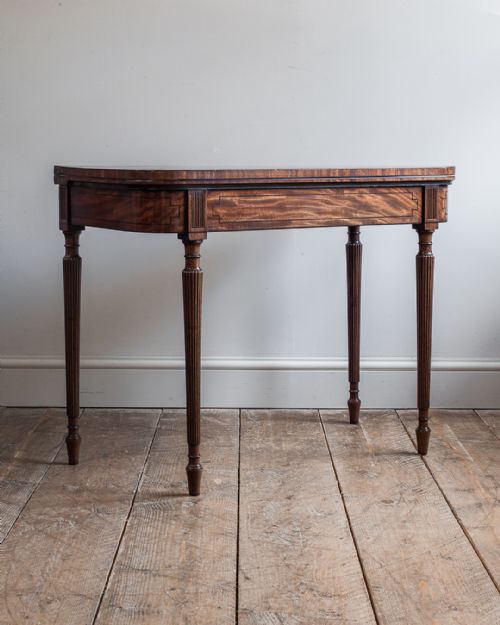
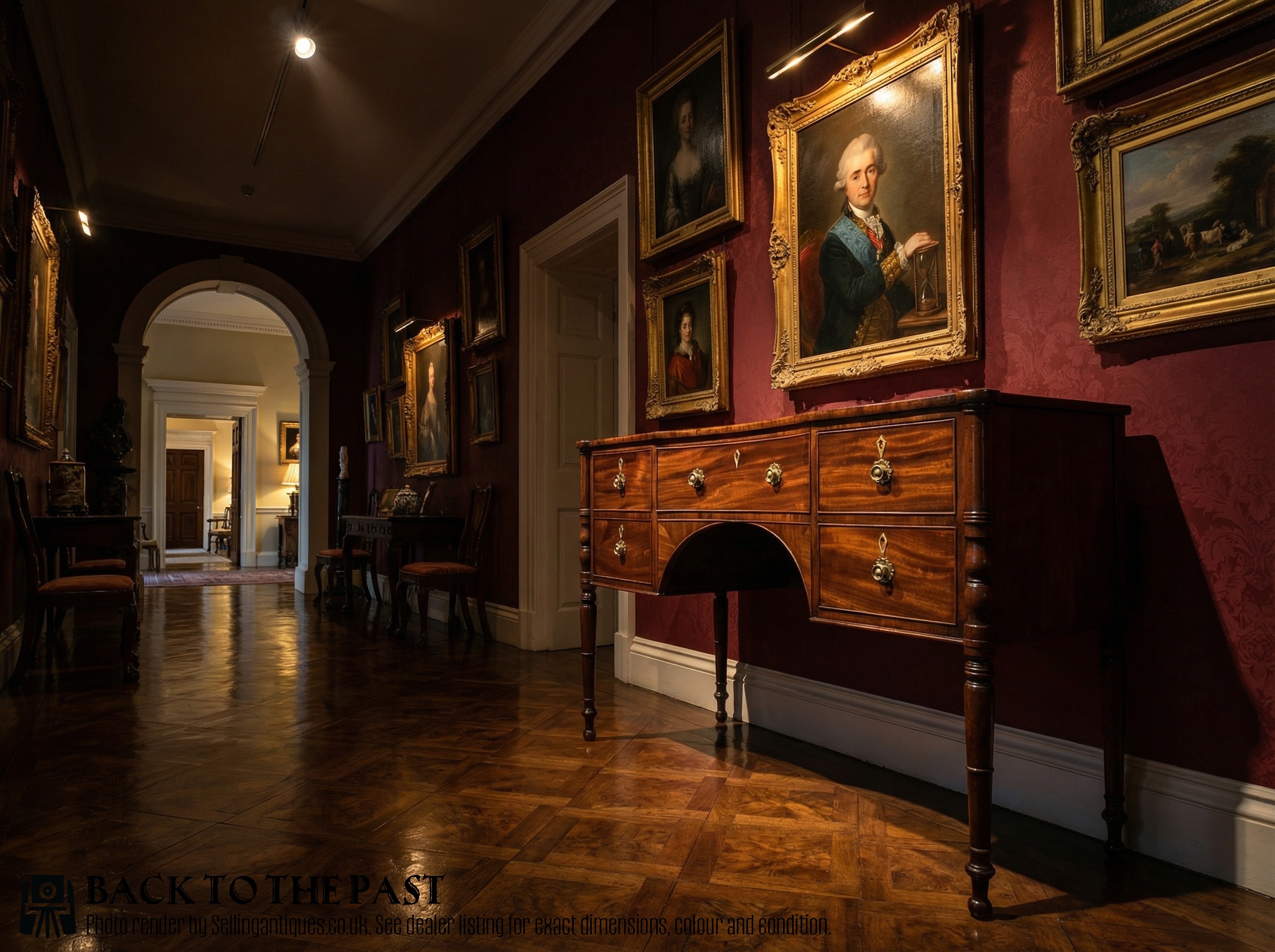
A flame mahogany hall table encompasses console tables, drum tables, occasional side tables and lowboys designed for narrow spaces and entranceways. These pieces frequently appear in Georgian, Regency, William IV, French Empire and Victorian iterations spanning the eighteenth, nineteenth and early twentieth centuries.
The console format dominates the selection, often featuring rectangular or demi-lune configurations intended to sit flush against a wall. Alongside these, drum tables and occasional side tables provide alternative forms built for similar domestic placement.
Makers utilised rich timber figuring to create visual impact upon entering a room, pairing the figured grain with architectural proportions. The resulting tables reflect the evolving tastes of the nineteenth century while retaining utility in the modern interior.
How they were made
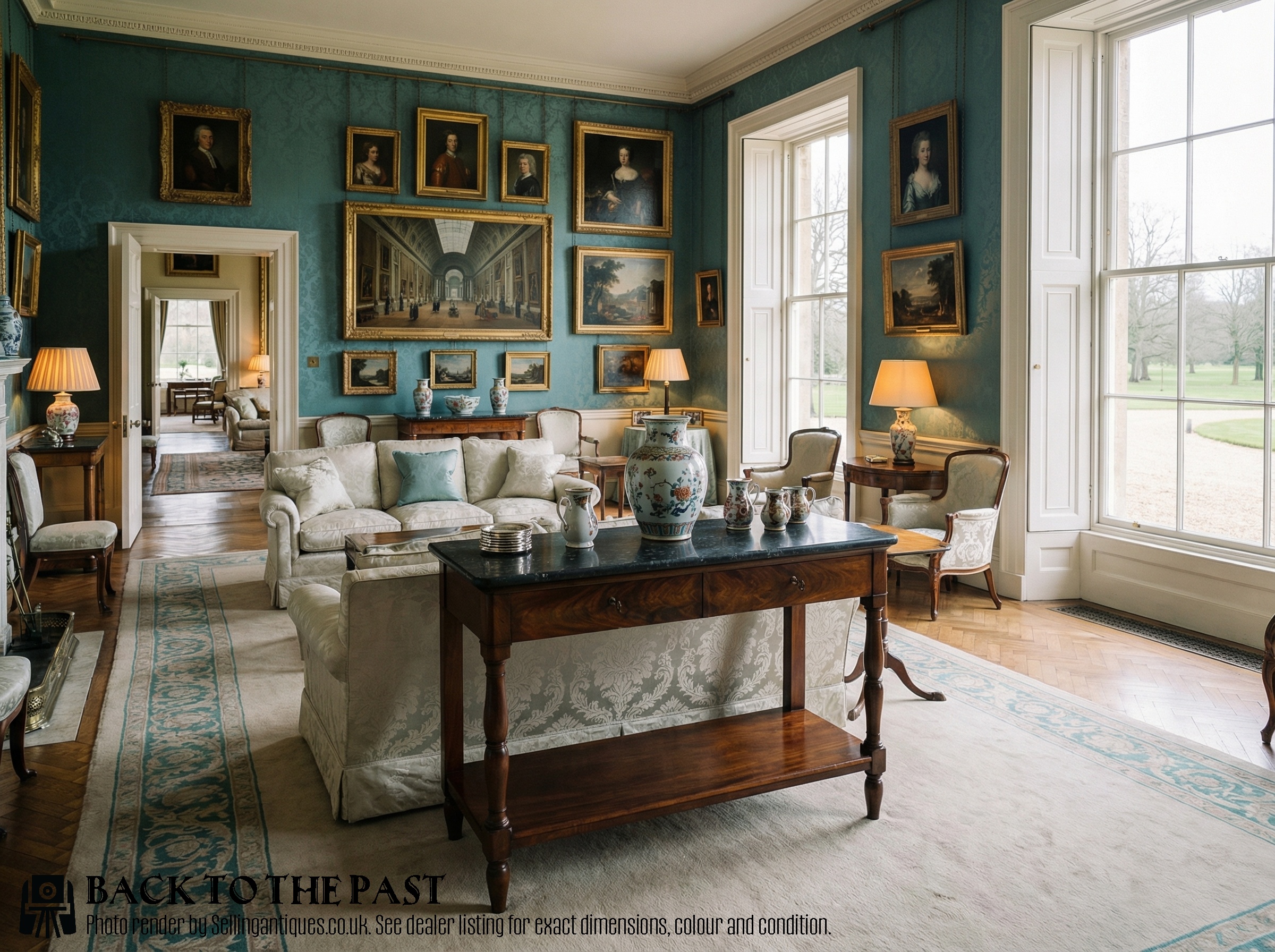
Craftsmen applied flame mahogany veneer over supportive secondary timbers to display the dramatic swirling patterns of the wood. This technique required precise cutting of the veneer from branch forks or specific growth points of the tree.
Makers incorporated contrasting materials such as marble for tops, alongside brass and ormolu mounts or inlay details. Structural elements relied on solid mahogany framing, bone accents and traditional joinery methods suited to console and drum formats.
Retail Price Guide 2026
Typical UK retail prices for flame mahogany hall table, calculated from the Sellingantiques database of over a million retail prices indexed since 2003. This retail price guide relies exclusively on Sellingantiques data; no external sources or auction records are used, so the figures do not describe the wider market.
Listings span the Georgian, Regency, William IV and Victorian eras, alongside French Empire styles.
What varies in quality
The visual strength and matching of the flame mahogany veneer dictate the primary tier of distinction across these tables. Finer examples display symmetrical grain patterns that flow harmoniously across the top and drawer fronts.
The integration of secondary materials such as white marble tops, precise brass inlay or cast ormolu mounts elevates the sophistication of the piece. Masterful joinery and well-proportioned architectural forms separate standard production items from superior cabinetwork.
Freeman
The Flame Mahogany Hall Table Glossary
- Flame mahogany veneer
- A thin slice of wood cut from the fork of a mahogany tree to produce a distinctive, flame-like pattern. This figured timber forms the primary decorative surface on these tables.
- Console table
- A table designed to stand against a wall, frequently supported by brackets or legs at the front. These pieces serve as narrow surface fixtures in hallways and reception rooms.
- Drum table
- A circular table with a deep top containing drawers, resembling the shape of a drum. They stand on a central pedestal base.
- Ormolu
- Gilded bronze ornamentation applied to furniture mounts and decorative details. The technique imparts a rich metallic finish popular in French Empire and Regency designs.
- Demi-lune
- Half-moon or semicircular in shape. Hall tables often utilise this profile to fit tightly against entrance walls.
Frequently Asked Questions
What is a flame mahogany hall table?
A flame mahogany hall table is a narrow entranceway or side table surfaced with figured timber veneer displaying dramatic, flame-like grain patterns.
These pieces typically take the form of console tables, drum tables or side tables dating from the Georgian, Regency and Victorian periods.
Where do you put a hall table?
Hall tables are traditionally positioned in entranceways, corridors or reception rooms against a wall where floor space is restricted.
Their narrow depth allows them to sit comfortably in passageways while providing a surface for lamps, correspondence or decorative objects.
How do I identify a Regency table?
Regency tables are characterised by classical architectural influences, crisp proportions and often incorporate brass inlay or ormolu mounts.
They reflect the design vocabulary of the early nineteenth century, drawing inspiration from ancient Roman and Greek forms.
What is a console table used for?
Console tables were historically designed to stand flat against a wall, sometimes secured with wall brackets for stability.
In modern interiors, they function as display surfaces in hallways or living spaces, holding decorative items or lighting.