
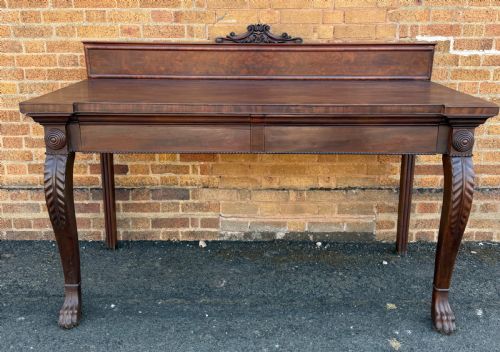
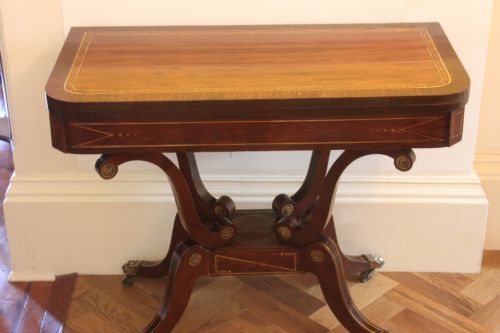
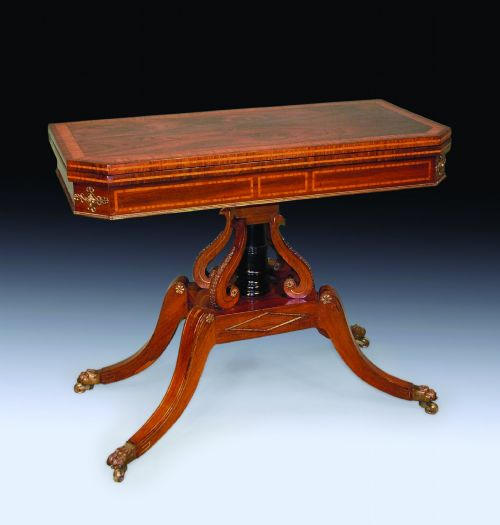
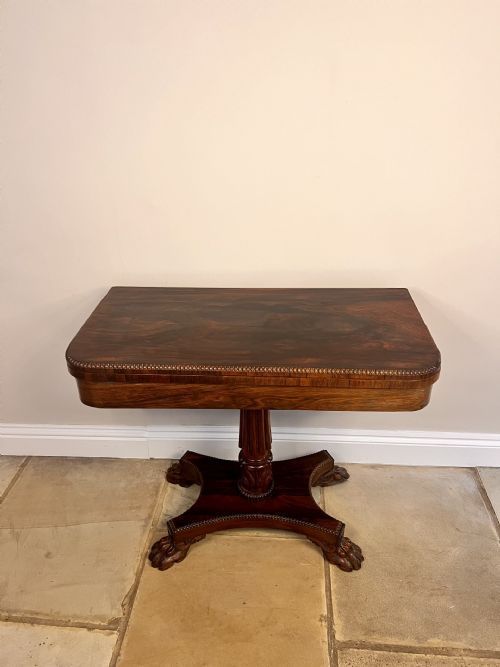

Regency Period Console Table
A regency period console table brings architectural confidence and polished timber to a room, offering a structured surface designed to anchor a wall.

Regency Period Console Table
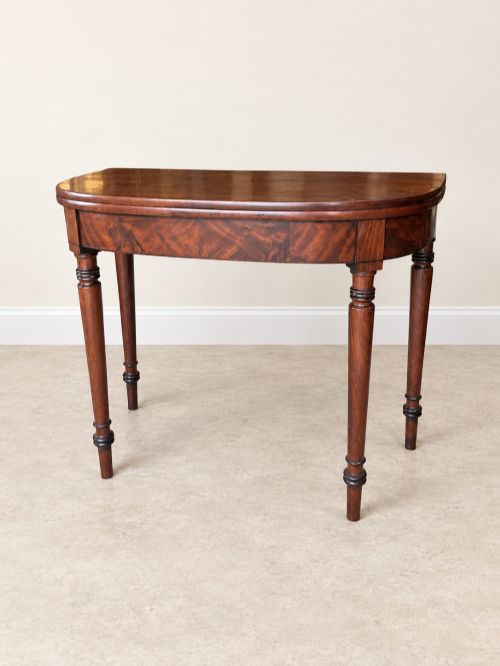
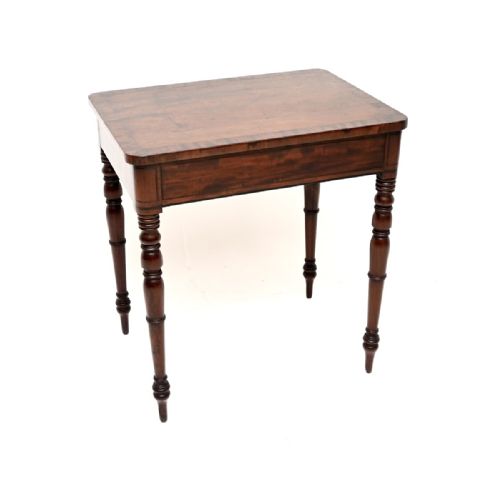
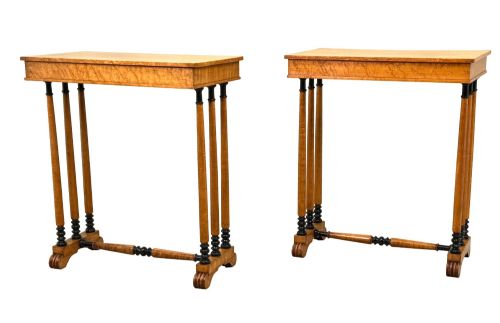
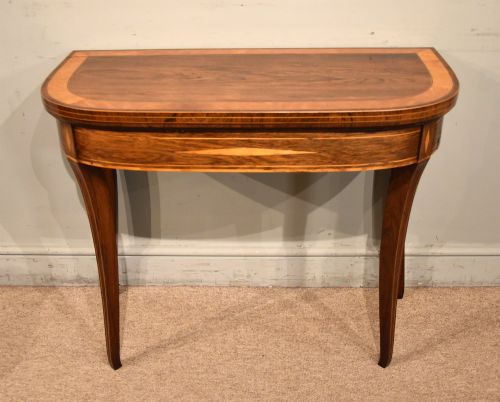
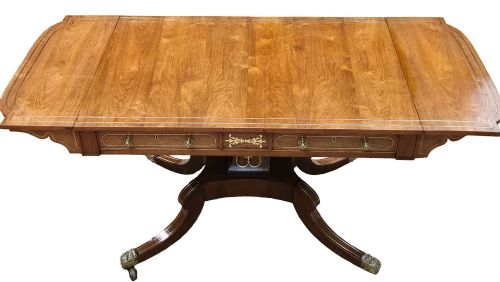
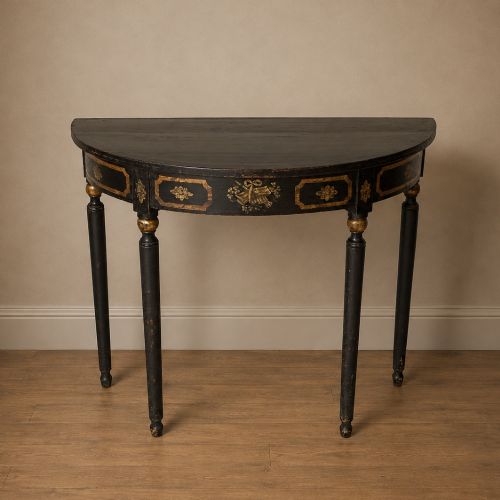
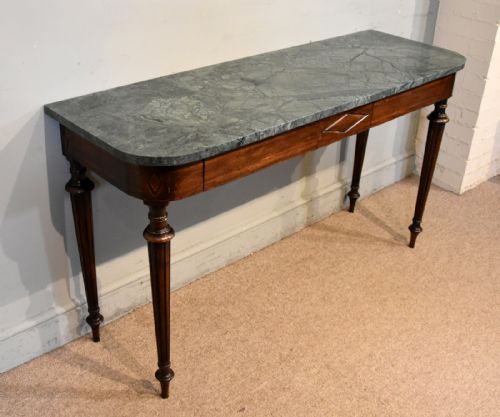
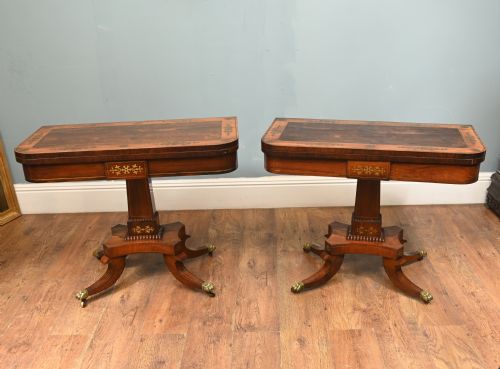
When you search for a regency period console table, you are looking at formal tables from the early nineteenth century designed to stand against walls, alongside related serving tables, card tables, and sofa tables. The examples you meet on this page span the Regency, George III, William IV, and broader nineteenth century periods, drawing on styles from classical English cabinet-making to French Empire and Irish Regency designs.
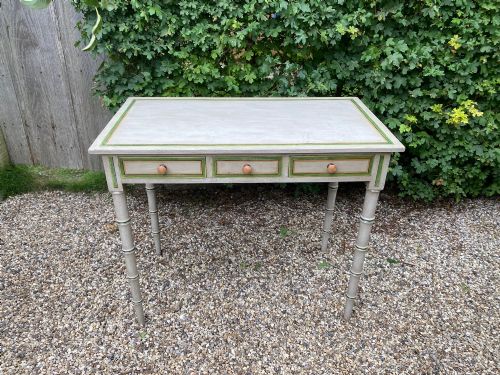
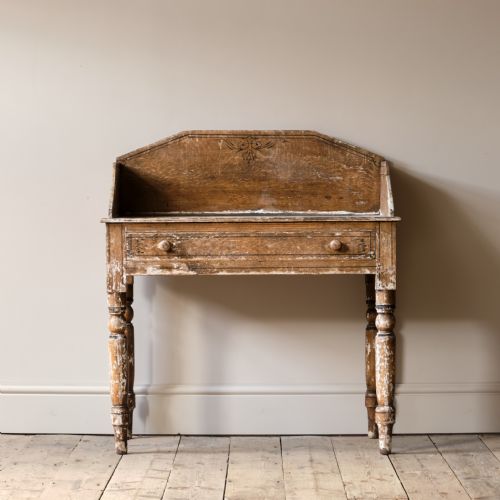
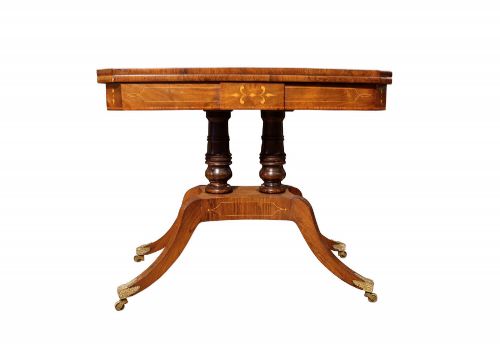
The forms vary from simple D-shaped side tables and pine washstands to grander marble-topped console tables fitted with mirror-backs, carved dolphin bases, or scroll pedestal supports. Mahogany and rosewood dominate the selection, often enriched with satinwood, boxwood, and brass inlay, while painted and parcel gilt finishes appear on demi-lune and faux bamboo pieces.
Materials and Construction
Cabinet-makers of the period relied heavily on solid and veneered mahogany and rosewood, applying flame mahogany veneers to create rich, figured surfaces across tabletops. Decorative contrast was achieved through inlay using satinwood, boxwood, and brass stringing or brass mounts, while finer pieces integrated white marble tops and inset mirror-backs.
Regency Period Console Table Retail Price Guide 2026
Typical asking prices for regency period console table among the pieces listed under this phrase on Sellingantiques today, from the lower quarter to the upper quarter. They describe what is for sale here now, not the wider market.
Listings on this site demonstrate that mahogany and rosewood are the dominant timbers used across these tables.
What Varies in Quality
Quality in these tables rests on the selection of timber veneers and the precision of the brass inlay work. Pieces featuring highly figured rosewood or flame mahogany display a depth of grain that elevates the visual weight of the furniture.
The sophistication of the carving, from scroll pedestals to carved dolphin bases, distinguishes standard utilitarian tables from ambitious pieces attributed to prominent makers. Integrated materials such as heavy marble tops and original brass sabots further separate the output of standard workshops from higher-tier production.
Jean-Joseph Chapuis·Mack Williams And Gibton
The Regency Period Console Table Glossary
- Console table
- A table designed to stand against a wall, frequently secured to it or supported by front legs and scroll brackets.
- Sofa table
- A rectangular freestanding table traditionally placed in front of or beside a sofa, often featuring drop leaves and end supports.
- Card table
- A folding table designed for games, typically featuring a hinged top that opens to reveal a baize-lined surface.
- Ormolu
- Gilded bronze used for mounts and decorative accents on furniture, prominent in French Empire and high-status Regency design.
- Parcel gilt
- Wood or plaster partially gilded with gold leaf to highlight carved details, mouldings, or architectural elements.
Regency Period Console Table: Frequently Asked Questions
How were console tables used originally?
Console tables served primarily as decorative and formal furniture placed against walls in hallways, drawing rooms, and dining parlours. They often held decorative objects, lamps, or urns to complete the symmetry of a room's interior scheme.
In dining and entertaining contexts, related forms like serving tables and card tables provided functional surfaces for meals and evening games. Their placement against walls maximised floor space while displaying the refined timber and brass inlay characteristic of the era.
How do I style a console table today?
Position your table against a clear wall in a hallway, living room, or dining space to create a strong architectural focal point. You can complement the surface with a mirror hung above, echoing the historic pairing of console tables with mirror-backs.
Keep the arrangement balanced by placing lamps or ceramics on top, allowing the figured mahogany or rosewood grain to remain visible. The shallow depth of these tables makes them particularly useful in narrow circulation spaces where deeper furniture would obstruct movement.
How can I tell Regency pieces from later styles?
Regency furniture typically exhibits classical architectural restraint, drawing inspiration from ancient Greek, Roman, and Egyptian forms. Look for characteristic elements such as brass inlay, lyre ends, bold mahogany or rosewood grains, and carved paw or scroll feet.
Later Victorian interpretations often introduce heavier proportions or mixed revival motifs that differ from the balanced geometry of the early nineteenth century. Comparing timber patination, construction joints, and hardware helps confirm the period of manufacture.