


Flame Mahogany Tea Table
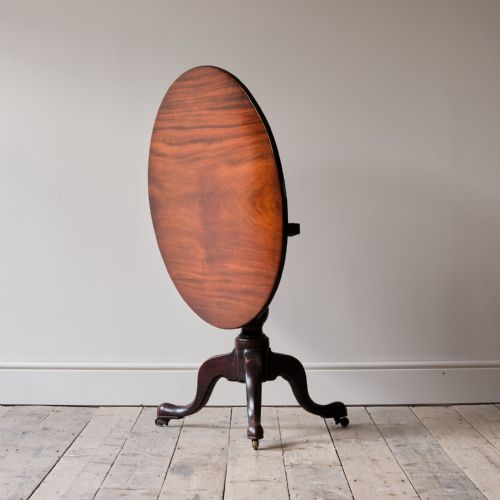
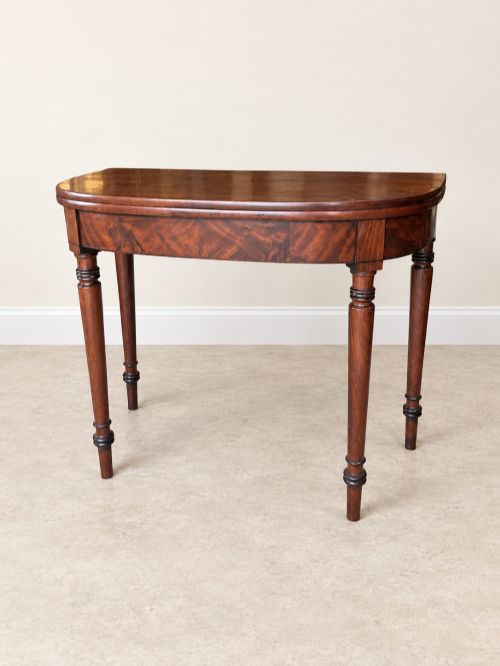
A flame mahogany tea table brings dramatic grain patterns and refined cabinet-making into a room, spanning periods from the Georgian era to the Victorian age.
Flame Mahogany Tea Table
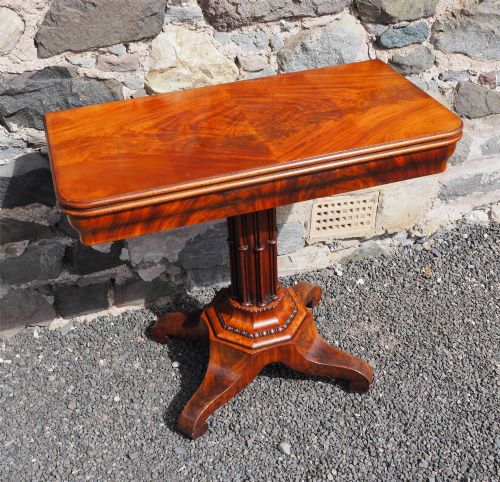
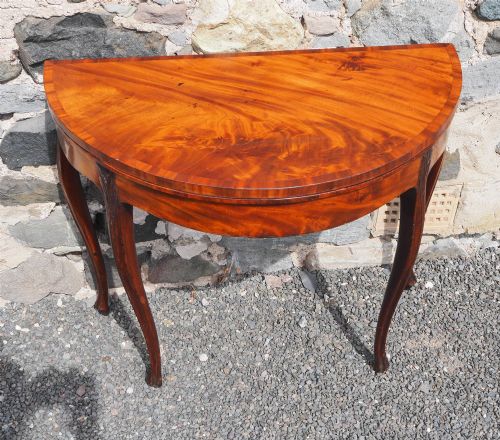
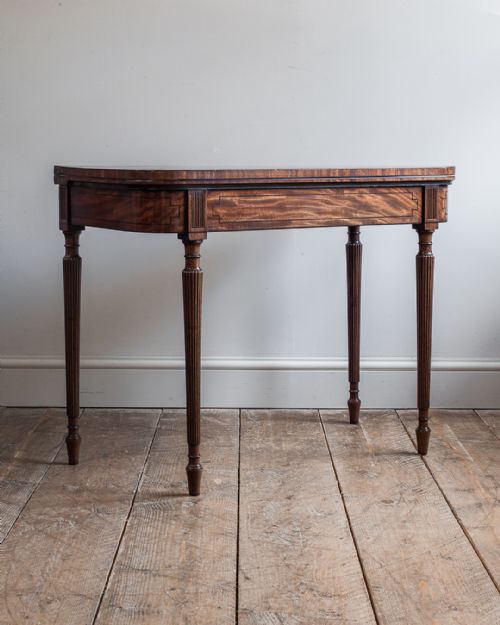
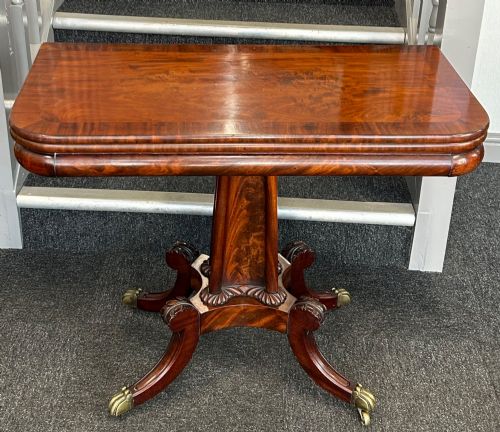
A flame mahogany tea table is a versatile surface designed for entertaining, appearing most frequently in forms that feature folding tops or pedestals from the Georgian, Regency, and William IV periods.
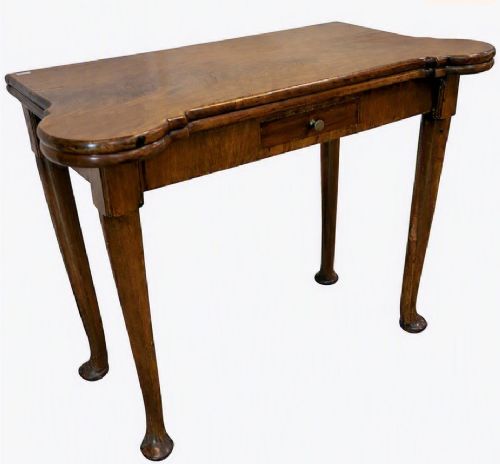
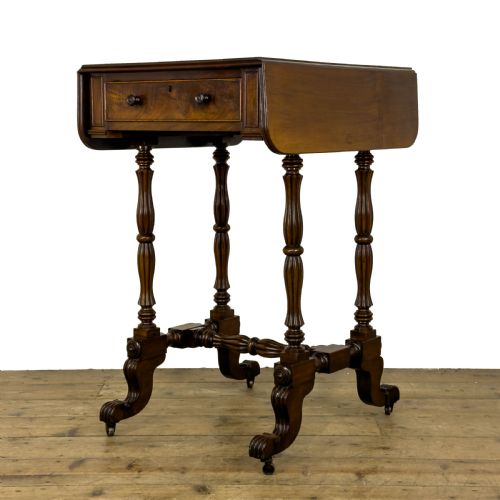
The pieces listed on this page include D-shaped tea tables, fold-over card and games tables, and occasional pieces that showcase the distinctive figuring characteristic of high-status English furniture production.
Makers and workshops of the eighteenth and nineteenth centuries utilised these richly patterned timbers to create striking console and side tables intended for formal reception rooms.
Materials and Construction
Cabinet-makers applied thin slices of flame mahogany veneer over solid secondary woods, selecting sections from the fork of the tree where the grain twists to create dramatic, flame-like patterns.
Construction frequently incorporated brass hardware, boxwood stringing details, and solid mahogany supports, often resting on pedestals with carved or claw feet.
Flame Mahogany Tea Table Retail Price Guide 2026
Typical asking prices for flame mahogany tea table among the pieces listed under this phrase on Sellingantiques today, from the lower quarter to the upper quarter. They describe what is for sale here now, not the wider market.
Some nineteenth-century teapoys doubled as miniature cellarets, keeping tea leaves secure under lock and key away from sticky-fingered servants.
Assessing Craftsmanship
Quality rests on the selection and matching of the veneer, where symmetrical figuring across a fold-over top demonstrates superior timber management by the maker.
The crispness of carved details, the stability of the pedestal or leg joints, and the precision with which the leaves align when closed distinguish the finest examples.
Gillows
The Flame Mahogany Tea Table Glossary
- Flame mahogany
- A veneer cut from the fork of the mahogany tree, prized for its swirling, fire-like grain pattern. It appears on the principal surfaces of formal nineteenth-century tables.
- Fold-over table
- A dual-purpose piece with a hinged top that opens to double the surface area for tea or card games. This mechanism is standard on Regency and Georgian examples.
- Teapoy
- A small stand or chest designed to hold canisters of tea, frequently supported on a central pillar and resting on a platform base. Examples often feature elaborate wood veneers.
- Pedestal
- A central column support resting on a plinth or claw feet, commonly utilised in Regency and William IV designs to hold heavy mahogany tops.
- Boxwood
- A dense, pale wood employed for contrasting inlay work and stringing lines on table edges and friezes.
Flame Mahogany Tea Table: Frequently Asked Questions
How do I date a flame mahogany tea table?
Dating relies on observing structural characteristics, timber selection, and decorative motifs associated with specific periods such as the Regency or William IV eras. Cabinet-making techniques and leg styles change distinctly between the eighteenth and nineteenth centuries.
Examining the secondary woods and the style of the pedestal or support framework helps narrow down the decade of production. Comparison with documented pieces from workshops like Gillows provides further chronological clarity.
How were tea tables used historically?
These tables stood against drawing room walls until tea service or evening card games commenced, at which point the hinged top folded open to create a stable surface. They functioned as social centres for hosting guests in formal domestic spaces.
The adaptability of the fold-over mechanism allowed households to maximise floor space during the day while maintaining elegant furnishings for evening gatherings.
How do I care for flame mahogany veneer?
Maintenance requires keeping the timber away from direct sunlight and maintaining stable humidity levels to protect the delicate veneer layers from splitting or lifting. Gentle dusting with a dry cloth preserves the polished surface.
Avoid placing hot cups or moisture directly onto the polished wood, as nineteenth-century finishes react poorly to extreme temperatures and damp conditions.
What is the difference between a tea table and a card table?
While both share fold-over top constructions, tea tables were primarily designed for serving tea and displaying porcelain, whereas card tables often featured lined playing surfaces and corner recesses for counters.
Many surviving examples from the Georgian and Regency periods served interchangeable functions depending on the needs of the household during social events.