


Rich Mahogany Tea Table
A rich mahogany tea table brings warm timber tones and Georgian elegance to a room, serving as both a practical surface and a period focal point.
Rich Mahogany Tea Table
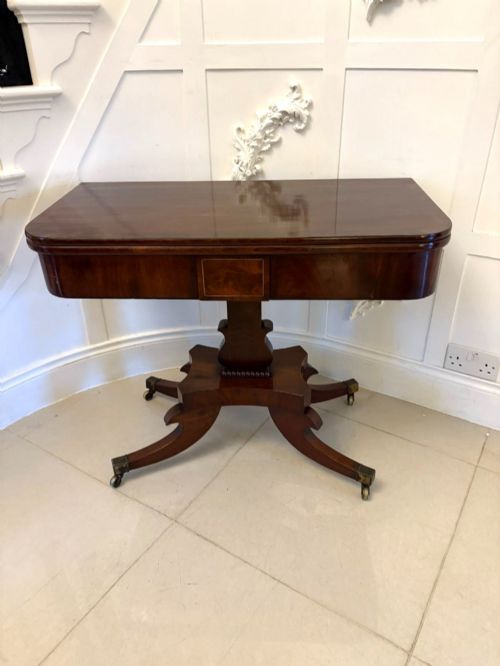
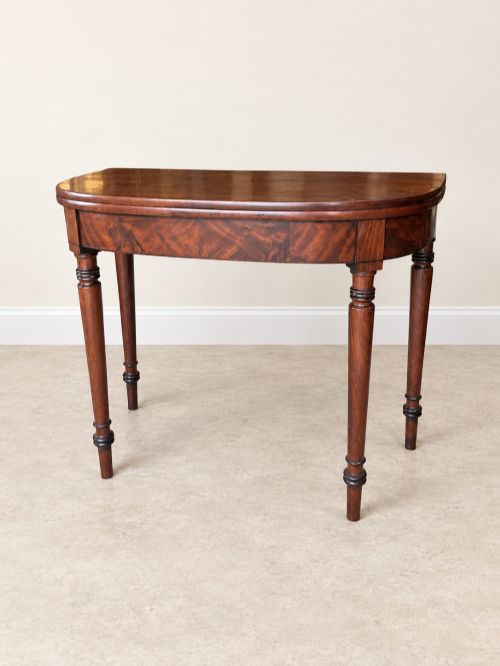
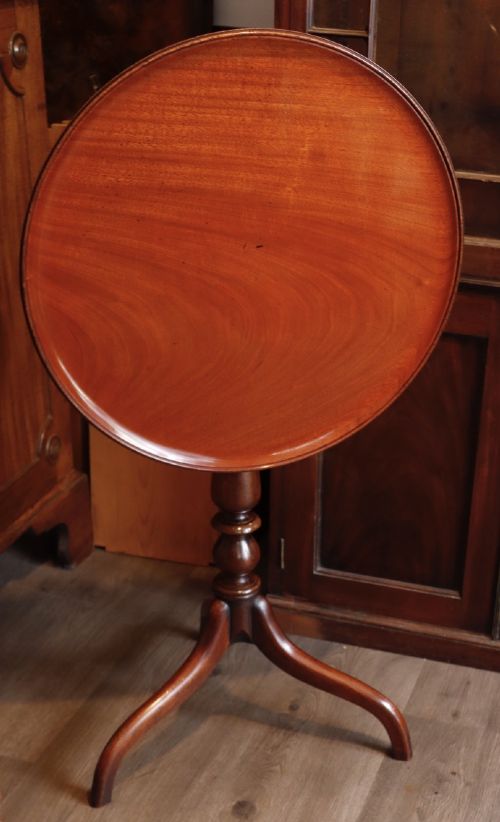
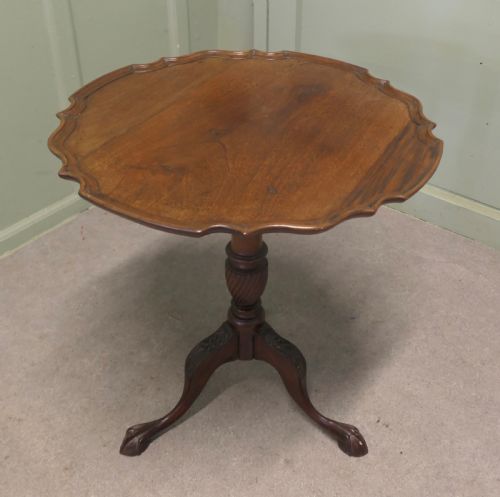
Buyers browsing this selection will frequently encounter classic Georgian and George III examples alongside later Victorian and Edwardian interpretations. The forms vary from tilt-top birdcage tables to demi-lune card and tea combinations, reflecting shifting domestic habits from the eighteenth century onward.
Materials and construction
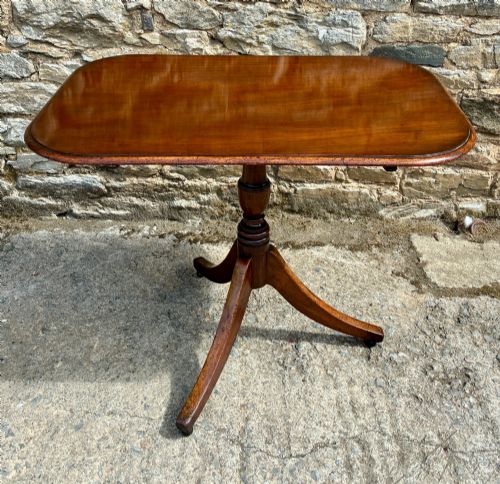
Cabinetmakers built these tables using dense mahogany timber, often selecting flame mahogany veneer for figured tops and incorporating secondary woods for interior framing. Detailed work frequently involved satinwood inlay and boxwood stringing to create sharp contrasts along the borders.
Structural engineering relied on stable pivot mechanisms, birdcage actions, and folding hinges that allowed the tops to store flat against walls or tilt upright when not in use. Turning and joinery techniques produced sturdy tripod legs, slender spider legs, or robust pillar supports.
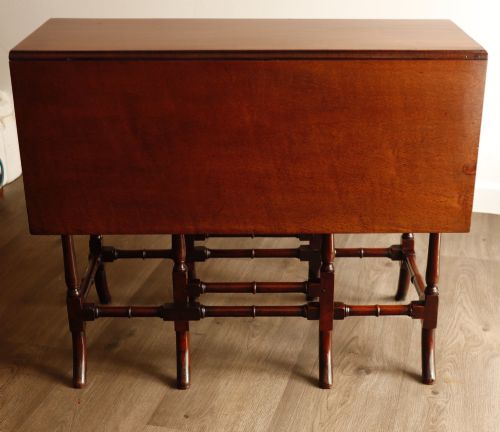
Some tables feature spider legs so slender they appear ready to scuttle away when tea is served.
Assessing quality and finish
The distinction between ordinary and superior pieces rests in the depth of the timber's grain and the preservation of its natural patina. Finely figured flame mahogany veneer combined with crisp satinwood inlay demonstrates a higher level of initial craftsmanship than plain, unadorned surfaces.
Proportion and structural integrity dictate long-term desirability, where well-balanced tripod bases and tight hinge mechanisms maintain their original function without sagging. The subtlety of the polished finish and the retention of original brass hardware further elevate the standing of a piece.
The Rich Mahogany Tea Table Glossary
- Tilt-top table
- A table with a hinged top that can be rotated to a vertical position when not in use. This mechanism saved valuable floor space in historical drawing rooms.
- Flame mahogany veneer
- A sliced timber veneer showing a characteristic flamed or feathered grain pattern. It was applied to primary surfaces to create dramatic visual movement.
- Birdcage
- A rotating wooden block mechanism beneath a table top that allows the surface to both tilt and revolve. It represents a more complex and desirable form of tripod table construction.
- Demi-lune
- A half-moon shape commonly found in card and tea tables designed to stand flat against a wall. These surfaces often feature delicate stringing or crossbanding along the curved edge.
- Spider leg
- A table featuring exceptionally slender turned legs connected by delicate stretchers. This fragile-looking underframe provides surprising stability for light occasional use.
Rich Mahogany Tea Table: Frequently Asked Questions
How do I use a tea table today?
These tables function well as accent surfaces in living areas or as display stands for lamps and decorative objects. Their traditional proportions allow them to fit easily beside sofas or in hallways.
Fold-over and drop-leaf versions offer flexibility when space is limited, letting you expand the surface area only when needed. Placing them away from direct heat sources helps protect the polished mahogany finish from drying out.
What is a birdcage mechanism?
The birdcage is an ingenious wooden framework fitted beneath the top of certain tripod tables. It permits the surface to tilt flat and rotate independently on its central column.
This construction feature is typically found on finer examples from the eighteenth century. Collectors prize the mechanism for both its mechanical ingenuity and its smooth operation.
How do I distinguish George III from Victorian pieces?
George III pieces generally display lighter, more restrained proportions with subtle carving and refined satinwood stringing. The timber selection often emphasises rich figuring paired with elegant tapered legs.
Victorian iterations tend to be heavier in build, utilising darker finishes and more robust turning. Examining the interior secondary woods and overall heft usually clarifies the period of manufacture.
Can I use a fold-over table for games?
Many tables designed for tea served a dual purpose as gaming surfaces with lined interiors. The hinged top unfolds to reveal a baize or polished wood playing area suitable for cards.
While sturdy enough for occasional use, modern placement should avoid heavy loads on the unsupported leaf edges. Careful handling of the pivot hinges ensures the mechanism remains undamaged over time.