
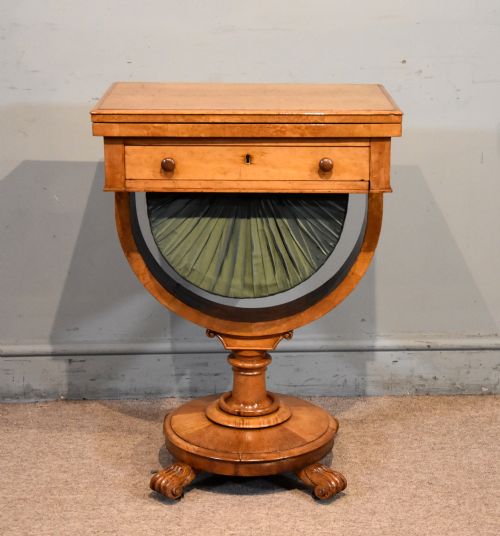

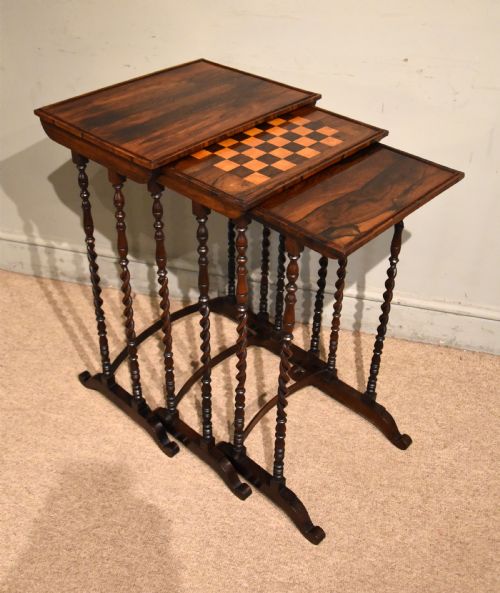


Regency Period Gaming Table
A regency period gaming table brings ingenious folding tops and rich rosewood or mahogany into the drawing room.
Regency Period Gaming Table
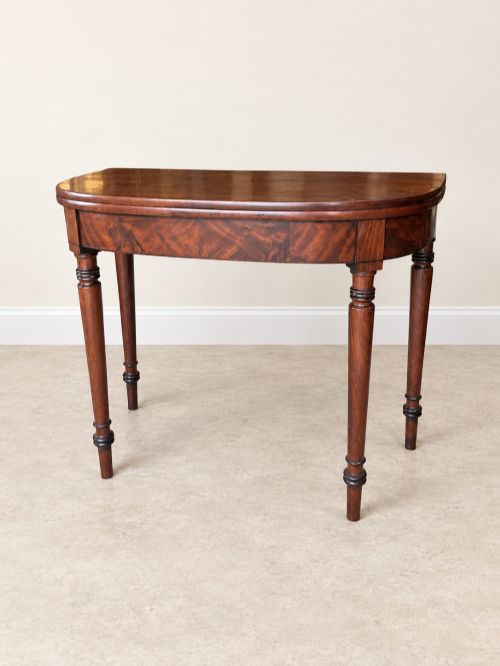
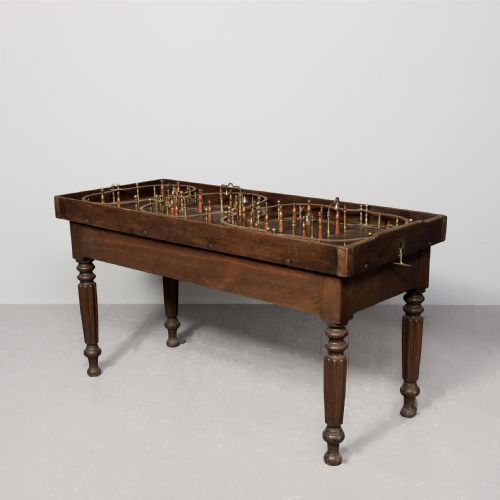
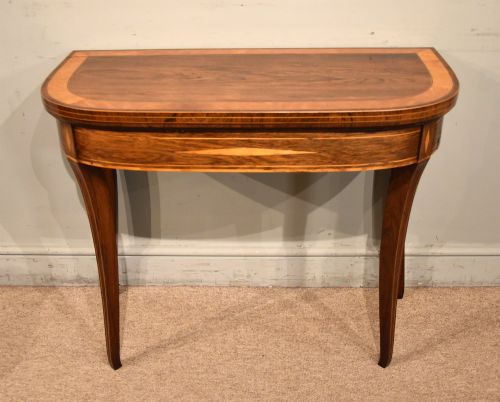
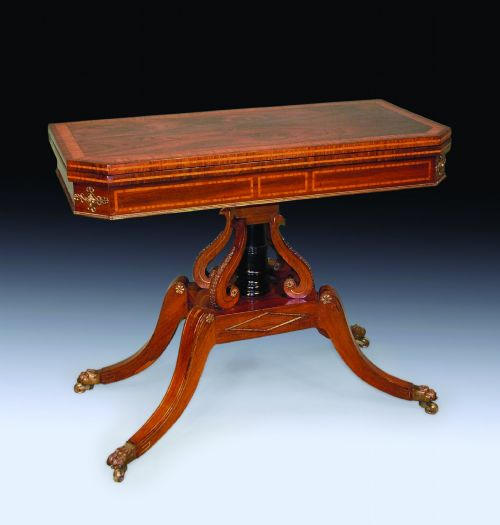
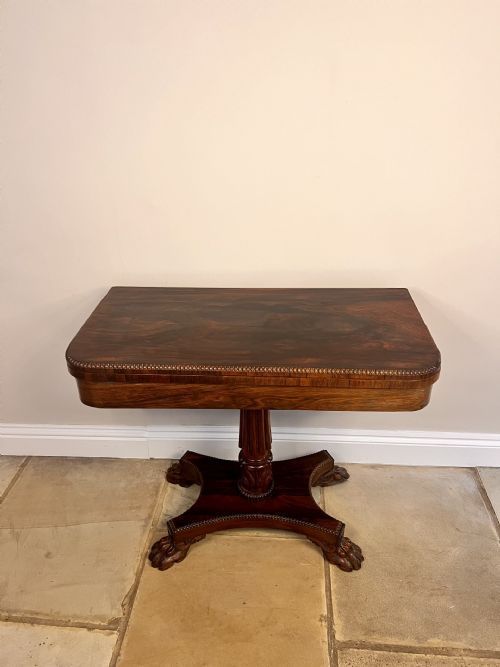
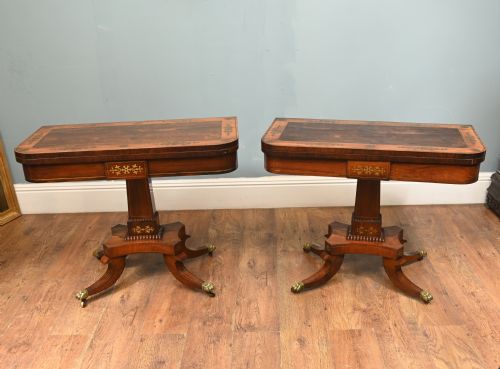
A regency period gaming table typically appears as a fold-over card table, tea table, or occasional table dating from the early nineteenth century. These pieces span the Regency, George IV, and William IV styles, drawing on Georgian traditions while introducing bolder pedestals and pillar supports.
Buyers most frequently encounter rosewood and mahogany examples featuring clever swivel tops that conceal shallow storage wells for counters and cards. D-shaped formats, octagonal tripod tables with inlaid chequer-boards, and nests of tables also feature prominently across the inventory.
Origins trace through English workshops of the nineteenth century, occasionally reaching Scottish makers such as William Trotter. The forms serve dual purposes, functioning as compact console tables against a wall before opening to accommodate evening entertainment.
Materials and Technique
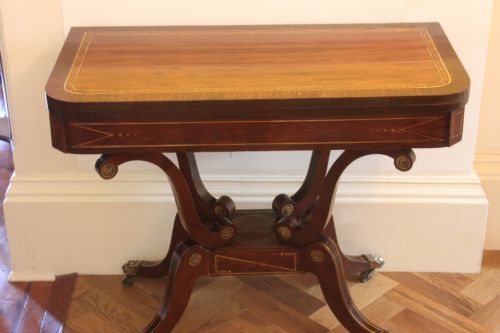
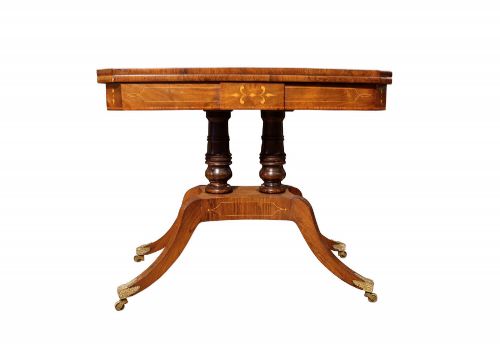
Cabinetmakers utilised dense timbers like rosewood and mahogany, frequently applying flame mahogany veneer over secondary woods to achieve deep surface figure. Brass inlay, delicate stringing in boxwood and satinwood, and gilded bronze mounts accent the primary structures.
Pedestal bases rely on architectural forms, incorporating carved scroll work, dolphin motifs, and lyre supports raised on brass castors and sabots. Tops are engineered with clever hinge mechanisms and swivel actions to support the weight of the fold-over leaf safely.
Listings feature rosewood, mahogany, maple, and satinwood alongside brass inlay and penwork decoration.
Evaluating the Pieces
Superior examples display crispness in carved wooden details like dolphin bases or scroll pedestals, alongside precise brass stringing and inlay work that remains entirely flush with the surrounding timber. The selection of figured rosewood or flame mahogany veneer dictates the visual depth of the top surface.
Construction integrity determines daily utility, particularly in the smoothness of the swivel mechanism and the alignment of the fold-over leaves when open. Finer tables maintain structural stability in their pillar supports without wobble, preserving the original brass castors and sabots.
William Trotter
The Regency Period Gaming Table Glossary
- Fold-over
- A table top hinged to double in surface area when opened. This design allows a console to transform into a functional playing surface.
- Sabot
- A metal sleeve fitted to the foot of a table leg. Brass versions protect the wood and often house castors underneath.
- Stringing
- Thin inlaid lines of contrasting timber used for decoration. Boxwood and satinwood provide bright linear contrast against dark mahogany.
- Ebonised
- Wood stained or painted black to imitate ebony. This dark finish highlights gilt mounts and brass inlay.
- Quartetto
- A set of four graduating tables that nest together. They serve as versatile tea or occasional tables when separated.
Regency Period Gaming Table: Frequently Asked Questions
What is a regency period gaming table?
These are nineteenth-century tables designed with specialised tops for card games, chess, or general entertainment. They combine decorative cabinet work with practical folding mechanisms.
Most examples operate as console tables against a wall until opened for an evening of cards or tea. Their dual function made them essential furniture for period drawing rooms.
How do I use one today?
A regency period gaming table functions well as a hall console or a living room side table. The folding top remains closed for display or open for occasional use.
Keeping the timber away from direct heat sources protects the polished rosewood or mahogany surfaces. The hidden wells beneath the top can store modern items or small collections.
How do I tell styles apart?
Regency pieces often feature refined brass inlay and delicate scroll or tripod pedestals. George IV and William IV examples tend to be heavier with bolder carving.
Looking at the timber choice and base construction helps identify the transition from Regency elegance to later nineteenth-century proportions.
Are these tables sturdy?
Solid pillar supports and heavy pedestal bases provide reliable stability for everyday placement. The timber frames are built to handle the movement of folding leaves.
Original brass castors allow the tables to be repositioned safely across floor coverings without straining the joints.