
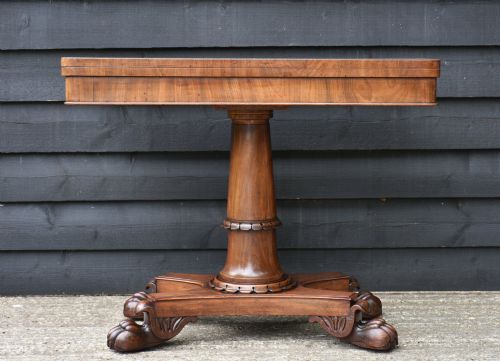
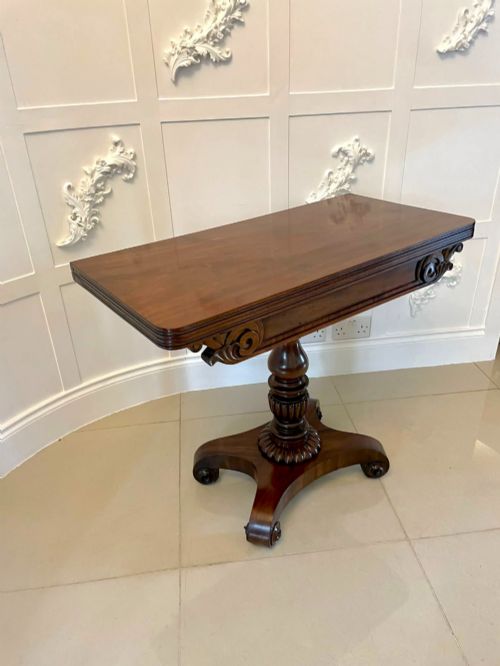
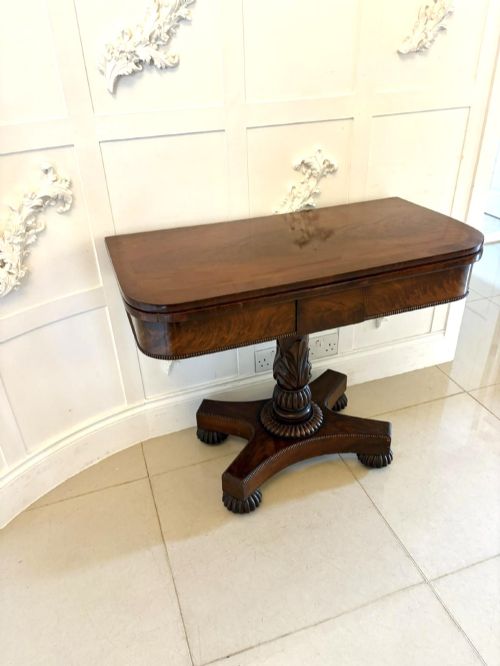
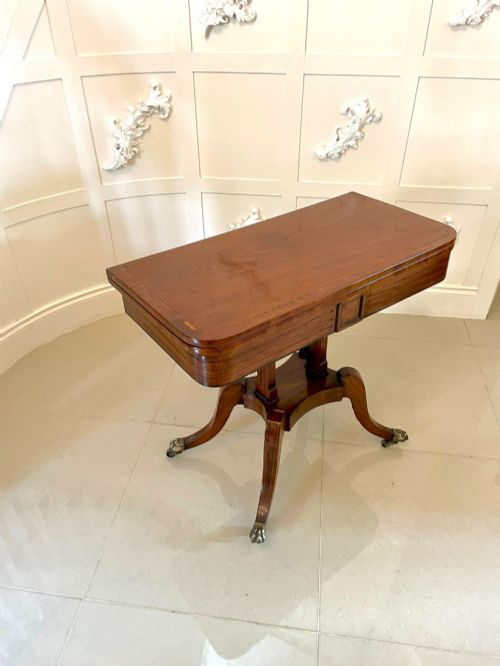

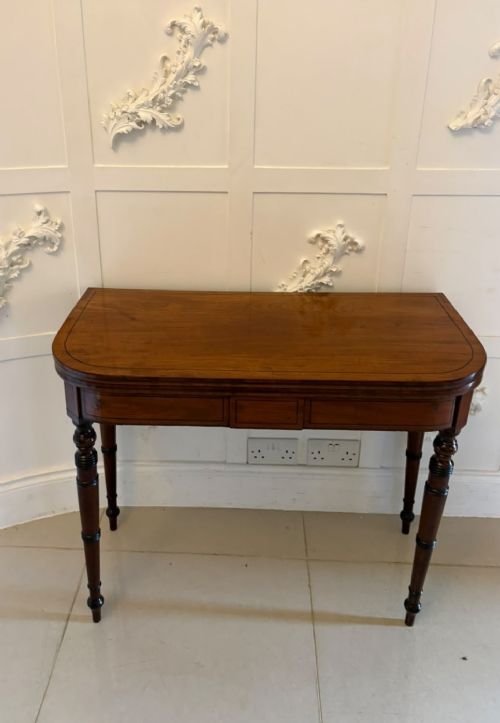
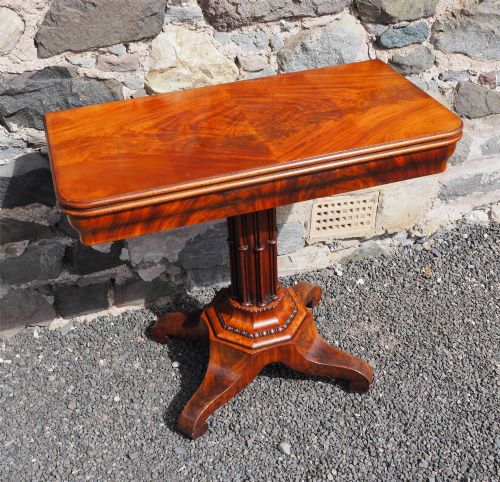
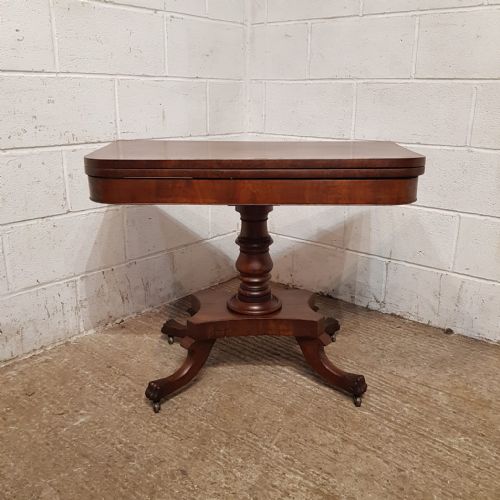

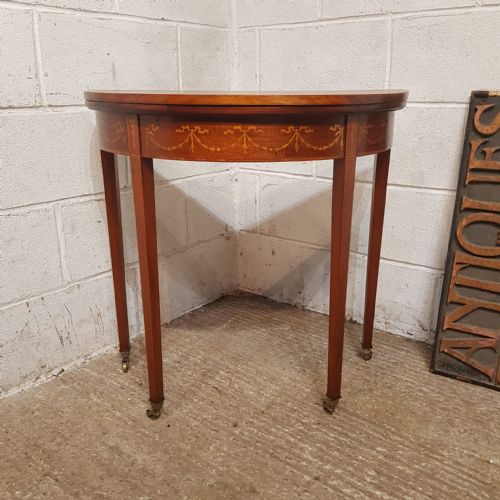
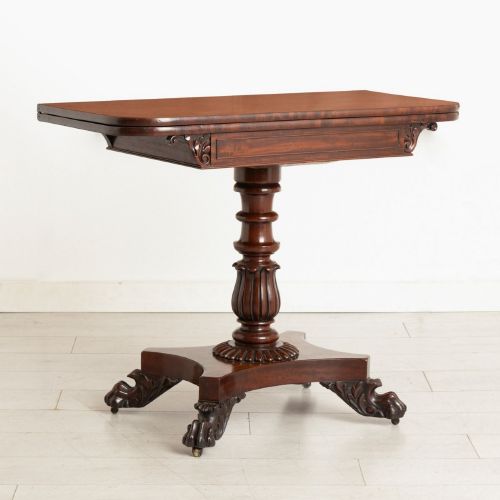
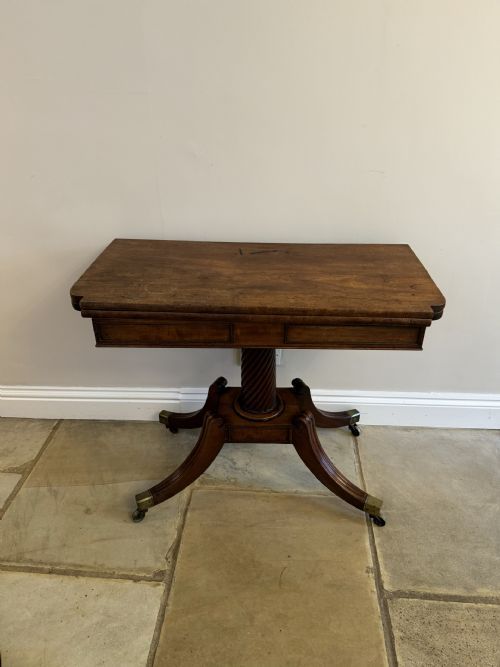
Regency Mahogany Games Table
These pieces are a regency mahogany games table, designed for card playing and social evenings in the early nineteenth century.
What these tables are
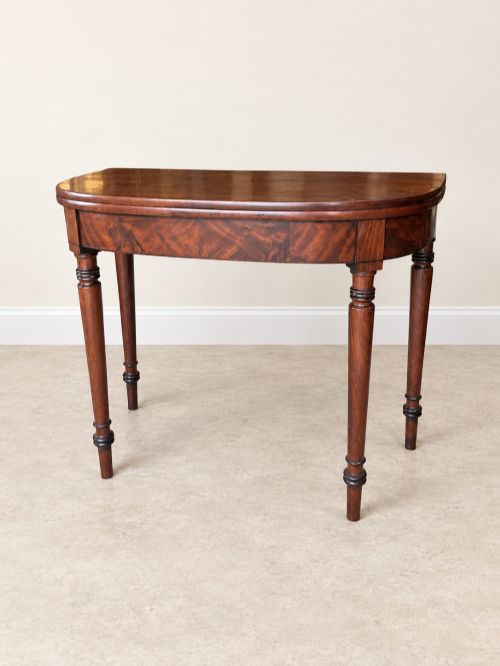
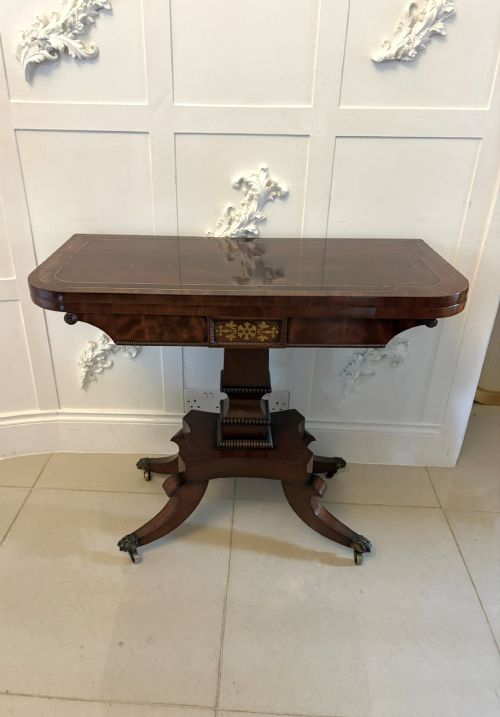
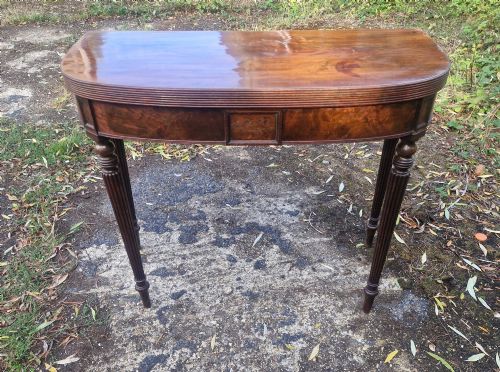
A regency mahogany games table is a versatile piece of nineteenth-century furniture built to serve as a console, side table, or card table when unfolded. The forms appearing most often include fold-over card tables, D-end tables, and pembroke or octagonal games tables.
Most examples date from the Regency period, though some carry traits from the late nineteenth century or Edwardian interpretations of the style. They combine domestic practicality with the refined proportions typical of the era.
Materials and construction
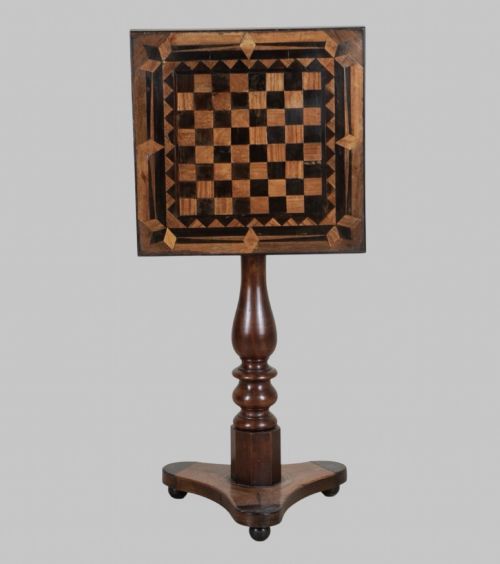
Makers utilised solid mahogany and flame mahogany veneer over secondary woods, sometimes incorporating satinwood, walnut, and plum pudding mahogany for contrasting surfaces. Details like brass mountings, ormolu, and ebony string-inlay appear across the surviving pieces.
The construction relies on sturdy pedestals, fold-over mechanisms, and saber legs to support the top during play. Surfaces often highlight the natural grain of the timber through polishing and veneer work.
Retail Price Guide 2026
Typical UK retail prices for regency mahogany games table, calculated from the Sellingantiques database of over a million retail prices indexed since 2003. This retail price guide relies exclusively on Sellingantiques data; no external sources or auction records are used, so the figures do not describe the wider market.
Listings feature mahogany, flame mahogany veneer, brass, satinwood, and ebony string-inlay across various Regency forms.
Distinctions in quality
The grade of a piece rests largely on the choice of timber, where striking flame mahogany veneer or intricate string-inlay separates standard items from finer works. The crispness of carved details and the integration of brass or ormolu mounts also signal higher craftsmanship.
Proportion and stability during the transition from a closed console to an open playing surface reveal the maker's skill. Tables retaining original hinges, pedestals, and unwarped tops command greater appreciation among collectors.
The Regency Mahogany Games Table Glossary
- Concertina action
- An expanding table frame that pulls outward on a concertina mechanism to support a doubled-over top. This allows the piece to remain balanced and even when fully opened for card games.
- D-end
- A table end shaped in the semi-circular profile of the letter D. These sections often join together or fold out to create a larger playing surface.
- Flame mahogany
- A figured wood veneer showing a distinct, flickering flame pattern derived from the branch junctions of the tree. It was favoured by cabinet makers for decorative exterior surfaces.
- String-inlay
- A thin, linear band of contrasting wood inlaid into the surface of a panel or leg. Ebony is frequently used for this decorative outlining.
- Sabre leg
- A curving, outward-flaring leg that tapers toward the foot, characteristic of Regency seating and support structures. It provides both stability and a sense of lightness.
Frequently Asked Questions
What is a regency mahogany games table used for?
These tables served primarily for card games, chess, and social gatherings in nineteenth-century drawing rooms. When closed, they functioned as console or side tables against a wall.
Their dual nature made them practical for smaller spaces where furniture needed to adapt throughout the day.
How do I tell a Regency table from a later copy?
Look closely at the secondary woods, timber shrinkage, and hand-cut joinery typical of early nineteenth-century construction. Machine-cut screws or modern adhesives generally point to later reproduction work.
Gradual wear patterns on the hinges and interior surfaces also offer clues to the actual age of the piece.
Are these tables sturdy enough for daily use?
The fold-over and concertina mechanisms are built to handle regular opening and closing, provided the joints remain stable. Gentle handling ensures the veneered surfaces and pivot points stay intact over time.
Placing them away from direct heat sources helps prevent the mahogany timber and veneers from splitting.
What features define the Grand Regency style?
Grand Regency pieces incorporate bolder decorative elements such as brass inlay, ormolu mounts, and richer timber selections like plum pudding mahogany. These details reflect a more opulent aesthetic than standard domestic furniture.
Proportions remain balanced, but the visual weight and surface ornamentation increase noticeably.