
Antique Fold Leaf Table
An antique fold leaf table offers ingenious space-saving design, transforming from a compact unit into a generous surface using hinged leaves.
Antique Fold Leaf Table
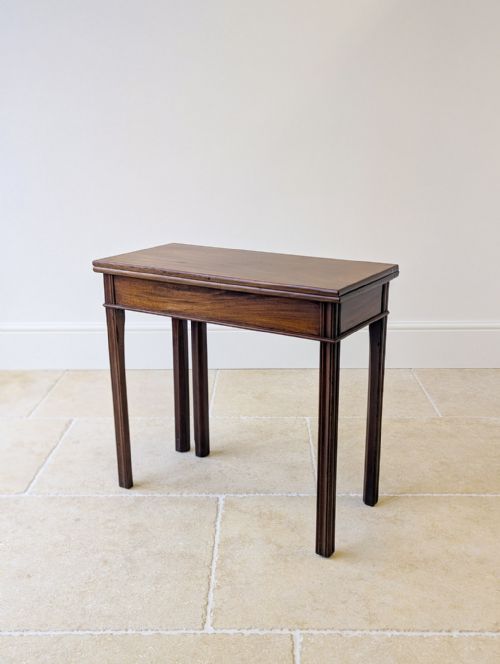
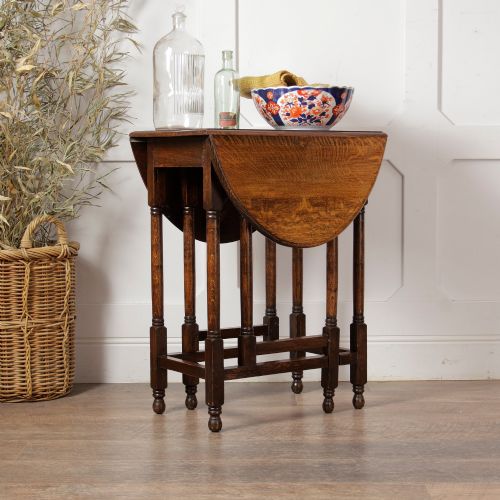
An antique fold leaf table encompasses versatile space-saving furniture designed with hinged leaves that expand the surface area when needed. These pieces function as dining tables, writing desks, and occasional tables depending on their primary configuration.
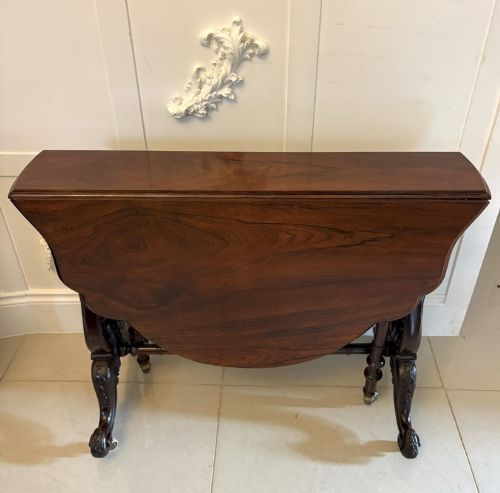
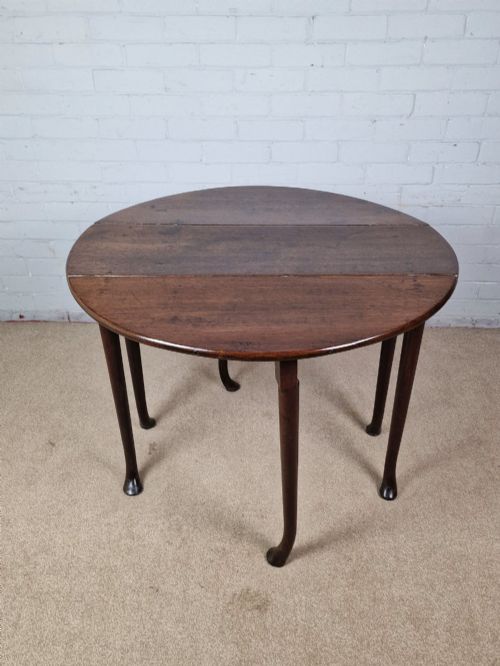
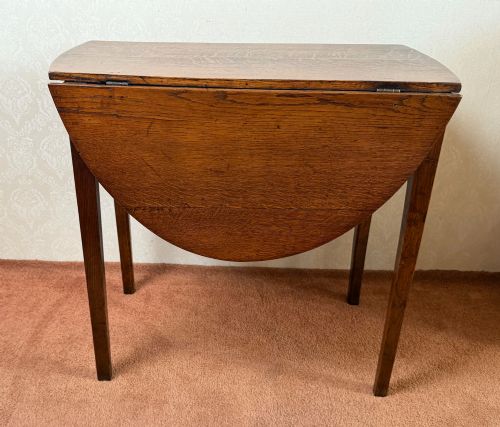
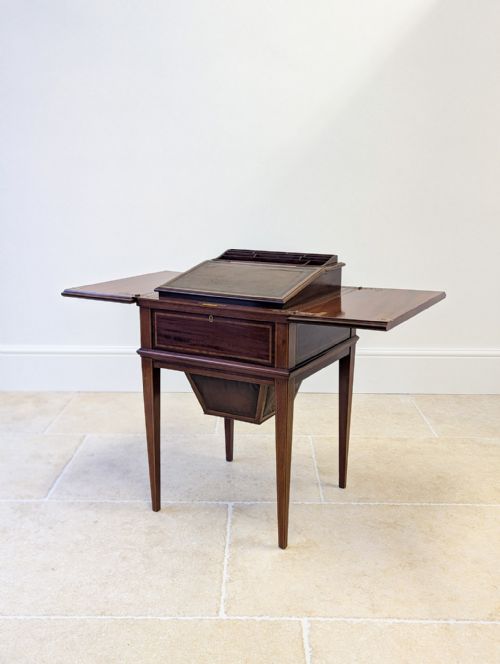
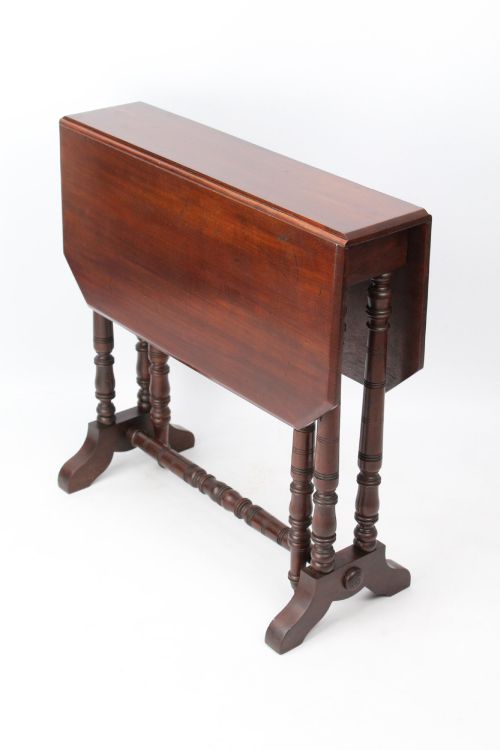
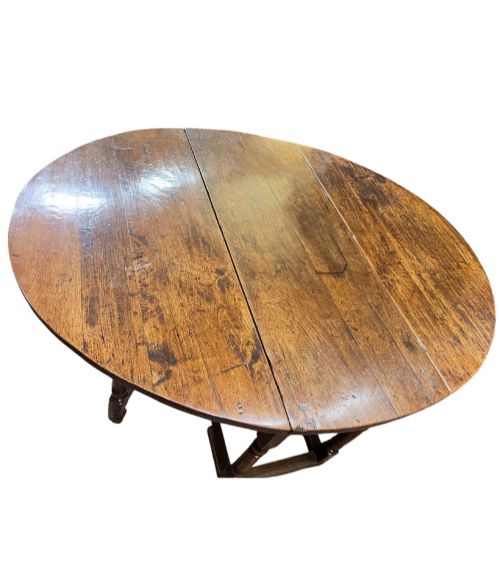
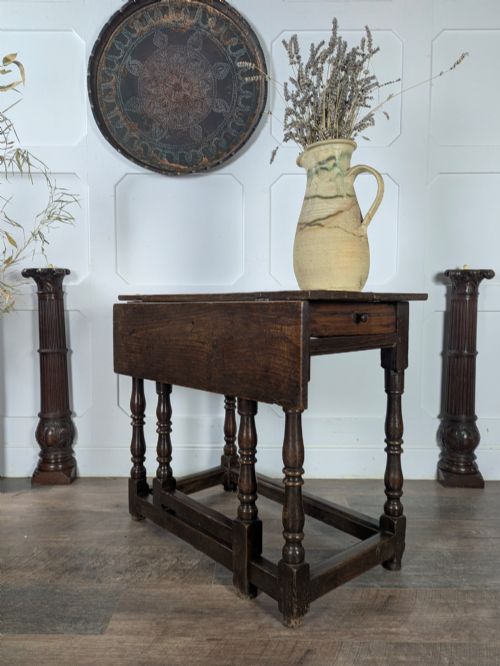
The selection ranges heavily toward early forms like oak gateleg tables alongside Victorian burr walnut Sutherland tables and Edwardian mahogany Pembroke designs. Buyers encounter everything from sturdy seventeenth-century plank-top dining formats to refined eighteenth-century tea tables.
Origins span British regional workshops as well as continental and Anglo-Indian production, utilising domestic timbers like oak and walnut alongside imported hardwoods.
How They Were Made
Cabinetmakers constructed these tables using solid native timbers such as oak, walnut, and mahogany, frequently applying burr walnut veneers to prominent surfaces. Structural integrity relied on pegged mortise and tenon joints for early gateleg frames and sturdy rule joints for drop leaves.
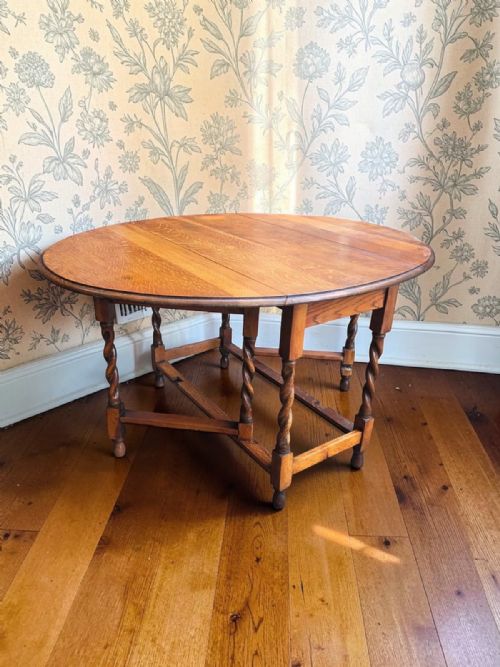
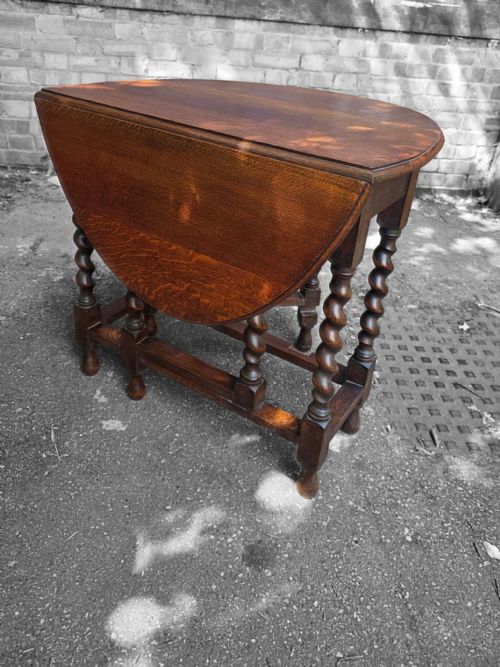
Turning techniques produced distinctive barley twist, baluster, and scissor-action legs that swing outward to support the unfolding leaves. Inlays of lighter woods and brass hardware finishes added decorative contrast during the Georgian and Edwardian eras.
Scissor-action mechanisms offer the satisfying theatre of folding architecture inside a compact Victorian parlour.
What Varies in Quality
The grade of timber and depth of natural patina dictate the visual success of the piece, with dense grain figuring in walnut and rich mature tones in oak marking superior examples. Finer pieces retain original surface finishes rather than heavy modern restoration.
Engineering precision in the folding mechanism ensures the drop leaves align flush and level with the fixed centre when opened. The complexity of the frame, such as six-leg configurations or intricate scissor actions, distinguishes standard domestic utility pieces from high-status commissions.
The Antique Fold Leaf Table Glossary
- Gateleg table
- A table with hinged leaves supported by swing-out legs that resemble a gate. This mechanism provides sturdy support for the extended surface.
- Sutherland table
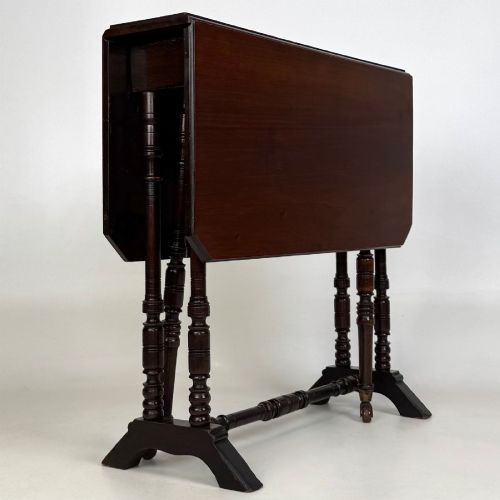
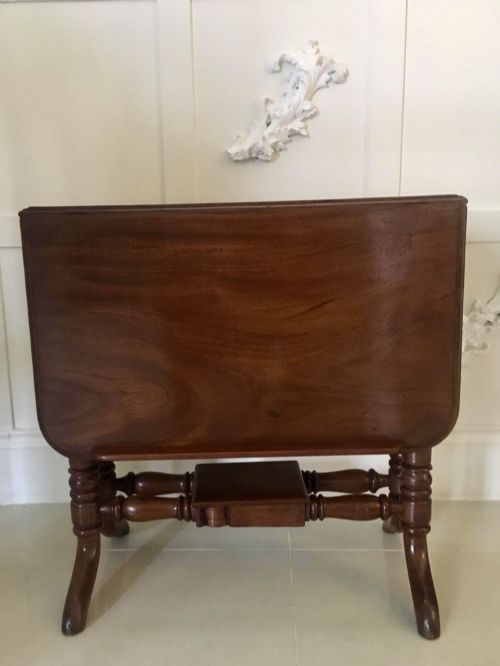
- A narrow drop-leaf table featuring exceptionally slender folding leaves and a low-profile underframe. They became widely popular during the Victorian period for occasional use.
- Pembroke table
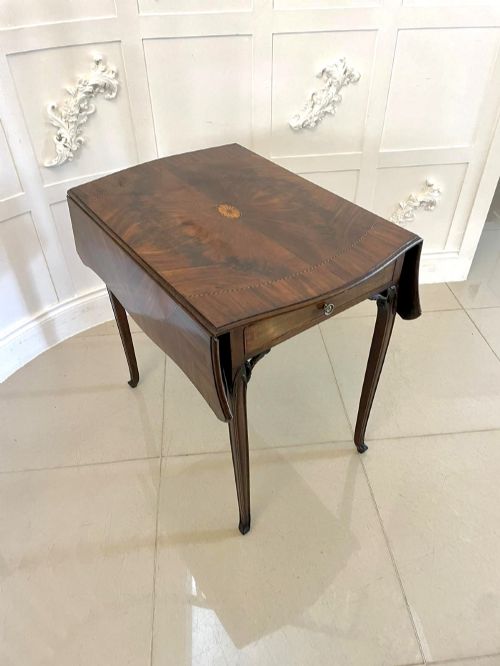
- A small rectangular table with two hinged drop leaves on opposing sides, often incorporating a single drawer. They typically date from the Georgian and Edwardian eras.
- Rule joint
- A specialised hinged joint connecting a table top to its drop leaf with a rounded edge moulding. This moulding bridges the gap tightly in both raised and lowered positions.
- Scissor action
- An intersecting leg mechanism that expands diagonally when the leaves lift into place. This design provides stable support without traditional swing-out gate legs.
Antique Fold Leaf Table: Frequently Asked Questions
How do gateleg tables work?
Gateleg tables operate through hinged side leaves supported by swing-out legs that pivot from the main frame. These extra legs move outward to hold the expanded surface level.
When not in use, the legs fold back inward parallel to the base, allowing the leaves to drop downward for compact storage.
What is a Sutherland table used for?
Sutherland tables function as versatile occasional furniture designed to sit against a wall until extra surface area is required. Their narrow central core and deep-folding leaves make them practical for tea service or reading.
Victorian drawing rooms utilised them extensively because they occupied minimal floor space when closed.
How can I date an oak drop leaf table?
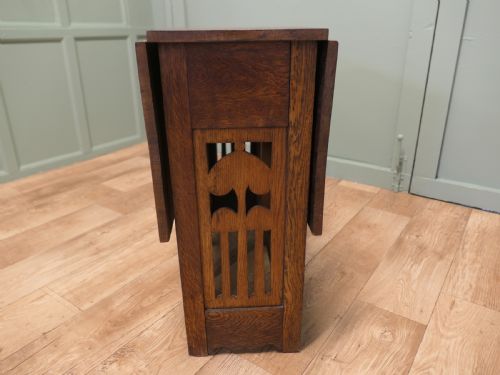
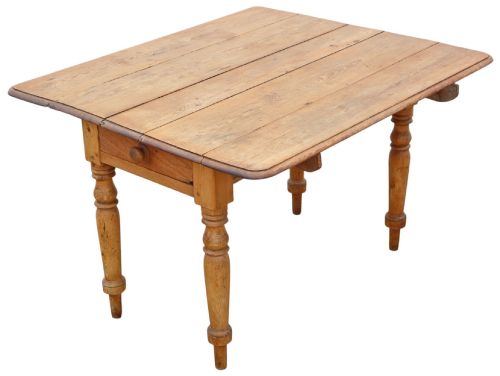
Dating relies on construction methods, timber selection, and turning styles visible on the base. Early examples from the seventeenth and early eighteenth centuries feature hand- cleft oak planks and heavy baluster turnings.
Later Victorian and Edwardian versions display machine-cut components, lighter secondary timbers, and different leg profiles such as barley twists.
Are Pembroke tables good for small dining spaces?
Pembroke tables suit compact interiors due to their drop leaves that lower against the central frame. Raising one or both leaves creates an impromptu dining or writing surface as needed.
Many examples also include built-in drawers for storing small items like stationery or cutlery.