


Dark Red Woven Textile
These examples of dark red woven textile are tribal rugs and bags from Central Asia and Persia, offering rich colour and deep historical character for any interior.
Dark Red Woven Textile
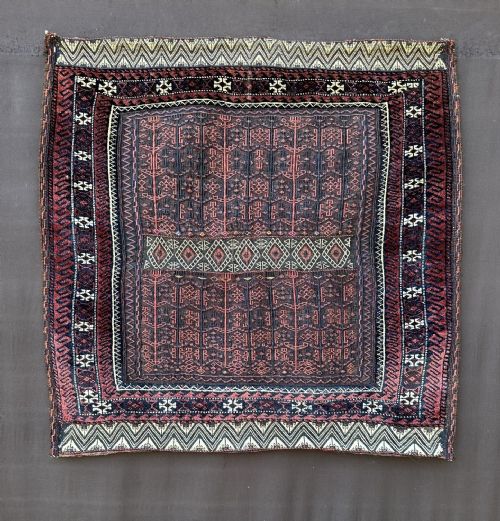
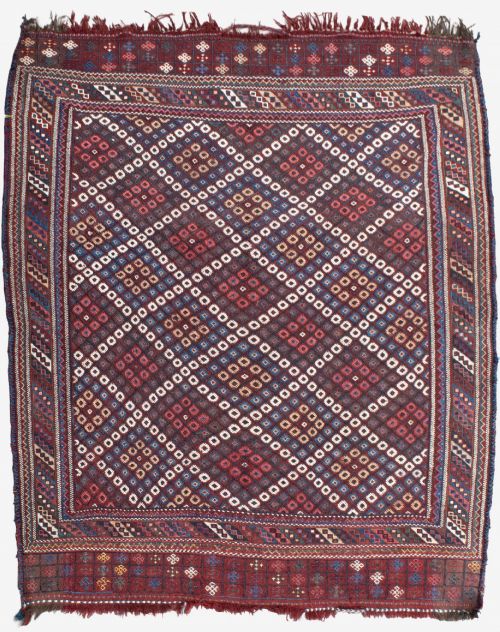
A dark red woven textile typically takes the form of a tribal bag face, torba, chuval, or small rug originating from nomadic and village communities in Persia, Afghanistan, and Central Asia. These pieces served practical domestic functions within tribal life, such as storing grain, bread, or household goods, before finding a place as decorative items.
The selections encountered here span the late nineteenth century into the early twentieth century, representing specific regional weaving traditions including Yomut, Tekke, Ersari, Baluch, Afshar, and Qashqa'i groups. Collectors most frequently meet torba faces and saddle bags displaying traditional tribal motifs and deep madder-dyed grounds.
Natural Dyes and Handspun Wool
The construction relies predominantly on handspun wool, sometimes combined with cotton for structural elements, woven on traditional horizontal or vertical floor looms. Artisans utilised natural dyes extracted from local plants and minerals to achieve the characteristic deep red and madder tones seen across the pieces.
Weaving techniques range from fine pile knots to flatweave plain weave structures, often incorporating supplementary weft-wrapping or brocade work for intricate geometric patterns. The density of the weave and the preparation of the wool fibres dictate the structural integrity and tactile quality of each textile.
Materials recorded across current listings are limited exclusively to wool, cotton, and natural dyes.
Purity of Colour and Weave Density
Quality in a dark red woven textile is determined by the depth and saturation of the natural dyes, particularly the richness of the madder red ground and the complexity of secondary colour contrasts. Subtle variations in shade, known as abrash, indicate natural hand-dyeing processes rather than uniform chemical application.
The fineness of the knotting or the tightness of the weave structure marks the distinction between standard utilitarian items and masterwork tribal pieces. Preservation of original borders, complete backs, and hanging loops further elevates the integrity of surviving bags and trappings.
The Dark Red Woven Textile Glossary
- Torba
- A small storage bag produced by Turkmen tribes, usually wider than it is tall and designed to be hung against the tent wall.
- Chuval
- A large storage sack made by nomadic groups for bedding and household possessions, often featuring repeated main guls.
- Gul
- A medallion or repeating primary motif used in Turkmen and Central Asian tribal rug design.
- Sofreh
- A flatwoven textile used primarily for preparing, serving, or wrapping bread and dining items.
- Abrash
- Variation in colour hue caused by changes in dye batches or wool lots during the hand-dyeing process.
Dark Red Woven Textile: Frequently Asked Questions
What is a torba used for?
A torba served as a practical wall-hanging storage sack within a nomadic tent or yurt, utilised for keeping small personal items, belongings, or utensils protected and organised.
Over time, these functional bags became decorative elements of tribal interior decoration and dowry displays, prized for their compact format and precise geometric ornamentation.
How are tribal bag faces displayed?
These textile fragments are frequently mounted on stretched fabric backings or displayed directly on walls using discreet hanging methods that support their weight evenly along the upper edge.
Some collectors choose to place smaller bag faces on flat surfaces or low-traffic tables, though wall mounting prevents physical wear and highlights the design details clearly.
What creates the dark red colour?
The predominant red tones derive from natural dye sources, most notably the roots of the madder plant processed with mineral mordants by nomadic dyers.
Variations in water chemistry, soil composition, and dye baths produce the characteristic tonal shifts and rich depth visible across the wool fibres.
How do you date antique tribal weavings?
Dating relies on assessing the wool quality, the chemical composition or natural origin of the dyes, structural tightness, and the traditional design vocabulary specific to particular tribal groups.
Pieces originating before the widespread adoption of synthetic aniline dyes in the late nineteenth century display specific palette characteristics and structural wear patterns consistent with utilitarian age.