


Handwoven Wool Trappings
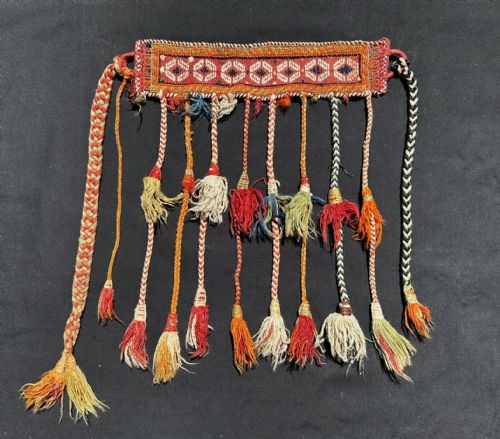
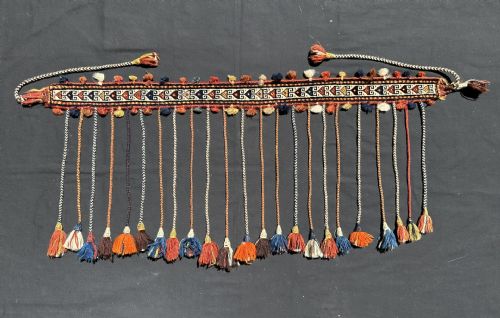
Handwoven wool trappings are nomadic textile works created by tribal makers across Central Asia and Persia, prized for rich colour and dense wool.
Handwoven Wool Trappings
The selections span from the mid-nineteenth century through the early twentieth century, originating from regions such as Turkmenistan, Afghanistan, and the Fars province. Tribal groups represented include the Turkmen tribes, Baluch, Qashqa'i nomads, and Afshar weavers.
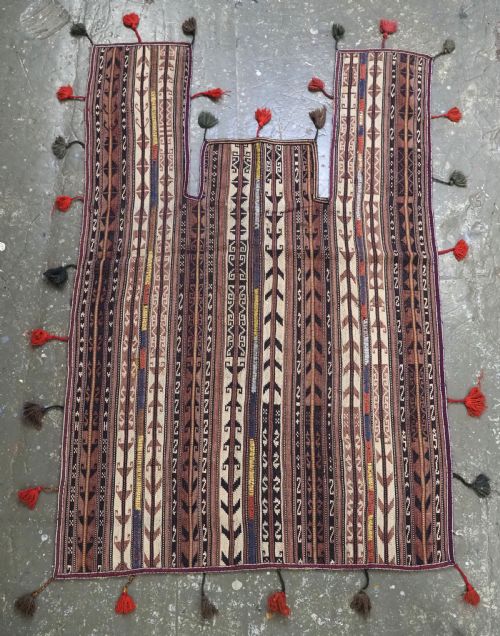
Most items on this page function as smaller decorative fragments or complete saddle rugs and ceremonial covers. They reflect specific regional weaving traditions passed down through generations of nomadic makers.
Materials and Construction
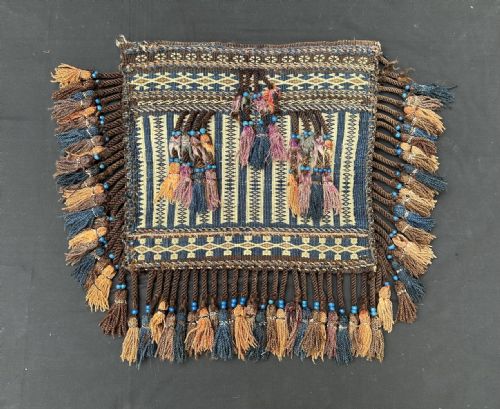
These pieces rely primarily on wool foundation and pile, often augmented with natural dyes to achieve deep red, brown, and secondary hues. Certain items incorporate cotton structural elements and glass beads for ornamentation.
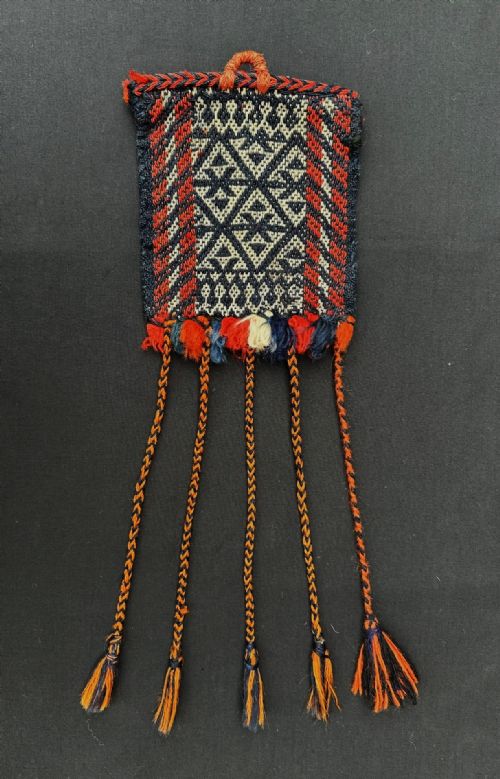
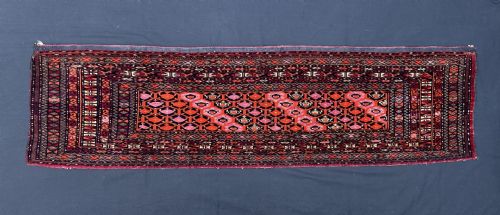
Weaving techniques involve dense knotting and flatweaving methods suited to portable looms used by nomadic societies. Surviving examples sometimes retain original backs, fringe work, or specialised structural designs like the asmalyk and torba face formats.
Some camels wore finer wedding clothes than the guests attending the ceremony.
Determinants of Quality
Quality rests upon the tightness of the weave and the precision of traditional tribal motifs such as guls, curled leaf designs, or kedjebe patterns. Finer knotting and careful execution distinguish accomplished dowry weaving from standard utilitarian output.
The integrity of natural dyes and the survival of original components, such as backing fabrics or complete borders, elevate certain ceremonial horse covers and wedding trappings above heavily worn fragments.
The Handwoven Wool Trappings Glossary
- Torba
- A small wall-hanging storage bag traditionally used in nomadic tents for household possessions. These pieces often feature prominent gul motifs and finished face panels.
- Asmalyk
- A ceremonial pentagonal trapping hung on the flanks of a camel during wedding processions. These items display intricate tribal patterning and symbolic designs.
- Gul
- A repeating medallion or floral motif characteristic of Turkmen and Central Asian tribal weaving. Each tribe utilised distinct variations of these primary design elements.
- Kedjebe
- A specific lattice or tent-band design found on Turkmen torbas and ceremonial trappings. The pattern requires precise geometric arrangement during the weaving process.
Handwoven Wool Trappings: Frequently Asked Questions
What are handwoven wool trappings used for?
These textiles served practical and ceremonial roles within nomadic households and animal husbandry. They functioned as storage bags, horse blankets, and wedding decorations for camels.
Tribal groups utilised them during migrations, daily camp life, and marriage celebrations. Today, collectors display them as wall hangings or decorative interior textiles.
How do I identify a Yomut trapping?
Yomut trappings typically display specific tribal motifs such as the aishk gul and characteristic geometric borders. The palette often relies on deep madder reds combined with dark secondary tones.
Structure and weave density also aid identification, aligning with the regional output of Yomut weavers in Central Asia. Comparing knotting styles to known examples clarifies tribal origin.
How should I care for antique wool trappings?
Keep antique wool textiles out of direct sunlight to prevent natural dye fading. Gentle vacuuming with a mesh screen protects the wool pile and structural foundation.
Avoid hanging heavy pieces by single points to distribute weight evenly across the textile. Professional textile conservators should handle cleaning or repairs.