
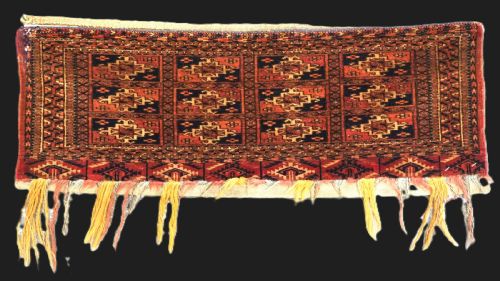


19th Century Turkmen Weaving
These pieces of 19th century turkmen weaving bring rich tribal woolwork into modern rooms.
What these textiles are
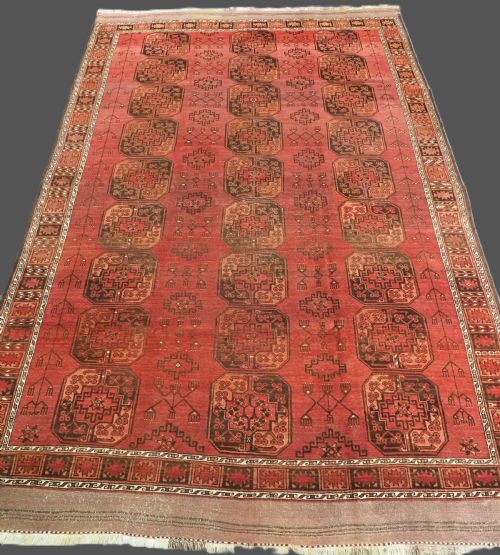
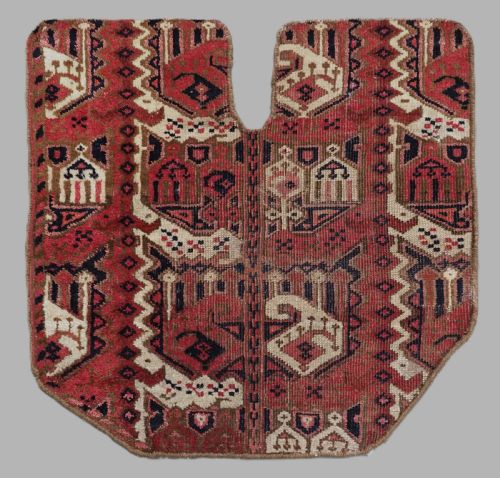
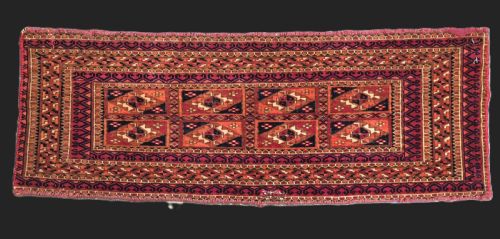
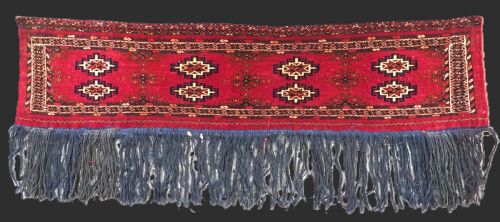
When you search for 19th century turkmen weaving, you encounter tribal wool items produced across Central Asia. These pieces comprise torba faces, chuval faces, mafrash faces, and horse covers.
The objects stem from specific tribal groups including the Saryk, Ersari, Yomut, and Tekke. You are most likely to meet torba and chuval fragments featuring traditional gul designs on this page.
Materials and construction
Makers utilised wool to construct these heavy tribal textiles. Every piece relies on hand-spun materials suited to nomadic life.
Weavers knotted and wove these items using traditional Central Asian methods. The structural integrity of each rug panel or bag face depends on tight wool foundations.
Retail Price Guide 2026
Typical UK retail prices for 19th century turkmen weaving, calculated from the Sellingantiques database of over a million retail prices indexed since 2003. This retail price guide relies exclusively on Sellingantiques data; no external sources or auction records are used, so the figures do not describe the wider market.
All items recorded on this page consist entirely of wool textiles from Central Asian tribal traditions.
Judging quality
Quality rests in the precision of the gul motifs and the saturation of the wool. Pieces with distinct Saryk, Ersari, Yomut, or Tekke tribal patterns command greater visual presence.
The integrity of the remaining wool pile and the survival of the original backing structure dictate the standing of each textile. Complete bag faces preserve more of the original weaver's intent than scattered fragments.
The 19th Century Turkmen Weaving Glossary
- Gul
- A primary medallion or repeating floral-derived motif found across Turkmen carpets and bag faces. These geometric emblems often identify the specific tribe that made the piece.
- Torba
- A small utility bag produced by nomadic weavers for household storage. They frequently display intricate gul designs on their visible faces.
- Chuval
- A large tent bag used for storing household goods inside a yurt. Examples often feature multiple rows of guls.
- Mafrash
- A rectangular storage bale or long bag panel used by nomadic tribes. These items formed part of the essential furnishings of a Central Asian tent.
Frequently Asked Questions
What is 19th century turkmen weaving?
These items are wool tribal textiles made by nomadic groups in Central Asia during the nineteenth century. They include utilitarian bag faces, rugs, and ceremonial horse covers.
Each piece reflects the specific aesthetic of tribes such as the Tekke, Yomut, Saryk, and Ersari. The work relies entirely on wool materials.
How were torba bags used?
Torba bags served as hanging storage containers inside traditional nomadic tents. Families used them to store small personal possessions and household goods.
Their decorative faces remained visible while hanging against the tent lattice walls. This combined practical storage with tribal artistry.
How do I identify a chuval?
A chuval is a large storage bag designed for heavier household items within the nomadic dwelling. They typically display larger proportions than torbas and feature prominent gul patterns.
Many surviving examples exist simply as decorative face panels removed from their original backings. They show the primary weaving work of the tribe.
How do I live with these textiles?
These wool pieces suit display on walls where foot traffic cannot harm the old pile. Proper mounting protects the structural wool from undue stress.
Keep them away from direct sunlight to preserve the natural wool tones. Gentle cleaning maintains the textile fibres over time.
What distinguishes tribal horse covers?
Horse covers and blankets served ceremonial functions within nomadic communities during special gatherings and processions. They represent scarcer items compared to standard storage bags.
Their large formats accommodate animal use while displaying intricate tribal motifs. The heavy wool construction provided durability during outdoor ceremonies.