


Nomadic Woven Tent Bag
Nomadic woven tent bag pieces are functional tribal textiles from Central Asia, providing collectors with rich geometric patterns and authentic nomadic history.
Nomadic Woven Tent Bag
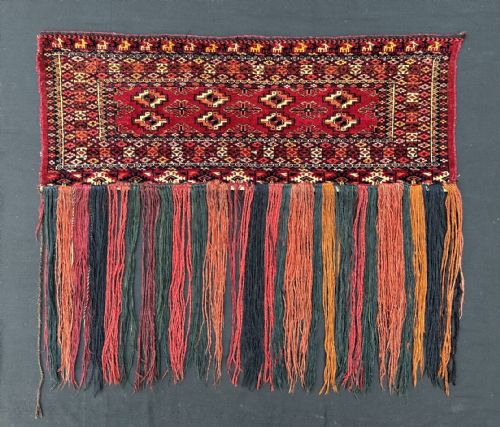
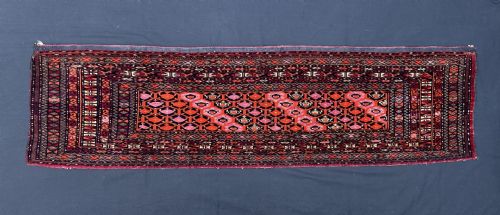
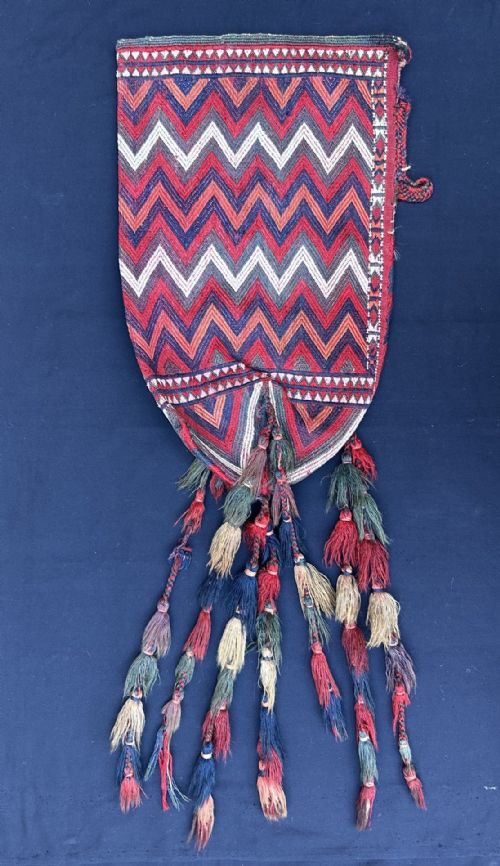
A nomadic woven tent bag is a utilitarian textile created by tribal groups in Central Asia for storage inside a yurt or tent. These items include torbas, chuvals, and tent pole bags used for household organisation and dowry displays.
The pieces on this page span the mid-nineteenth century to the early twentieth century, originating from specific tribal groups such as the Yomut, Tekke, Ersari, Saryk, and Chodor. They frequently manifest as bag faces or complete sacks with flat-woven backs and tassels.
Tribal weavers utilised traditional formats like the torba and chuval, applying distinct regional gul motifs to denote clan identity. These textiles survive as fragments or intact utility objects reflecting nomadic life.
Materials and Construction
These textiles are built from hand-spun wool foundations dyed with natural colourants, sometimes incorporating cotton and silk highlights for contrast. The handle of the wool varies from dense and heavy to supple flat weaves.
Weavers employed intricate knotting and flat-weaving techniques to construct durable storage sacks capable of withstanding daily camp usage. Specific pieces include supplementary embroidery and tassel attachments executed by hand.
Some tent bags retain their original wool tassels, swaying slightly as visitors walk past.
Assessing Quality and Execution
Quality rests in the density of the weave, the clarity of the primary gul design, and the saturation of the natural dyes. Superior examples display exceptionally fine knotting and precise geometric layout.
The presence of complete wool backs, original flat-woven details, and tassels elevates a textile. Greater precision in tribal pattern repetition distinguishes exceptional dowry pieces from standard utility items.
The Nomadic Woven Tent Bag Glossary
- Torba
- A small horizontal wall bag used by Turkmen tribes for domestic storage. These pieces were often produced as part of a bride's dowry.
- Chuval
- A large storage sack utilised within the yurt for bedding and clothing. They display prominent tribal guls across the primary field.
- Gul
- A repeating medallion motif used by Central Asian tribes to identify specific clans and lineages. Each design variation corresponds to a distinct tribal group.
- Okbash
- A specialised hood-shaped bag designed to fit over the top of tent poles during transit or storage. They feature a triangular profile and narrow neck.
- Beshir
- A sub-group of Ersari Turkmen weaving known for unorthodox design layouts and floral or ikat influences. These textiles originate from the middle Amu Darya region.
Nomadic Woven Tent Bag: Frequently Asked Questions
What is a torba?
A torba is a specific type of storage bag produced by Turkmen tribes in Central Asia. They were hung inside the tent for domestic organisation.
These pieces typically measure wider than they are tall and feature repeating tribal gul patterns across the face.
How were tent bags used?
Nomadic families utilised these woven sacks to store household belongings, clothing, and bedding inside traditional tents. Different bag forms served specific functional purposes within the camp.
Larger chuvals held heavy items while smaller torbas and okbash protected specific gear like tent poles and personal possessions.
How do I identify tribal origins?
Tribal attribution relies primarily on the structural gul motifs, colour palettes, and border designs present on the textile face. Different groups such as the Yomut and Tekke used distinct geometric markers.
Examining the weave density and secondary colours provides additional clues regarding the specific oasis or steppe region of manufacture.
Are these pieces complete?
Survival state varies across these antique textiles, with many examples surviving only as decorative bag faces rather than intact sacks. Some pieces retain their original flat-woven backs and wool tassels.
Both complete bags and cut fragments hold historical value for collectors focusing on Central Asian tribal arts.