


Dark Oak Trunk
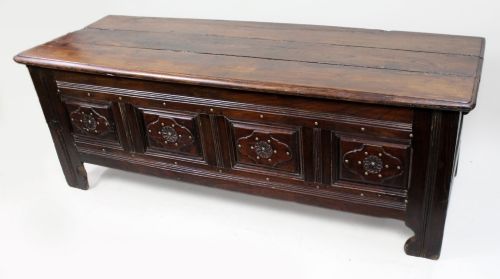
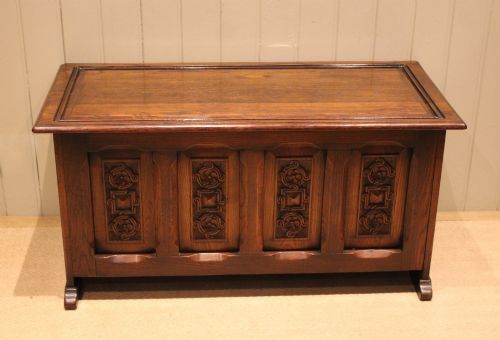
A dark oak trunk brings heavy sixteenth and seventeenth century timber into a room, offering deep interior storage with a distinct panelled presence.
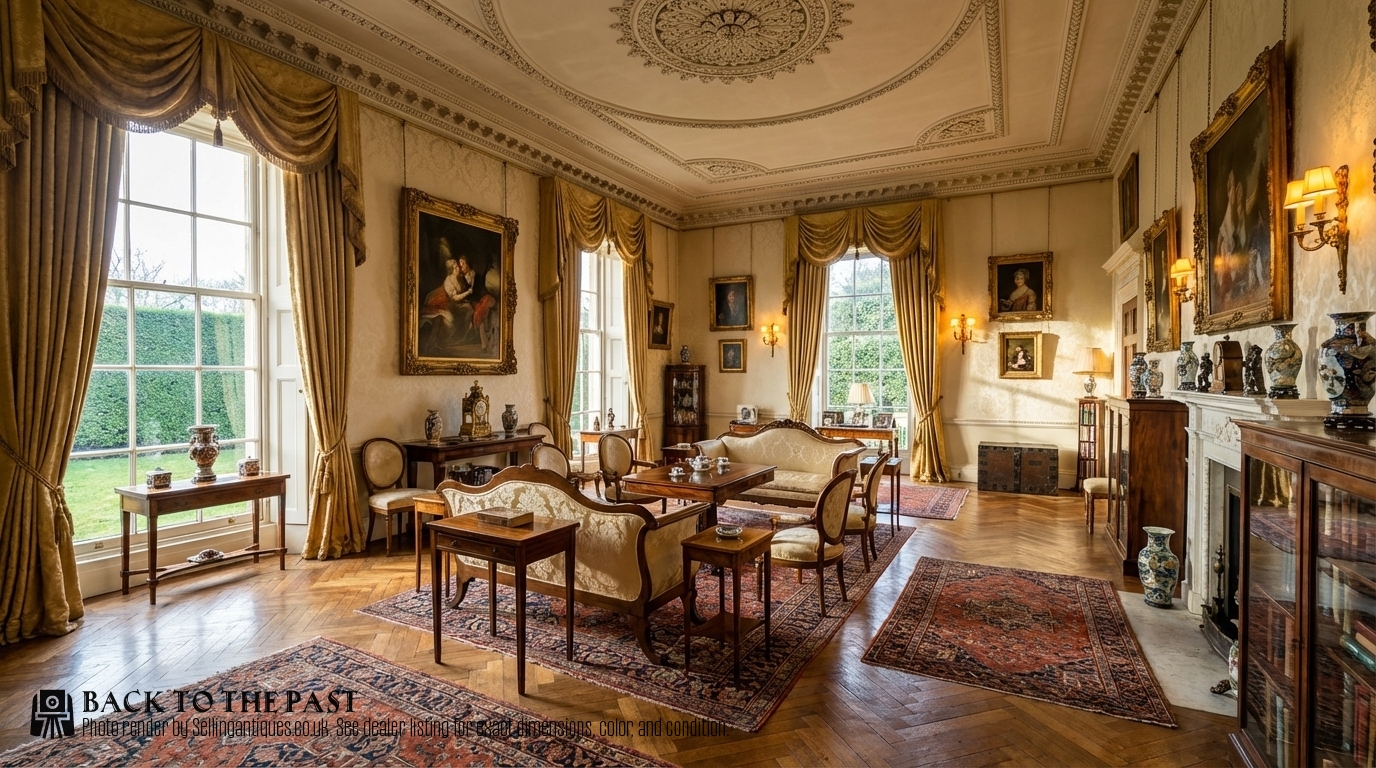
Dark Oak Trunk
A dark oak trunk appears across periods ranging from the sixteenth century through to later revivals, functioning primarily as a coffer, chest, or blanket box. These pieces serve as robust storage vessels shaped by centuries of domestic utility.
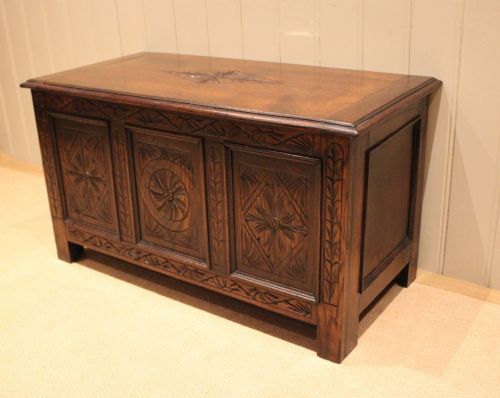
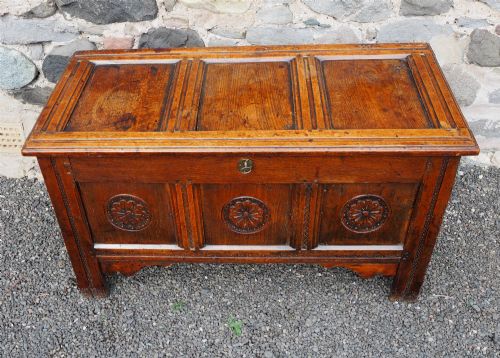
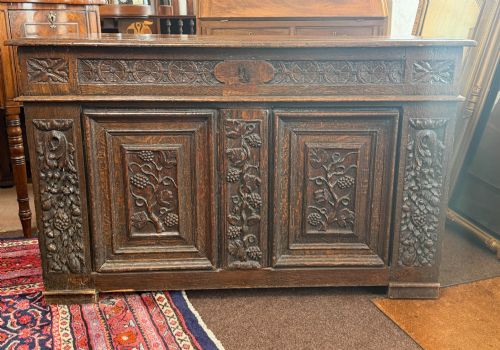
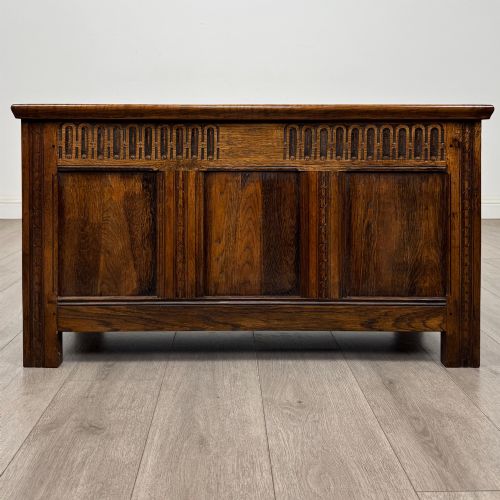
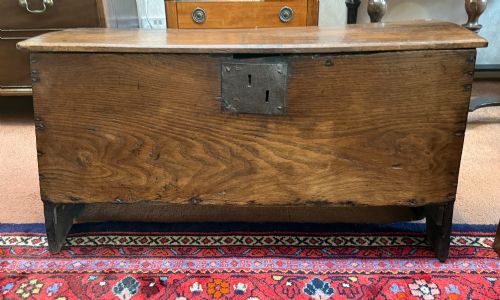
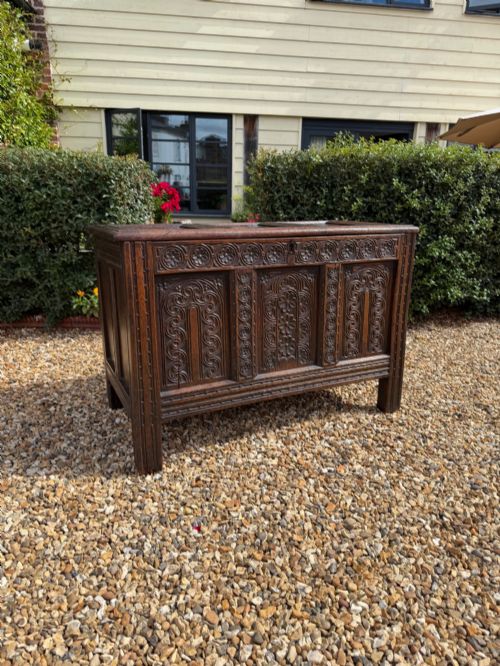
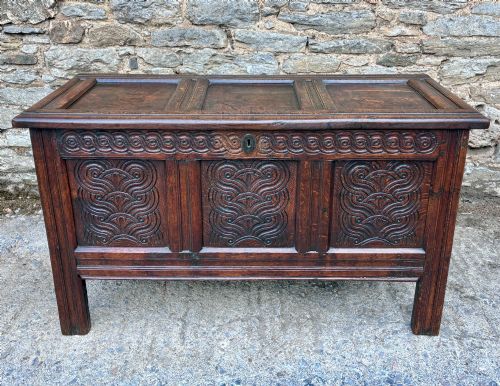
The version most commonly encountered on this page is the seventeenth century panelled coffer, often showing carved details or straightforward boarded construction. Examples span English, Welsh, and continental origins, including specific regional forms like the coffer bach.
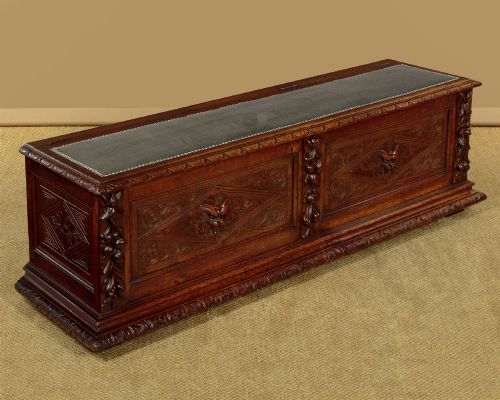
While primarily designed to hold textiles and household goods, variations extend to specialised forms such as sword chests and mule chests. Each piece bears the structural hallmarks of early cabinet making, utilising heavy timber framing.
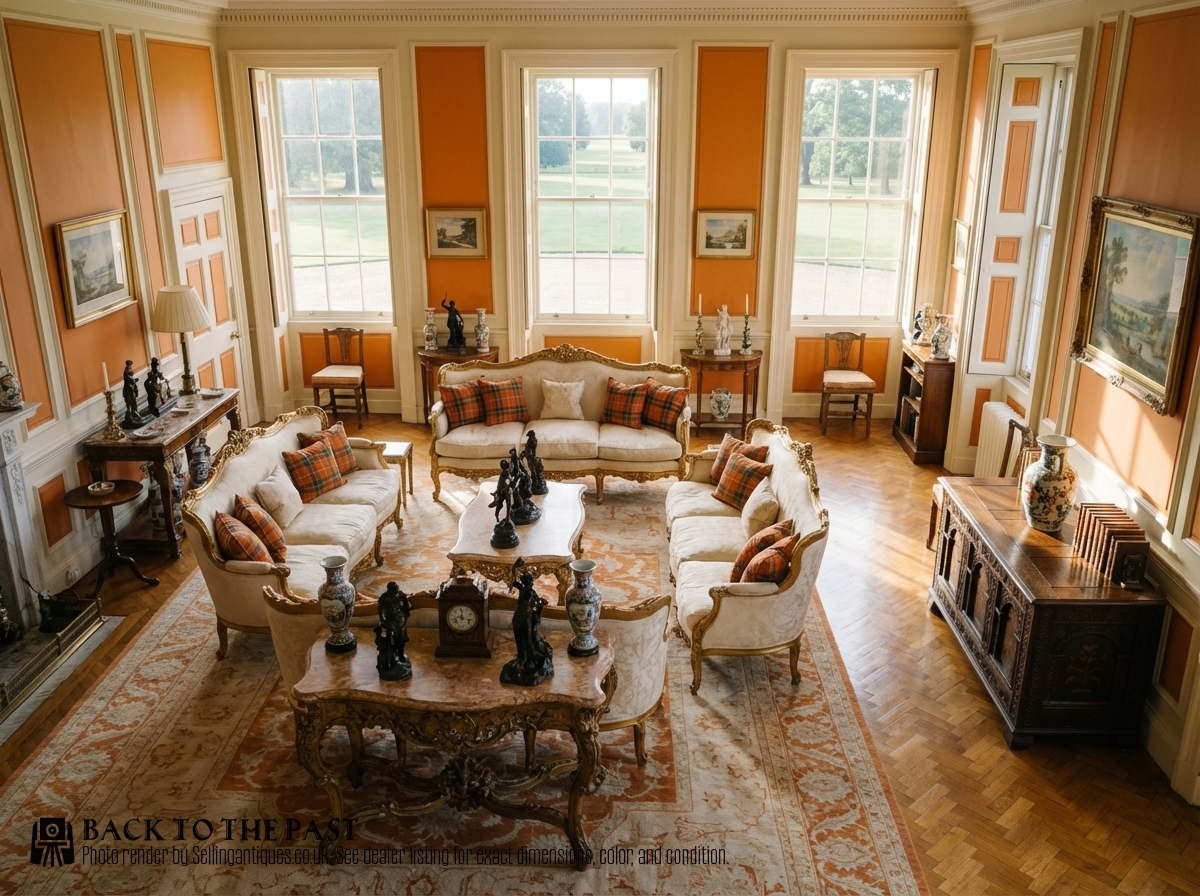
Materials and Construction
Makers built these pieces primarily from solid oak, sometimes combining walnut or incorporating mixed inlay woods and wood inlay for surface decoration. Iron and brass hardware, including hinges, locks, and brackets, provide both structural reinforcement and functional closure.
Joinery relied heavily on frame and panel construction, allowing the dense timber to expand and contract with seasonal humidity without splitting. Hand-carved ornamentation, incised detailing, and marquetry frequently decorate the front panels and friezes.
Dark Oak Trunk Retail Price Guide 2026
Typical asking prices for dark oak trunk among the pieces listed under this phrase on Sellingantiques today, from the lower quarter to the upper quarter. They describe what is for sale here now, not the wider market.
Some early trunks even feature concealed interior compartments affectionately known as secret tills for hiding small treasures.
Defining Quality and Character
The distinction between tiers rests upon the crispness of the hand-carving and the integrity of the original timber boards. Pieces retaining their early hinges, locks, and undisturbed surface patination command greater attention from discerning collectors.
Proportion and scale also dictate worth, as smaller coffers and specific regional variants demonstrate higher demand than standard utility boxes. The survival of untouched boarded bases and authentic interior tills separates standard items from exceptional examples.
The Dark Oak Trunk Glossary
- Coffer
- A heavy timber storage chest, typically fitted with a hinged lid and used for securing valuables and textiles. These vessels represent the primary seating and storage form of early domestic interiors.
- Coffer bach
- A small Welsh box or miniature coffer, traditionally used for holding personal documents or valuables. These scaled-down pieces mirror the construction methods of full-sized chests.
- Mule chest
- A storage chest featuring one or two drawers beneath the main internal compartment. This form bridges the evolution from simple top-loading coffers to modern drawer-based cabinetry.
- Marquetry
- The art of applying decorative veneer pieces to a structure to form geometric or pictorial designs. This technique adds varied wood tones and contrasting patterns to the surface.
- Panelled construction
- A method where a frame holds a thinner central board loosely in a groove, accommodating wood movement. This technique prevents warping in large expanses of dense timber.
Dark Oak Trunk: Frequently Asked Questions
What were dark oak trunks used for originally?
These trunks served as secure storage for valuable household textiles, garments, and documents in early domestic settings. Their heavy construction and lidded design also allowed them to double as seating benches when space was restricted.
Over centuries, their role shifted from utilitarian storage to decorative furniture. Today, they function as focal points in hallways or living areas while continuing to hold blankets and linens.
How do I date an early oak coffer?
Dating relies on examining the joinery methods, tool marks, and style of carving present on the frame. Peg construction, hand-riven boards, and wrought iron hardware often point toward specific centuries of production.
Stylistic motifs like linenfold panels or geometric strapwork provide further chronological clues. Comparing the piece against documented examples helps narrow down the era of manufacture.
Are these trunks suitable for daily use?
Solid timber construction makes these pieces remarkably durable for storing household items like spare bedding and winter woollens. The robust oak framing withstands normal weight if utilised as a casual seat or surface.
Care should be taken to keep them away from direct heat sources and excessive moisture to protect the antique wood and historic joinery. Conditioning the surface periodically helps maintain the natural finish.
What is the difference between a coffer and a chest?
The terms are often used interchangeably, though a coffer traditionally denotes a more substantial storage box with a flat lid suitable for sitting. Chests can sometimes refer to boarded or simpler lidded containers designed strictly for containment.
Regional terminology also influences the names, with certain areas favoring specific labels for local forms. Both types share the fundamental purpose of secure lidded storage.