
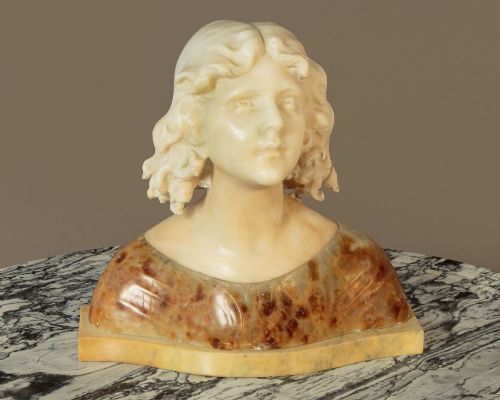


Cream Marble Statue
A cream marble statue brings classical poise and tactile warmth to an interior through finely carved stone.
Cream Marble Statue
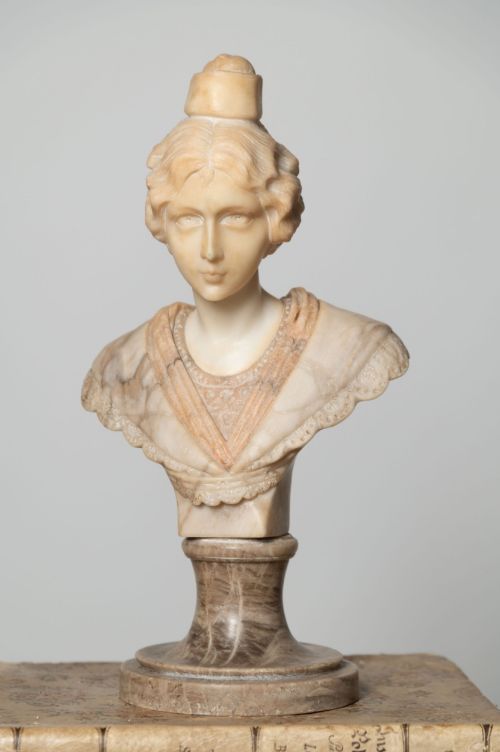
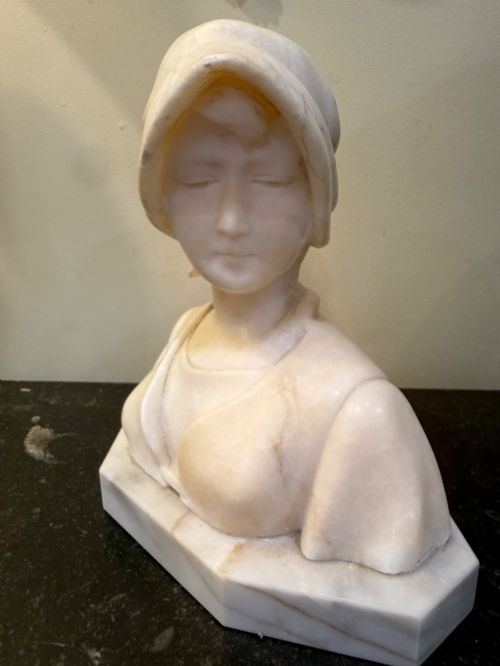
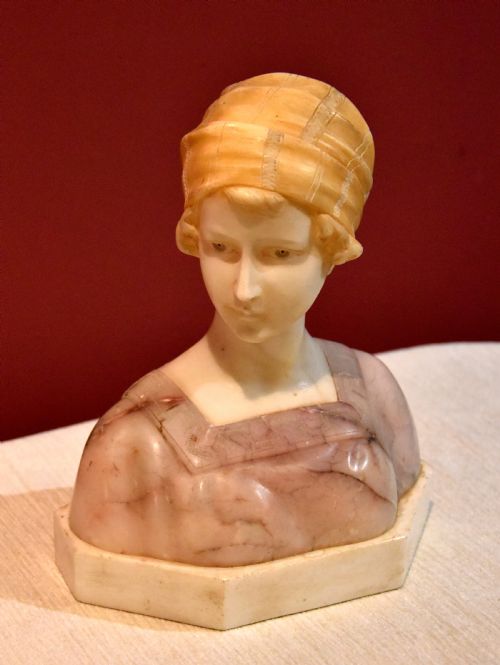
When a buyer searches for a cream marble statue, they encounter a range of sculptural works spanning portrait busts, full figures, and architectural supports. The selection here leans heavily towards carved alabaster and marble depictions of female figures, young women, and classical subjects created across the nineteenth and early twentieth centuries.
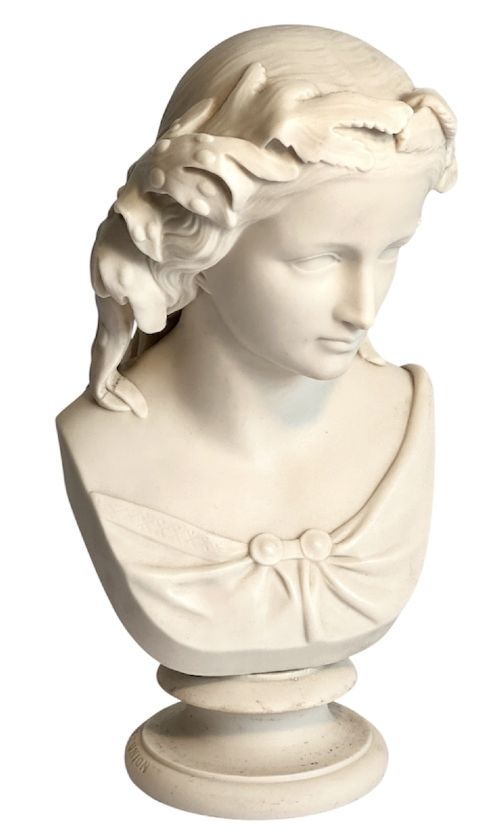
The objects take diverse forms, from intimate portrait busts of gentlemen and ladies to larger mythological figures like Hestia and the Spinario. Alongside these sculptural pieces, related works in parian porcelain, stone, and even structural elements such as Arabescato marble columns appear within the broader grouping.
Origins stretch across European ateliers, with distinct representation from French, Italian, and British makers working in prevailing styles from Neoclassical and Victorian to Art Nouveau and Arts & Crafts. Pieces range from modest nineteenth-century studies to substantial sculptural groups signed by known makers.
Materials and carving techniques
Carvers shaped these pieces primarily from natural alabaster and marble, harnessing the soft translucency of the former and the dense durability of the latter. Artisans utilised chisels, rasps, and abrasive powders to achieve smooth skin tones and intricate drapery, frequently combining different tones of stone within a single sculpture.
Certain works integrate secondary materials such as brass, bronze, or metal mounts to support or elevate the stone figure. Where marble or alabaster proved too brittle for fine extremities, makers turned to parian porcelain or bisque porcelain to cast detailed figures and portrait groups.
Listings feature works spanning the nineteenth and early twentieth centuries, encompassing Victorian, Art Nouveau, and Neoclassical styles.
Distinctions in sculptural execution
The distinction between ordinary and superior pieces lies in the subtlety of the carving and the life brought to the stone. Master sculptors rendered hair, fabric, and facial expressions with fluid naturalism, whereas lesser works remain stiff and blocky in their transitions.
Auguste Henri Carli·Fritz Kochendorfer·Mieczyslaw Leon Zawiejski·Gugielmo Pugi·Giovanni Ottaviani
The Cream Marble Statue Glossary
- Alabaster
- A fine-grained, translucent stone favoured by sculptors for its soft appearance and ease of carving. It allows light to penetrate slightly beneath the surface, creating a lifelike warmth in figurative works.
- Parian Porcelain
- A fine biscuit porcelain developed in the nineteenth century to imitate carved marble. It was frequently used for statuary and portrait busts due to its smooth, matte finish.
- Arabescato Marble
- A distinctive white marble marked by bold, dark grey veining. It provides a striking, decorative pattern often utilised for architectural columns and sculptural plinths.
- Portrait Bust
- A sculptural representation of a person from the chest up. These pieces capture the likeness and character of the subject, often recording historical figures or private citizens.
- Spinario
- A classic Greco-Roman Hellenistic sculpture depicting a boy pulling a thorn from his foot. The subject was frequently revisited by European carvers in later centuries.
Cream Marble Statue: Frequently Asked Questions
How do I clean a marble or alabaster sculpture?
Dust the surface gently with a soft, dry brush or microfiber cloth to prevent dirt from settling into the porous stone. Avoid using water, soap, or chemical cleaners, as moisture and harsh agents damage unsealed alabaster.
For stubborn grime, consult a professional conservator rather than attempting wet cleaning at home. Alabaster is particularly sensitive to liquids and dissolves slightly when exposed to moisture over time.
Where should I place a heavy stone statue?
Position your sculpture on a sturdy surface, such as a strong sideboard, a dedicated pedestal, or a reinforced column. Ensure the furniture or architectural support can bear the substantial weight of solid marble or alabaster.
Keep the piece away from direct sunlight, radiators, and damp areas to protect the stone from thermal shock and discoloration. Stable indoor conditions help preserve the integrity of both the sculpture and any attached base.
How do I tell alabaster apart from marble?
Alabaster is noticeably softer than marble and can often be scratched with a fingernail or a metal point in hidden areas. It also possesses a distinctive, waxy translucency when held near a light source.
Marble is harder, denser, and generally cooler to the touch with crystalline structure visible in the grain. While both materials appear similar in white or cream tones, their weight and resistance to scratching separate them clearly.
What is parian ware?
Parian ware is a type of fine white porcelain created in Victorian Britain to imitate carved marble statuary. Named after Parian marble from the Greek island of Paros, it allowed potteries to cast detailed figures at scale.
The material has a matte, porcelain biscuit finish that captures facial expressions and drapery folds with exceptional crispness. It often appears in busts and literary groups marked by manufacturers like Copeland.