
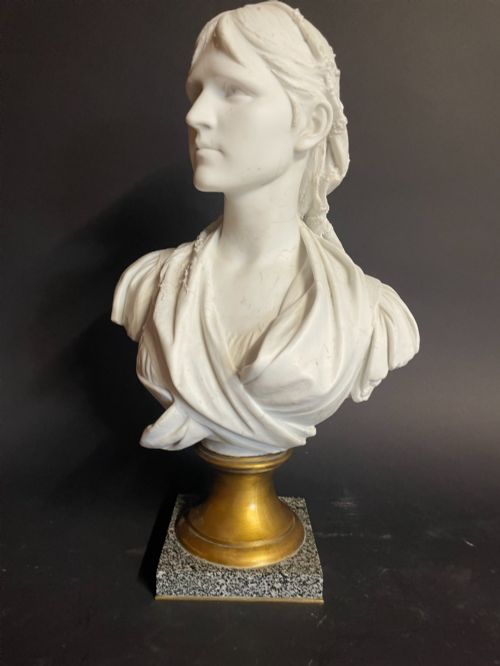
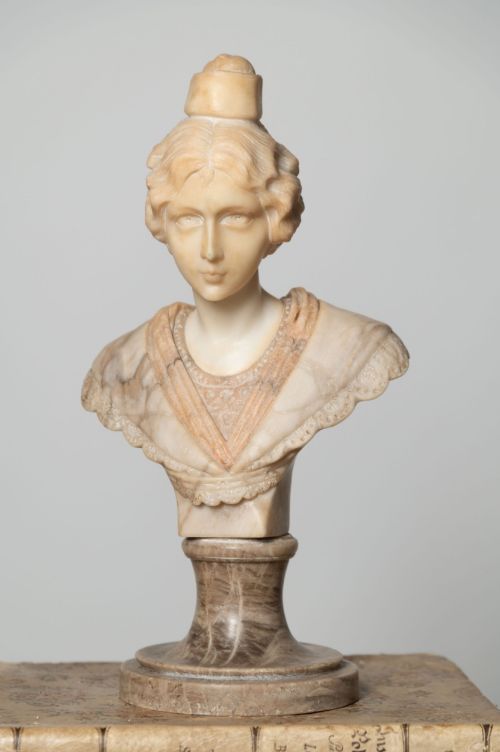
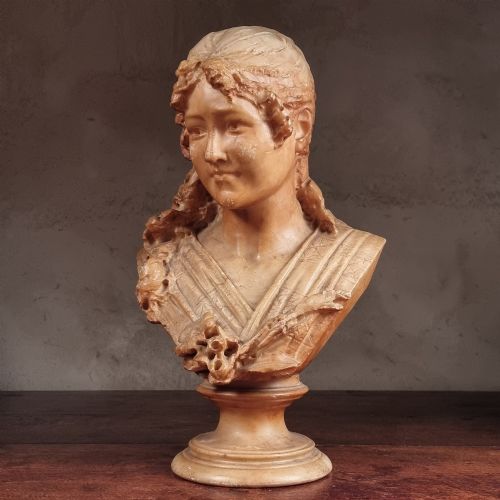
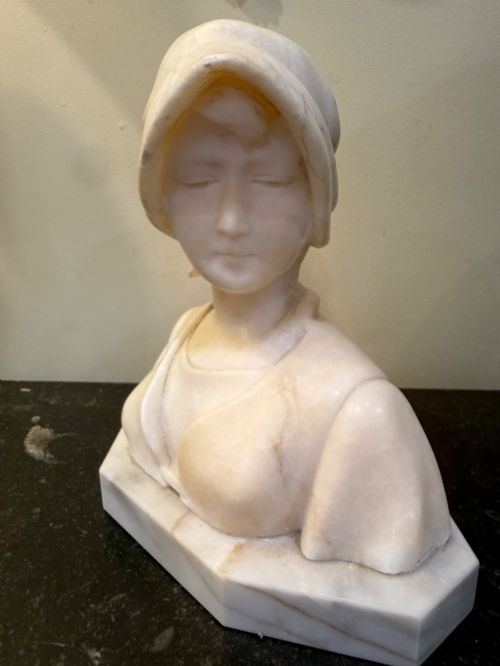
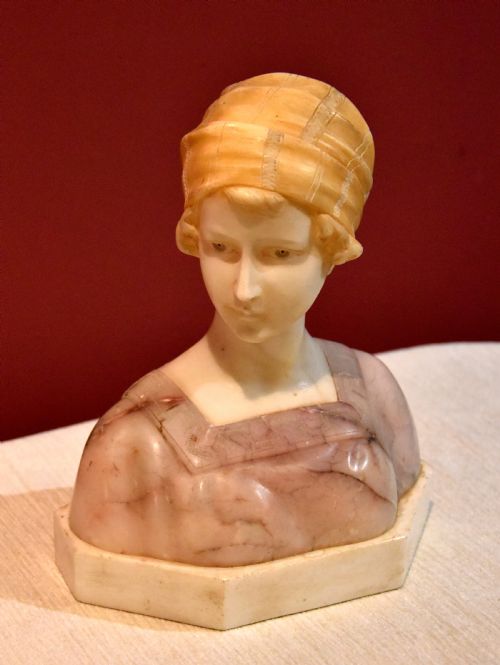
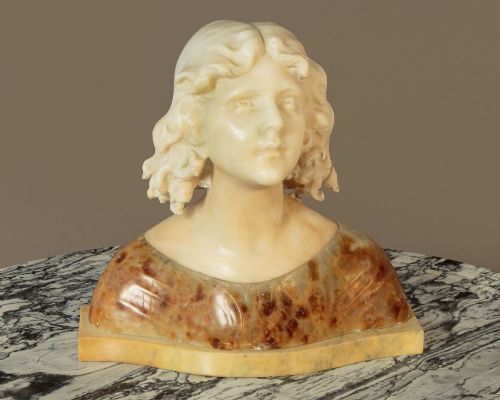


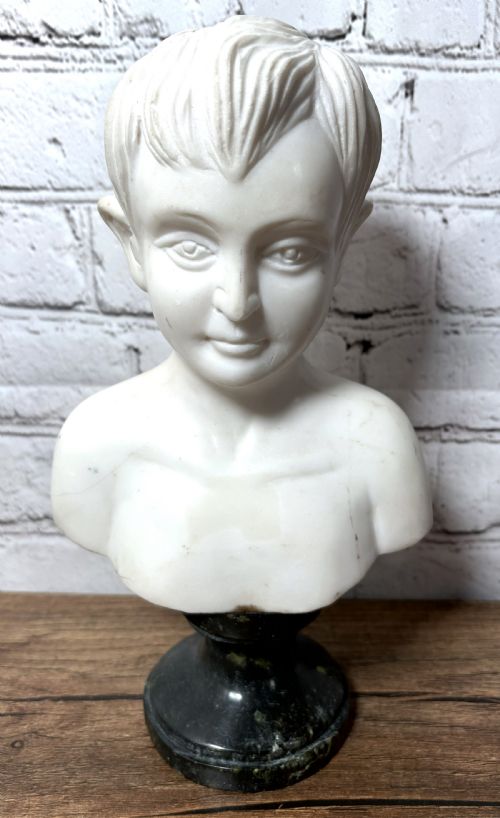


Carved Alabaster Bust
These pieces are a carved alabaster bust, capturing figures in stone for display on a shelf or plant stand.

Carved Alabaster Bust
A carved alabaster bust presents a portrait study of a female, child or historical figure rendered in fine stone. The most common version met on this page is a nineteenth century Italian or French sculpture depicting a young woman, girl or literary subject.
Makers produced these works as portrait busts, wall plaques and library studies, drawing on Neoclassical, Victorian and Art Nouveau styles. The subject matter ranges from classical poets like Dante and Virgil to anonymous maidens and children.
Materials and construction
Sculptors carved these pieces from alabaster, marble and stone, sometimes combining white alabaster with contrasting coloured marble or bronze. Certain works incorporate brass, ormolu or granite to mount the stone figure onto a pedestal or plinth.
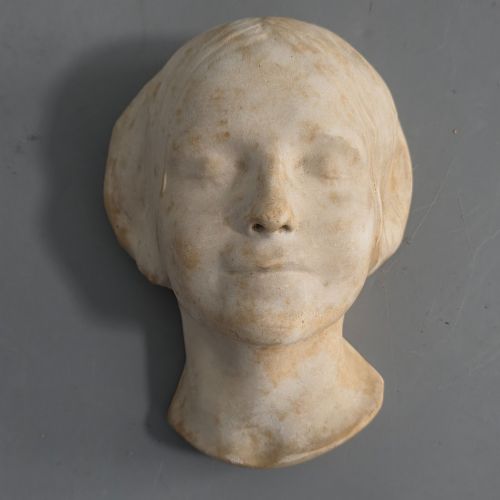
The carving technique relies on hand chiselling and polishing to achieve the translucent quality characteristic of fine alabaster. Artisans also utilised death masks, such as the L'inconnue de la Seine, to cast and carve exact facial contours.
Carved Alabaster Bust Retail Price Guide 2026
Typical asking prices for carved alabaster bust among the pieces listed under this phrase on Sellingantiques today, from the lower quarter to the upper quarter. They describe what is for sale here now, not the wider market.
Listings feature nineteenth and early twentieth century periods, utilising alabaster, marble, bronze and brass across Neoclassical and Art Nouveau styles.
Distinctions in quality
The inclusion of a signature from a known sculptor or studio elevates the piece from a commercial workshop production to a distinct work of art. Integration with secondary materials like marble bases or bronze mounts also marks out finer examples.
Auguste Henri Carli·Mieczyslaw Leon Zawiejski·G.V. Vaerenbergh·Joseph Gott·R. Lusili·Guglielmo Pugi·A. Cipriani
The Carved Alabaster Bust Glossary
- Alabaster
- A fine-grained, translucent stone used by sculptors for delicate portrait work. It absorbs light slightly beneath the surface, giving skin tones a life-like warmth.
- Ormolu
- Gilded bronze applied as a mount or decorative element on sculptures. It provides a rich metallic contrast to white alabaster and marble.
- Patination
- The surface appearance acquired by stone and metal over time through handling and age. It distinguishes antique pieces from modern reproductions.
- Plinth
- A heavy base or pedestal upon which a bust is set for display. Many nineteenth century examples include matching alabaster or marble plinths.
Carved Alabaster Bust: Frequently Asked Questions
What is a carved alabaster bust?
A carved alabaster bust is a three dimensional portrait sculpture fashioned from translucent gypsum or calcite stone. These pieces typically depict the head, neck and shoulders of a female subject, child or historical figure.
Originating largely from European workshops during the nineteenth century, they served as interior decorative objects for libraries, drawing rooms and studies.
Are these busts signed by artists?
Some carved alabaster busts carry signatures, monograms or foundry marks incised directly into the stone or cast into the bronze mounts. Signatures identify European sculptors working within French and Italian traditions during the nineteenth and early twentieth centuries.
Unsigned pieces remain common and typically represent quality workshop production rather than individual master carvers.
Where should I display a bust?
These sculptures require stable placement away from direct sunlight, high humidity and temperature fluctuations that can stress the stone. A sturdy wooden mantelpiece, library shelf or dedicated plant stand provides adequate support for heavy stone.
Because many examples feature delicate carved hair or protruding drapery, positioning them out of heavy traffic areas prevents accidental impact.