
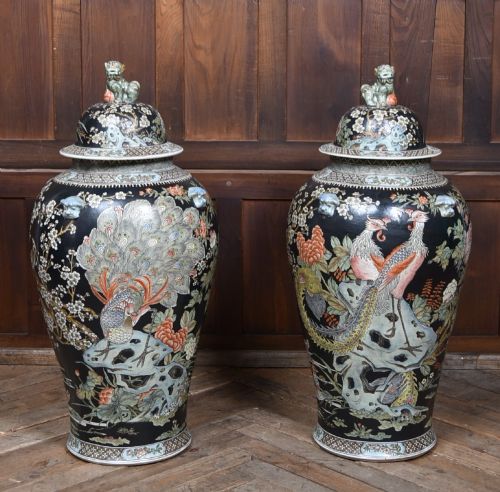
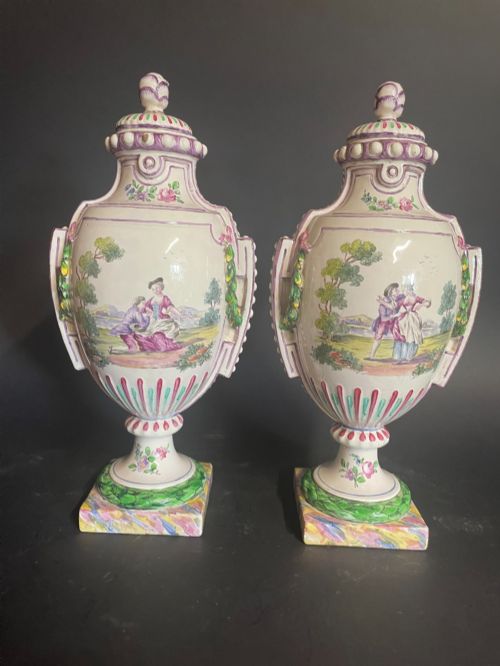
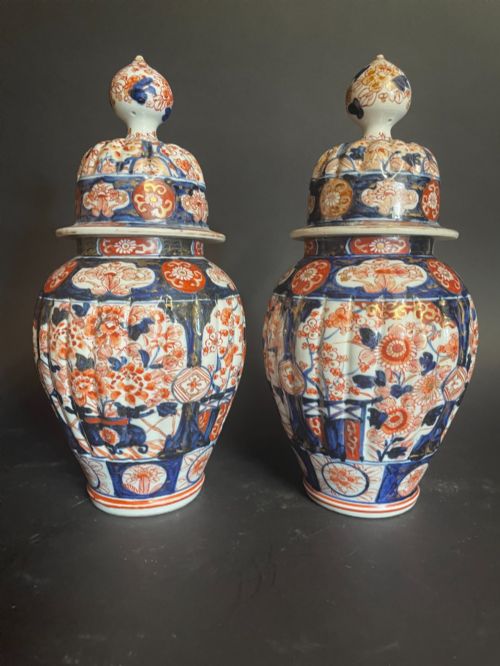
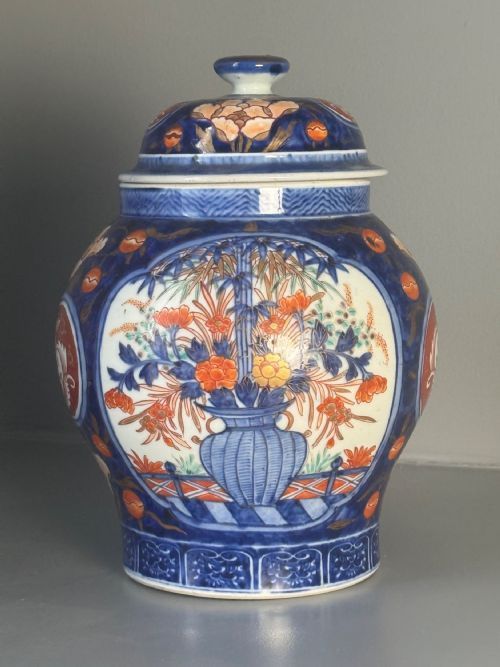

Covered Ceramic Jar
A covered ceramic jar brings centuries of kiln craft and painted detail into a room, offering both sculptural presence and enclosed storage.
Covered Ceramic Jar
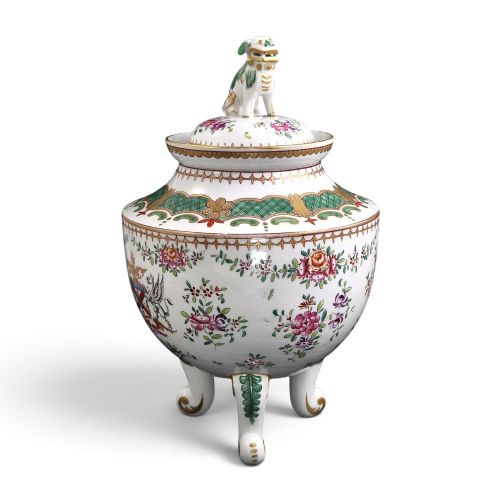
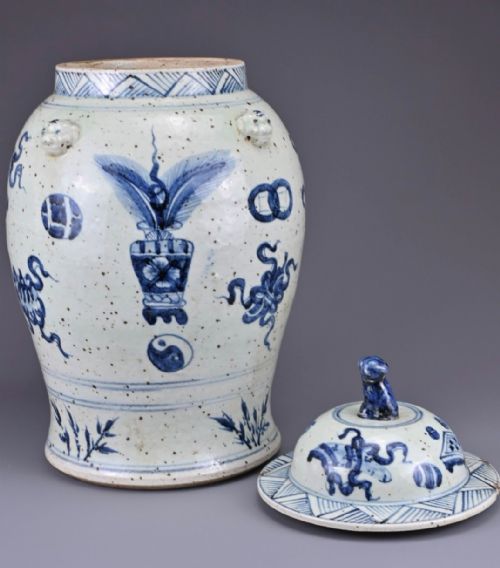
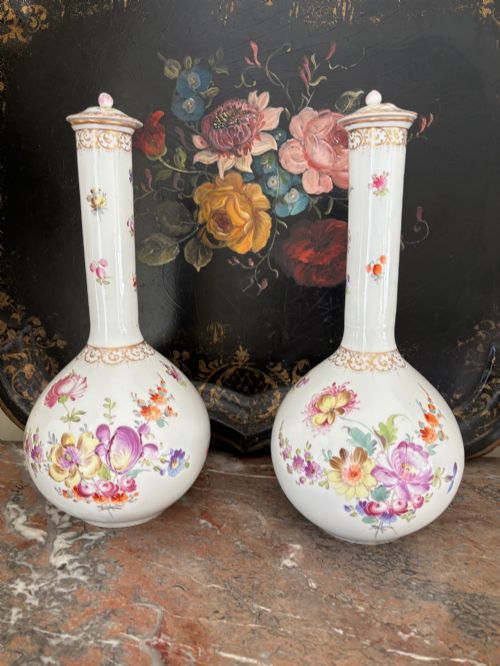
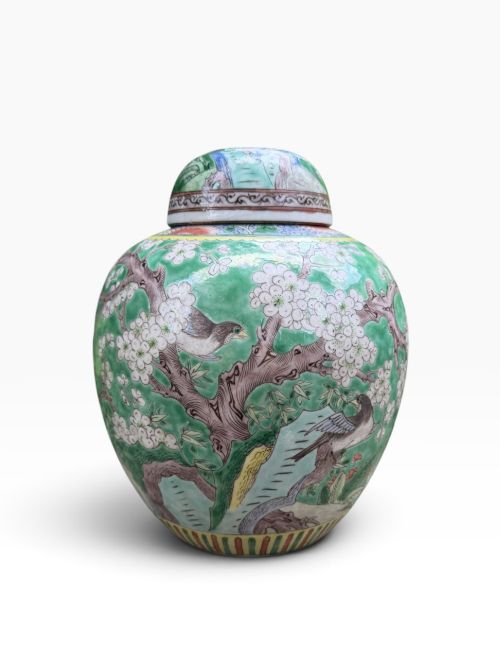
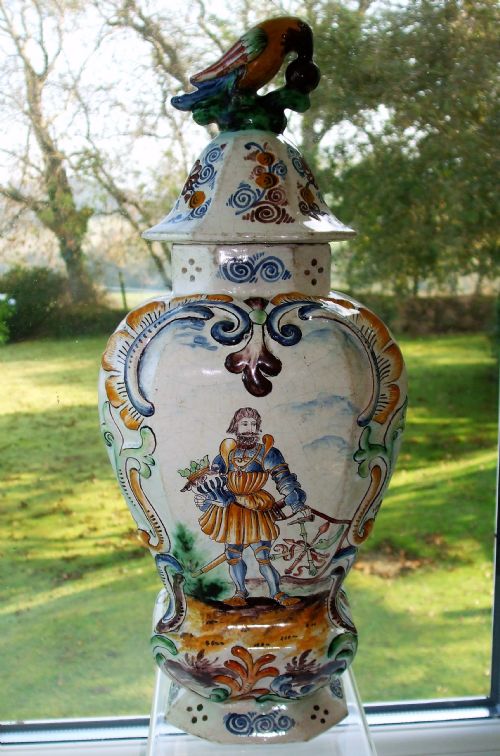
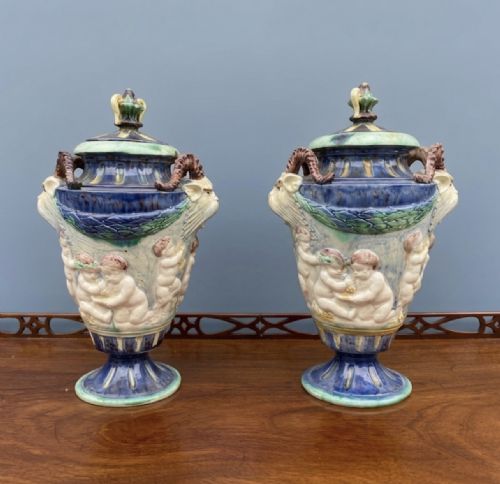
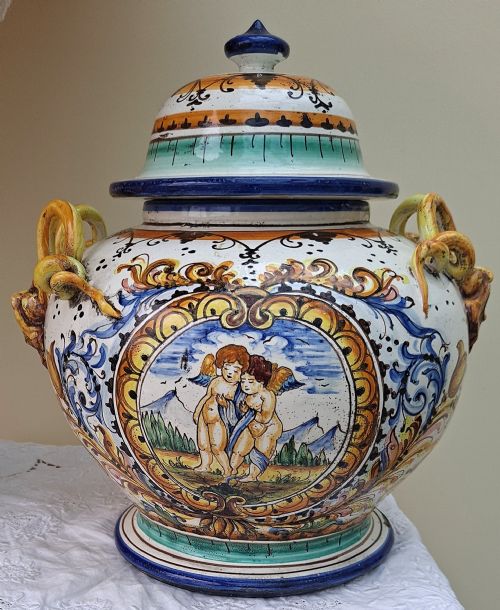
A covered ceramic jar is a vessel designed with a matching lid, appearing in forms such as ginger jars, ginger jar and cover sets, urns, and pot-pourri containers. These pieces cross European and Asian traditions, spanning periods from the eighteenth century through to the early twentieth century.
The domestic and display functions of these vessels range from storage for dry goods and tobacco to ornamental floor jars and cabinet vases. Continental and English factories produced earthenware and porcelain versions, while imported Asian wares brought blue and white porcelain and Imari palettes to Western interiors.
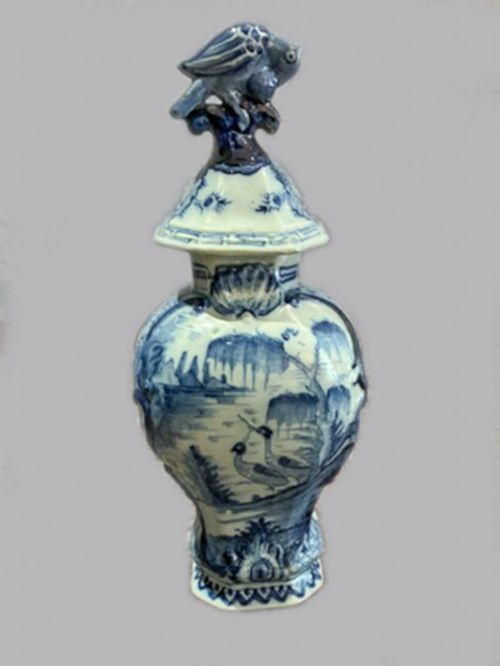
Buyers browsing this selection frequently encounter nineteenth-century Japanese Imari wares, English porcelain and ironstone factories, and eighteenth-century Delftware. Bulbous forms and lidded ginger shapes dominate the available selection.
Materials and Techniques
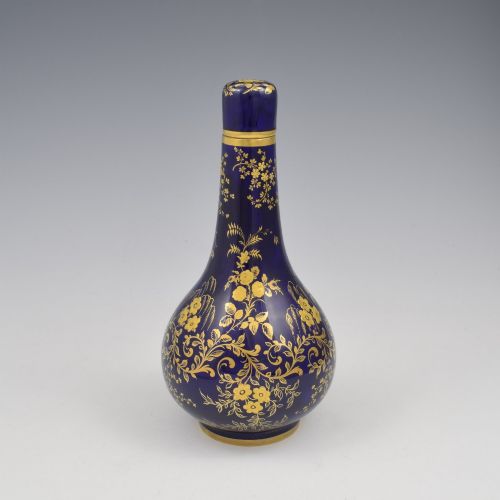
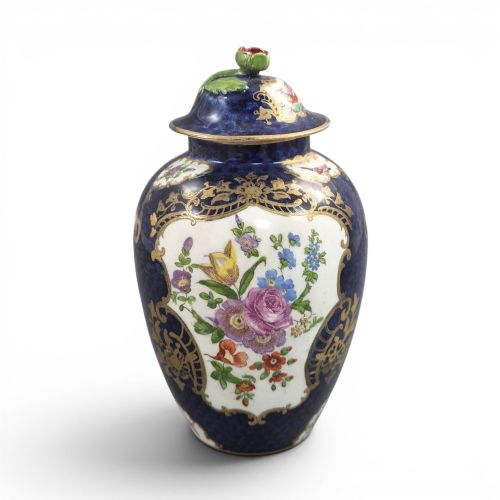
Potters shaped these bodies from clay, earthenware, porcelain, and ironstone, applying tin-glaze or transparent porcelain glazes before firing. Many vessels received hand-painted underglaze blue, polychrome enamels, and surface gilding or gold leaf.
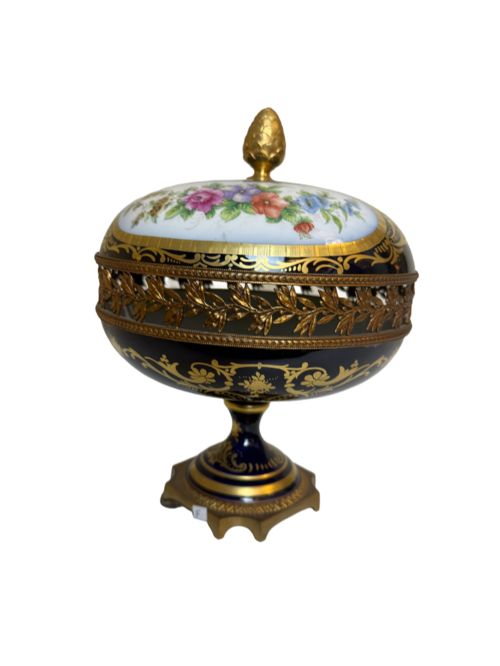
European factories often emulated Asian decorative vocabularies, employing Chinoiserie motifs alongside traditional Dutch Baroque or Victorian floral schemes. Selected pieces integrated cast ormolu mounts to secure the ceramic body and lid.
Victorian smokers kept their tobacco fresh inside ceramic jars shaped like a smiling Pierrot.
Markers of Quality
Quality rests upon the crispness of the ceramic form, the precision of the hand-painted decoration, and the harmonious fit between jar and lid. Superior examples display controlled brushwork, rich enamel saturation, and stable glaze applications without firing distortion.
The distinction between standard production wares and exceptional pieces also lies in the depth of the palette and the complexity of the design, such as intricate gilding or finely rendered figurative scenes.
Royal Worcester·Royal Crown Derby·Sitzendorf·Coalport·Samson Paris
The Covered Ceramic Jar Glossary
- Ginger jar
- A ceramic vessel with a wide rounded body and a flat or domed lid, originally utilised for storing spices. These pieces now serve primarily as decorative mantel or cabinet items.
- Tin-Glazed Earthenware
- Pottery coated with an opaque white tin oxide glaze that provides a smooth surface for painted decoration. This technique defines European Delftware and maiolica.
- Imari
- A style of Japanese porcelain featuring a tripartite palette of underglaze blue, iron red, and gold. European factories frequently copied these distinct patterns during the eighteenth and nineteenth centuries.
- Pot-pourri
- A lidded vessel perforated to release the scent of dried flower petals and spices placed within. These decorative jars often feature pierced ceramic covers.
- Chinoiserie
- European artistic interpretations of Chinese and East Asian decorative motifs. This style appears frequently on eighteenth and nineteenth-century porcelain and earthenware.
Covered Ceramic Jar: Frequently Asked Questions
What were covered ceramic jars originally used for?
These vessels served practical storage roles in domestic and commercial settings, holding items such as ginger, spices, dry foods, and tobacco.
Over time, many of these jars shifted away from utilitarian storage to function purely as decorative ornaments, table centerpieces, or lidded urns displayed on furniture.
How do I distinguish eighteenth-century Delft from nineteenth-century copies?
Eighteenth-century Delftware typically exhibits a softer, more porous earthenware body beneath a tin-glaze that shows characteristic minor imperfections and crazing.
Later nineteenth-century revival pieces often display harder ceramic bodies, brighter chemical pigments, and manufacturing marks that reflect industrial standardisation.
Are jar lids usually original to the piece?
Lids on antique ceramic jars can sometimes be marriage pieces assembled at a later date, due to the fragile nature of ceramics over centuries.
Examining the glaze consistency, wear patterns, and clay body between the jar and the lid helps determine whether the components were fired and designed together.
How should I clean and care for a lidded ceramic jar?
Dusting the surface gently with a soft dry cloth maintains the glaze and any delicate overglaze enamels or gold leaf gilding.
Harsh chemical cleaning agents, abrasive cloths, and submersion in water should be avoided, particularly on pieces with porous earthenware bodies or applied metal mounts.