
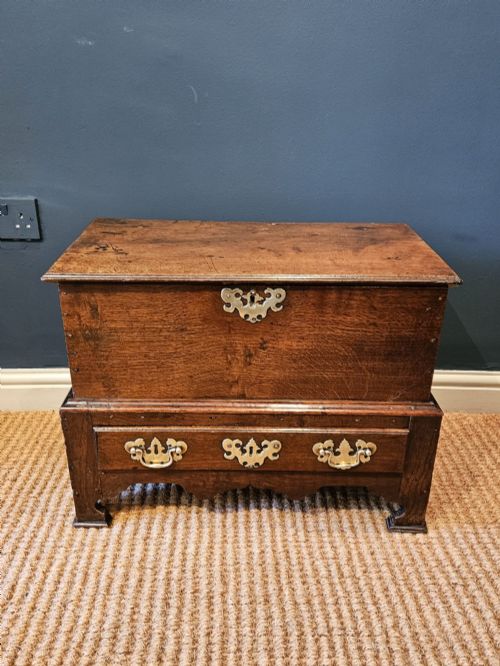


Coffer Bach Chest
A coffer bach chest is a small Welsh storage piece that brings centuries of regional craft into a modern room.
Coffer Bach Chest
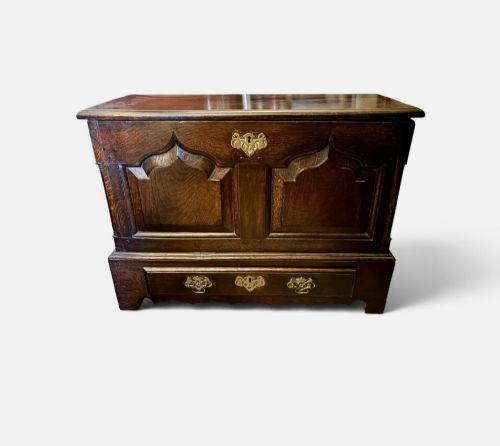
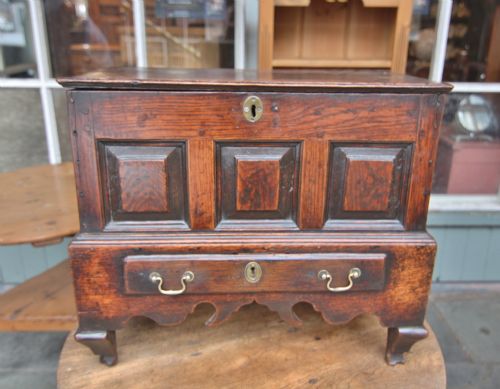
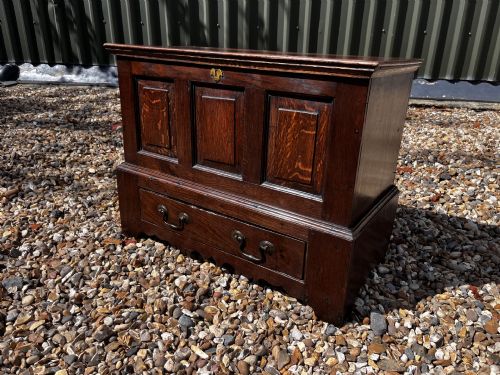
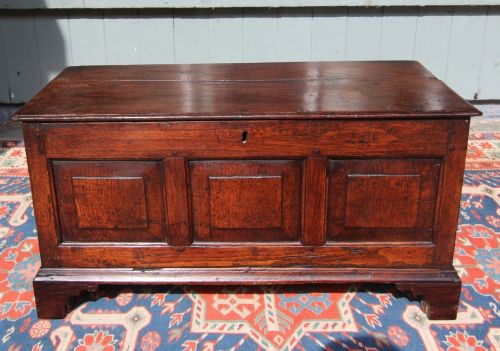
When you search for a coffer bach chest, you are looking at diminutive Welsh storage chests constructed during the seventeenth, eighteenth and nineteenth centuries. These miniature coffers combine the form of a full-size blanket chest with a scaled-down footprint, often featuring a small drawer or two beneath the main compartment.
The pieces on this page span the 17th century through to 1870, with Georgian examples predominating. Most originate from Welsh country workshops, taking the form of miniature chests, mule chests or small coffers mounted on turned feet.
Collectors encounter variations described variously as miniature coffers, small chests or coffor bach, reflecting regional Welsh nomenclature. They served historically as valuables chests or presentation pieces within domestic interiors.
How they were made
Joiners constructed these chests primarily from solid oak, sometimes augmented with fruitwood and timber inlay. Structural integrity relied on traditional pegged joinery and panelled construction.
Hardware played a functional and decorative role, with makers utilising brass and iron for hinges, escutcheons and drawer pulls. Turned feet elevate the body, while interior compartments often included small till boxes.
Some miniature chests hide tiny internal compartments behind false drawer fronts, designed to outwit curious fingers.
What varies in quality
Quality rests upon the crispness of the initial joinery and the survival of original surfaces. Pieces displaying crisp timber inlay, well-proportioned turned feet and undisturbed brass or iron hardware stand apart from altered examples.
Proportion dictates much of the appeal, as smaller and earlier seventeenth-century or mid-eighteenth-century examples demonstrate greater scarcity and refined regional character compared to later nineteenth-century iterations.
The Coffer Bach Chest Glossary
- Coffer bach
- A small Welsh chest, translating literally from Welsh as little coffer. These miniature pieces often include internal till boxes and external base drawers.
- Mule chest
- A storage chest fitted with one or more drawers at the base beneath the main lifting lid compartment. They bridge the gap between traditional coffers and modern drawer chests.
- Fruitwood inlay
- Decorative contrasting wood inserted into the primary oak surface to form geometric or floral patterns. It adds visual texture to Welsh country furniture.
- Turned feet
- Feet shaped on a lathe to support the body of the chest. Early examples feature distinctive ball, bun or peg turnings characteristic of regional seventeenth and eighteenth-century joinery.
Coffer Bach Chest: Frequently Asked Questions
What is a coffer bach used for?
Historically, these miniature chests served to store precious documents, linen, or family valuables. Their compact size made them suitable for keeping personal items secure within a household.
Today, collectors utilise them as decorative tabletop display pieces or compact storage boxes in living spaces.
Are coffer bach chests always Welsh?
The traditional term coffor bach originates from Wales, and the vast majority of these miniature chests stem from Welsh regional workshops. Makers in rural Wales developed distinct vernacular styles.
Similar small chests appeared in other regions, but the classic nomenclature links directly to Welsh cabinet-making.
How do I care for an antique oak coffer?
Keep the timber away from direct heat sources and sudden humidity changes to prevent wood splitting. Gentle dusting with a dry cloth maintains the surface.
Avoid modern silicon polishes; traditional wax feeds the dry oak and preserves the historic patination over time.