
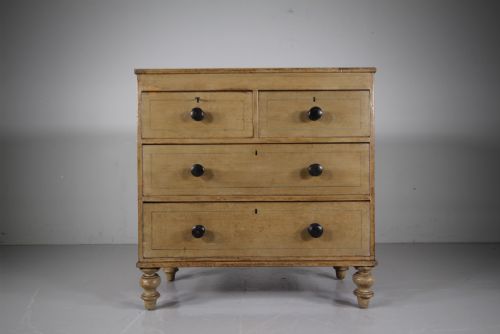
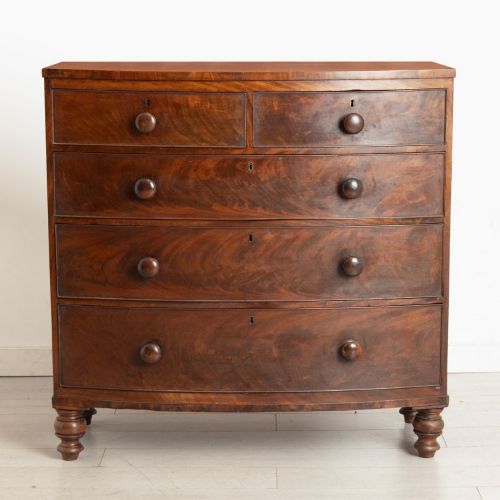
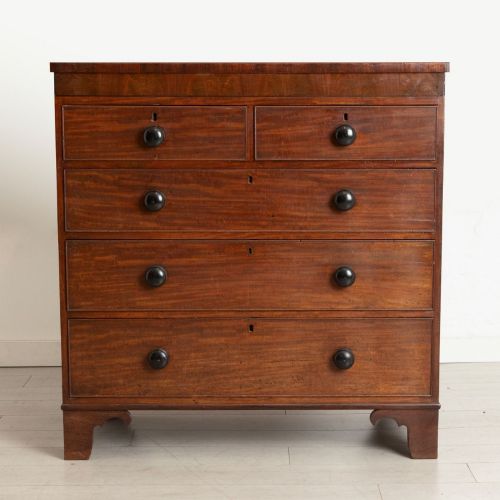


Turned Feet Chest
A turned feet chest brings sturdy domestic storage from the Georgian, Regency, and Victorian eras into your rooms.
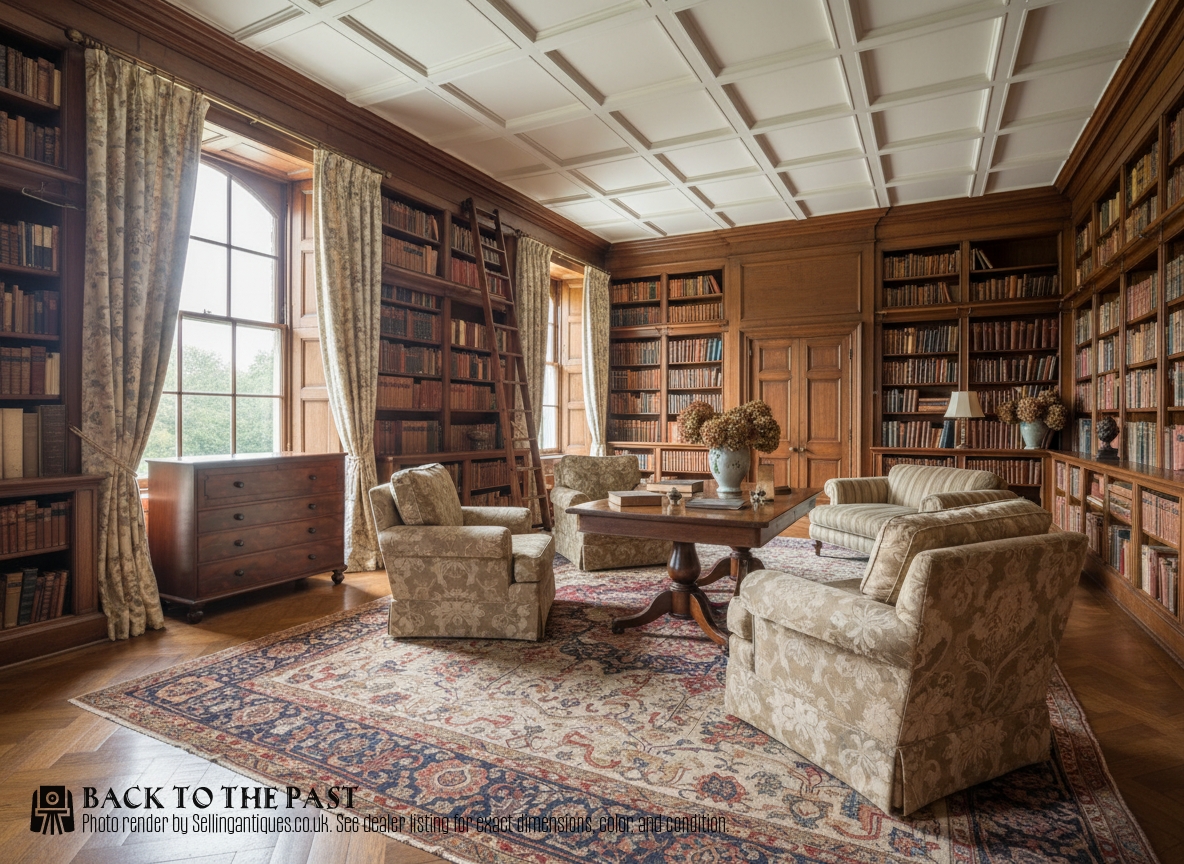
Turned Feet Chest
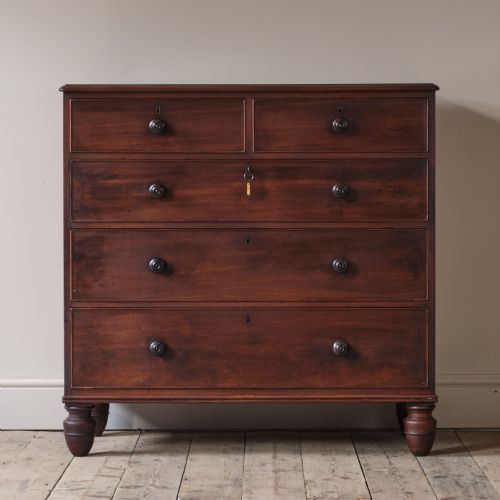
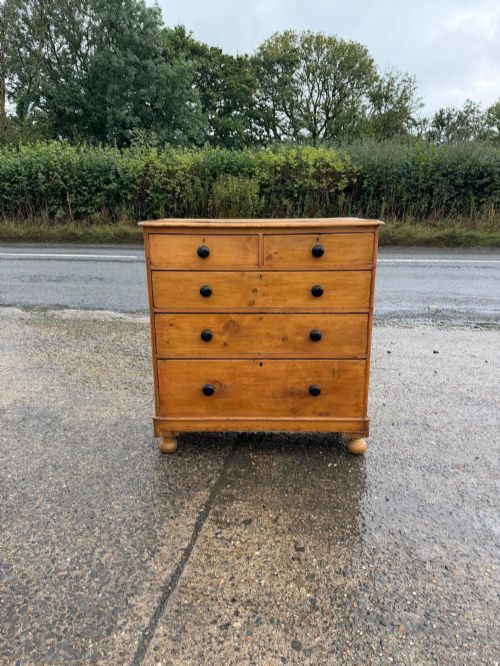
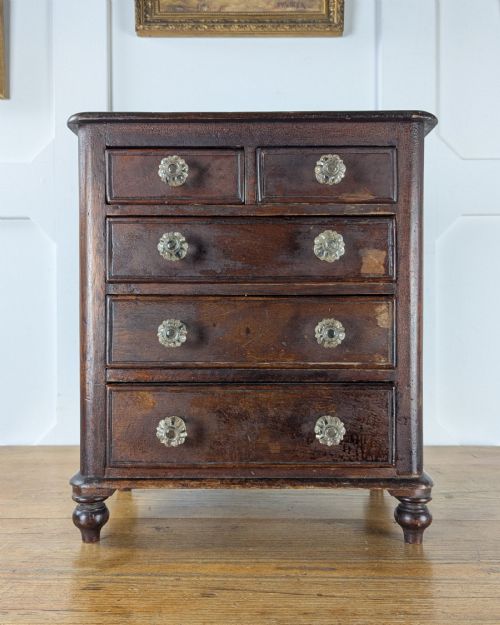
A turned feet chest is a substantial storage piece raised on circular supports turned on a lathe. These items range from full-sized mahogany and pine chests of drawers to miniature apprentice pieces and Welsh vernacular coffor bach boxes.
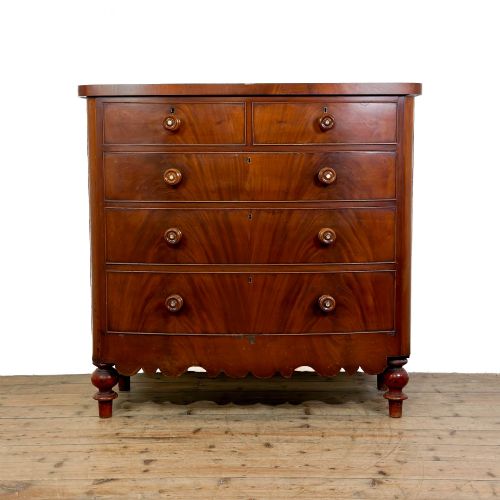
The Victorian pine and mahogany examples form the backbone of the selection on this page, often appearing with two small drawers over three larger ones. Earlier Georgian and Regency models also emerge in mahogany and oak, alongside painted finishes.
Miniature chests and small coffers appear frequently, showing the same attention to turned supports as their larger counterparts. Buyers will find both traditional timber grains and original painted surfaces across these domestic forms.
Materials and construction
Cabinet makers utilised solid woods like mahogany, oak, pine, and satin birch to build the carcase and drawers of each turned feet chest. Brass hardware, mother of pearl accents, and glass elements occasionally appear on handles and key escutcheons.
Turned feet and matching knobs were shaped on a lathe, a defining characteristic that elevated the base of the chest off the floor. Original paint finishes, dry-scraped surfaces, and traditional tongue-and-groove construction are frequently recorded in the evidence.
Periods represented range from the early 18th century through the Georgian and Regency eras into the Victorian period.
Assessing quality and character
The distinction between standard examples and finer pieces rests in the retention of original surfaces and components. Chests retaining their original turned knobs, feet, and dry-scraped paint hold significantly more historical integrity than those with replaced elements.
Timber selection and secondary woods also drive the grading of a turned feet chest, with dense mahogany and figured satin birch sitting alongside utilitarian pine. The crispness of the lathe work on the feet reveals the maker's hand and the overall refinement of the piece.
T & G Seddon
The Turned Feet Chest Glossary
- Coffor bach
- A small Welsh box or coffer, often fitted with drawers and raised on turned feet. These miniature blanket chests served domestic storage needs in 18th-century Wales.
- Bow front
- A convex curved cabinet front that projects outward in an arc. This styling appears frequently on Georgian and Victorian chests of drawers.
- Apprentice piece
- A small-scale model of a piece of furniture created by a craftsman to demonstrate skill. These miniature chests frequently mirror the exact construction of full-sized versions.
- Scraped finish
- A conservation technique where later overpaint is carefully removed to reveal the original colour beneath. This process preserves the earliest surviving decorative layer of the pine.
Turned Feet Chest: Frequently Asked Questions
What is a turned feet chest?
A turned feet chest is a traditional storage unit raised on circular wooden supports shaped on a lathe. These pieces span multiple centuries and include full-sized mahogany drawers and smaller pine boxes.
They function primarily as drawer storage or small coffers, offering a practical footprint with raised clearance from the floor.
How do I date a turned feet chest?
Dating relies on timber choice, construction methods, and overall proportions associated with periods like the Georgian, Regency, and Victorian eras. Mahogany and oak dominate earlier centuries, while painted pine becomes prevalent later.
Foot design and secondary woods inside the drawers provide further clues to the decade of manufacture.
Were these chests always painted?
Original paint finishes appear alongside polished mahogany, oak, and satin birch surfaces. Many Victorian pine examples were originally painted or retain dry-scraped surfaces showing early colour.
Applied paint finishes vary from plain schemes to decorative treatments recorded in regional vernacular pieces.