


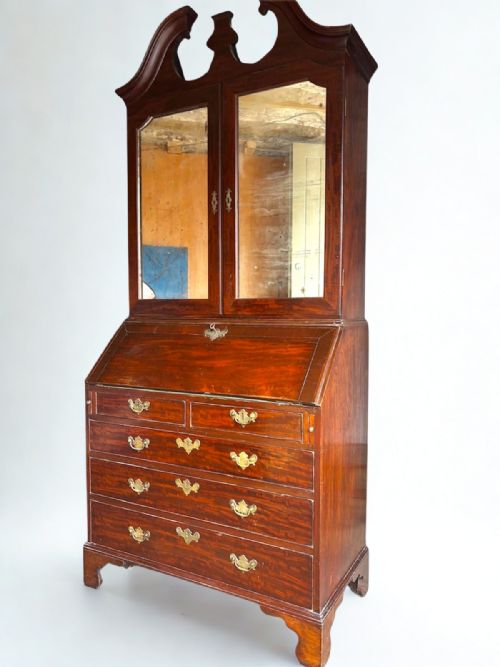


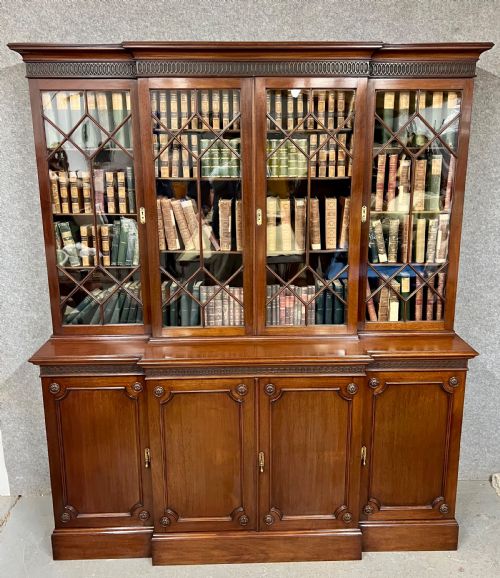


Chippendale Secretary Cabinet
A chippendale secretary cabinet combines a fitted writing desk and a glazed bookcase in a single timber housing.
Chippendale Secretary Cabinet
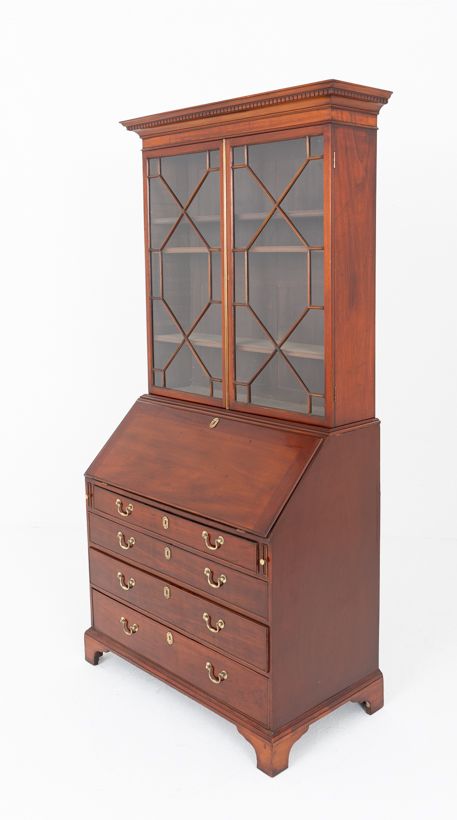
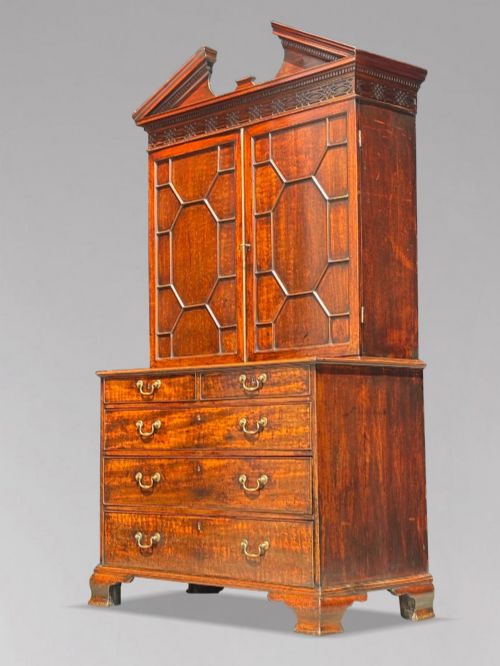
A chippendale secretary cabinet serves as a dual-purpose piece of furniture, combining a lower writing desk with an upper bookcase enclosed by glass doors. The form appears primarily across the eighteenth century, alongside later revival iterations from the early twentieth century.
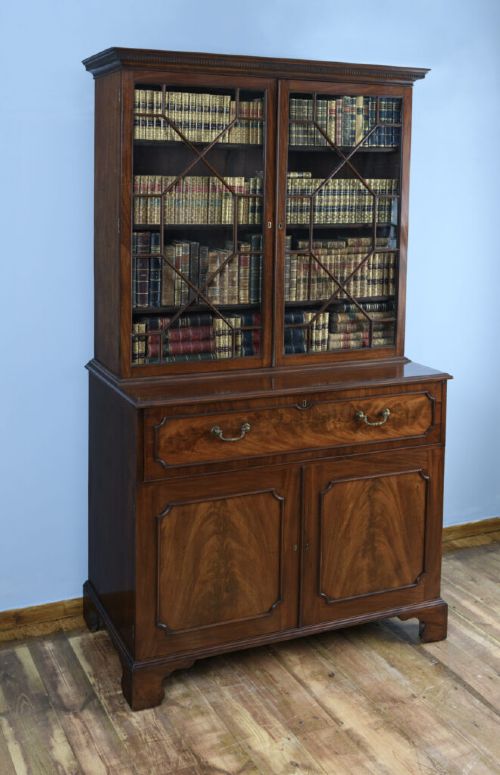
Makers constructed these pieces as bureau bookcases or secretaire cabinets, incorporating fall-front desks or fitted writing drawers. Examples span Georgian, George III, and Irish Georgian styles, alongside later Chippendale Revival pieces.
How they were made
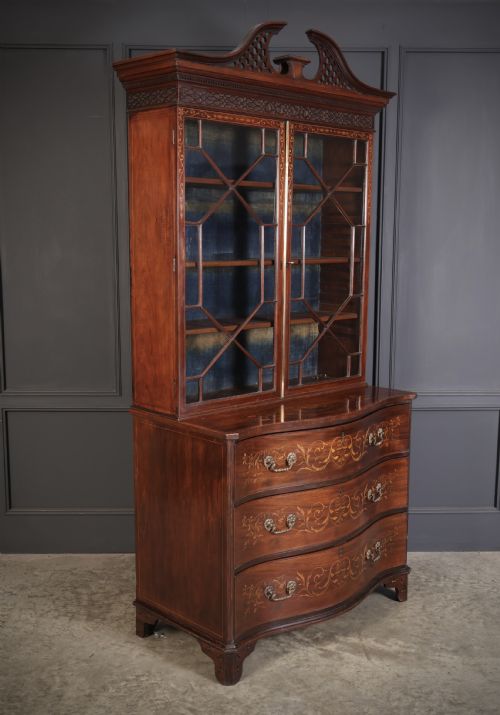
Cabinetmakers built these pieces principally using solid mahogany and oak, often incorporating marquetry inlay, satinwood, and gold leaf for decorative contrast. Brass hardware such as escutcheons and handles secured drawers and doors.
Glazing bars divided the upper cabinet doors into geometric panes to house glass panels securely. Secondary timbers such as oak appeared in drawer linings and internal divisions.
Listings feature mahogany, oak, satinwood, and marquetry inlay alongside brass hardware and glass panels.
What varies in quality
The refinement of carved ornament on pediments, friezes, and bracket feet separates high-status examples from simpler workshop output. Cabinetmakers invested greater time in figured timber selection and crisp joinery for prominent elevations.
Internal configuration also marks the grade of a piece, with fitted pigeonholes, secret compartments, and small drawers showing superior interior architecture. The integration of original brasses and undisturbed timber patination alters the standing of an example.
Thomas Chippendale·Giles Grendy
The Chippendale Secretary Cabinet Glossary
- Bureau bookcase
- A cabinet combining a sloping or fall-front writing desk with an upper shelved bookcase. This form represents the primary configuration found in these listings.
- Pediment
- The decorative architectural crown above the upper bookcase doors. Examples frequently take the form of swan neck designs.
- Marquetry inlay
- Decorative patterns formed by fitting contrasting veneers into timber surfaces. Makers employed this technique on select panels.
- Bracket foot
- A structural support extending from the bottom corners of the cabinet body. It lifts the base off the floor with a clean profile.
Chippendale Secretary Cabinet: Frequently Asked Questions
How do I use a secretary cabinet?
Lower the fall-front flap or pull out the secretaire drawer to reveal the writing surface and internal pigeonholes. Store books and display items behind the upper glass doors.
Keep the writing surface clear of heavy objects to protect the hinges and fall-front supports during daily use.
How do I tell an 18th century piece from a revival?
Examine the secondary timbers, construction joints, and timber patination for signs of period hand-tooling. Eighteenth-century examples display construction methods consistent with Georgian workshops.
Twentieth-century revival pieces often utilise standardised internal framing and machine-cut elements while copying earlier Chippendale forms.
Where were these cabinets placed in a home?
Owners positioned them in libraries, parlours, and private studies where correspondence and book collections were managed. They served as central administrative hubs for wealthy households.
The combined storage design allowed a single piece of furniture to handle both writing tasks and library organisation.
What woods are typical for these cabinets?
Mahogany serves as the dominant timber across the majority of pieces, frequently selected for its rich grain and stability. Oak also appears, particularly in regional Welsh examples.
Cabinetmakers accented these primary woods with satinwood veneers and marquetry inlay details on select decorative surfaces.