



Chippendale Period Bookcase
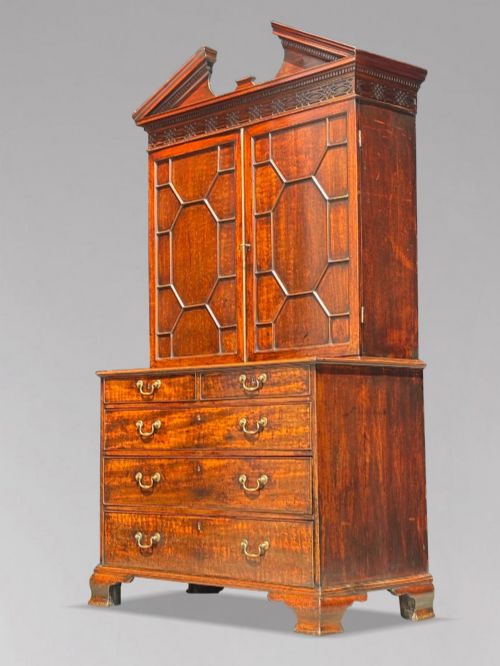
A chippendale period bookcase is a Georgian library centrepiece in solid mahogany, built to house and display calfskin volumes with architectural gravity.
Chippendale Period Bookcase
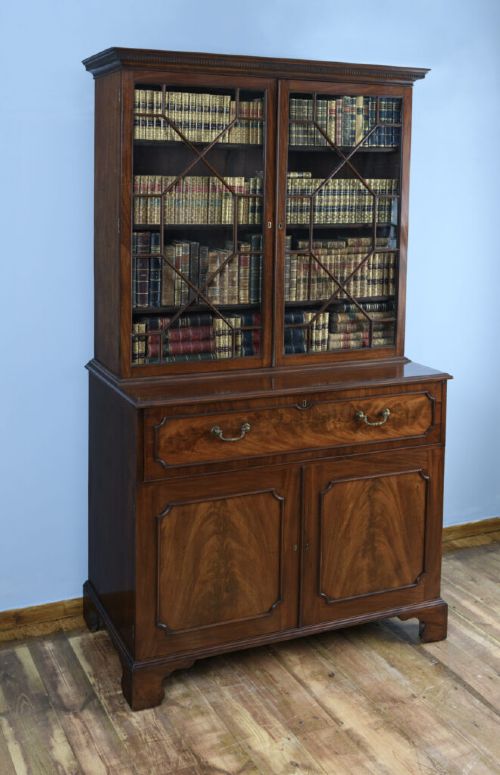
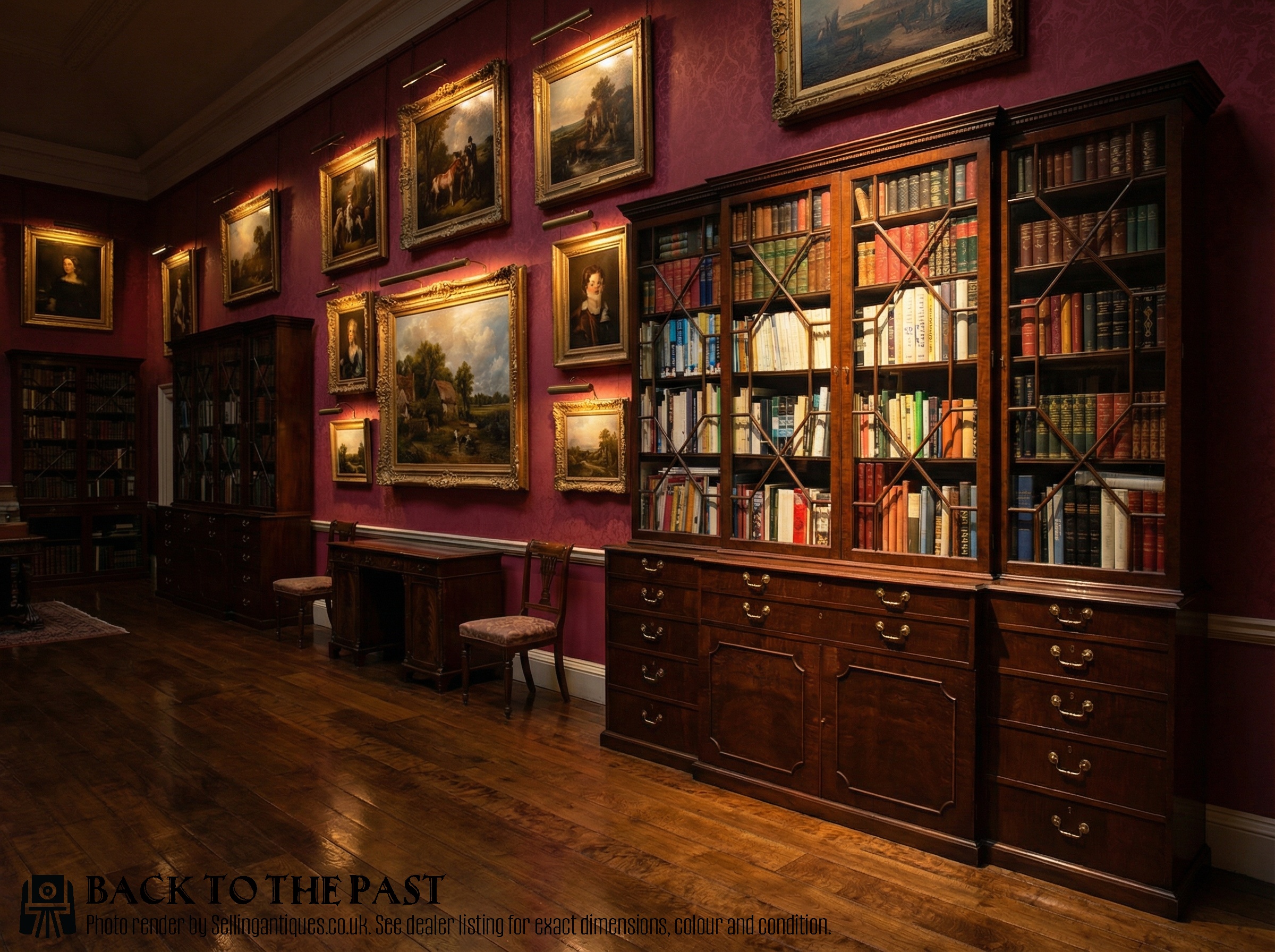
When you search for a chippendale period bookcase, you encounter tall mahogany storage pieces originating in the eighteenth century, dominated by Georgian proportion and glazed upper doors. The selection includes standard bookcases, bureau bookcases, secretaire bookcases, and expansive breakfront designs suited to country houses.
Most examples date to the eighteenth century or the reign of George III, built from rich timbers with glass fronts and fitted lower drawers. The pieces combine practicality with architectural presence, offering deep shelves above and drop-front writing desks or drawer chests below.
How they were made
Cabinet makers constructed these pieces primarily from solid mahogany, supported by secondary timbers such as oak and pine for drawer linings and internal framing. Glazed upper doors utilised individual wooden glazing bars to hold glass panes secure, while brass hardware secured doors and drawers.
Joinery methods focused on robust housing for heavy volumes, integrating pigeonholes and small drawers within secretaire sections. Makers shaped the cornices and base mouldings by hand, applying polished finishes that brought out the natural grain of the mahogany.
One exceptional piece incorporates a Bramah lock, adding patented security to the gentleman's library.
What varies in quality
The distinction between standard examples and the finest pieces lies in the ambition of the architectural layout and the crispness of the carved mouldings. Breakfront configurations and complex secretaire interiors indicate higher status commission work, whereas simpler upright forms represent more straightforward workshop production.
Selection of timber grain and the complexity of the astragal glazing bars further divide the output. Pieces retaining original brass handles and fitted interior compartments command greater interest among collectors.
Thomas Chippendale·Bramah
The Chippendale Period Bookcase Glossary
- Secretaire bookcase
- A tall storage unit incorporating a fitted pull-out writing drawer with a drop-front panel. This feature conceals small drawers and pigeonholes for correspondence.
- Breakfront
- A cabinet design where the central section projects forward from the flanking wings. This configuration adds architectural depth and presence to large library furniture.
- Georgian
- Pertaining to the reigns of the British monarchs George I through George IV, spanning the eighteenth and early nineteenth centuries. It defines the classical proportion and decorative vocabulary of the period.
- Astragal
- A narrow wooden moulding used to divide glass panes within a door. Fine astragal bars create intricate geometric patterns across upper bookcase doors.
- Bureau bookcase
- A piece combining a sloping desk flap at mid-height with shelving above. The slope opens to reveal fitted compartments for writing materials.
Chippendale Period Bookcase: Frequently Asked Questions
How do I date a chippendale bookcase?
Dating relies on timber selection, secondary woods like oak or pine, and the construction of the interior drawers. Eighteenth-century examples display hand-cut dovetails and specific Georgian proportions.
Later revival pieces from the Edwardian period often employ different interior framing and machine-finished secondary elements that distinguish them from eighteenth-century originals.
How do I care for antique mahogany?
Maintain stable humidity levels and keep the wood away from direct heat sources to prevent the mahogany from splitting or warping. Dust gently with a dry, soft cloth and avoid silicone-based polishes.
Occasional application of traditional beeswax feeds the dry timber and preserves the depth of the nineteenth or eighteenth-century finish.
Where were these bookcases used?
These large pieces were built for the libraries, studies, and drawing rooms of grand Georgian country houses. They served both as working furniture for estate management and as display cases for leather-bound volumes.
Today, they function well in similarly proportioned reception rooms or home studies with high ceilings.