




Chippendale Library Cabinet
These chippendale library cabinet pieces are substantial timber bookcases built to house serious collections with architectural authority.
Chippendale Library Cabinet
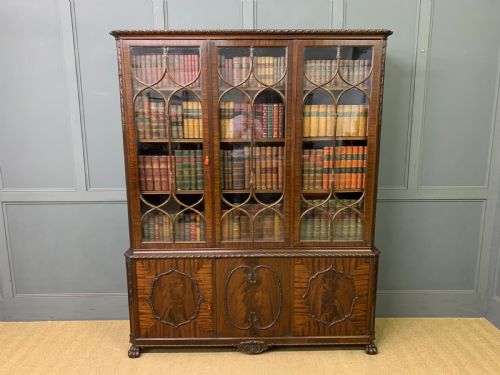
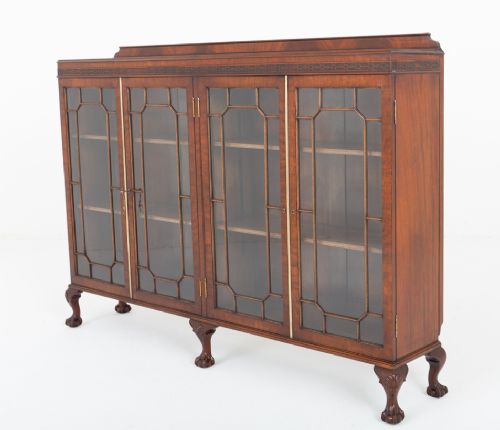
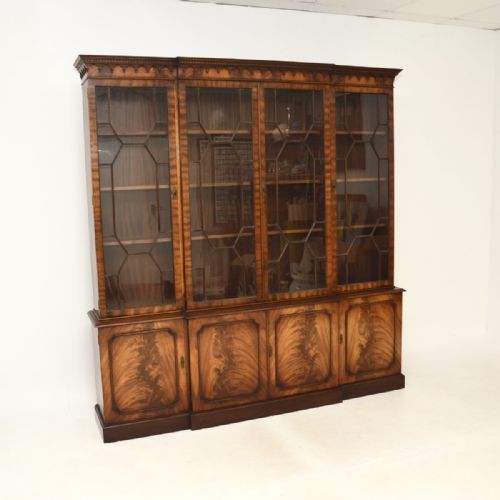
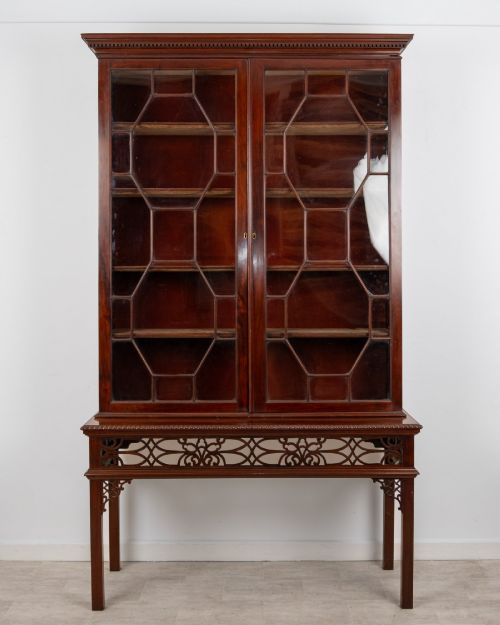
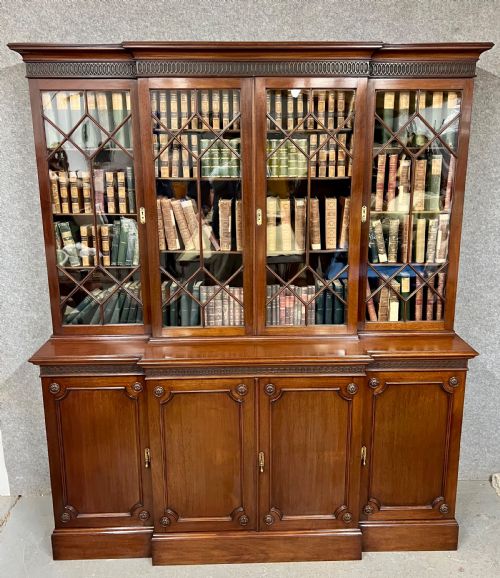
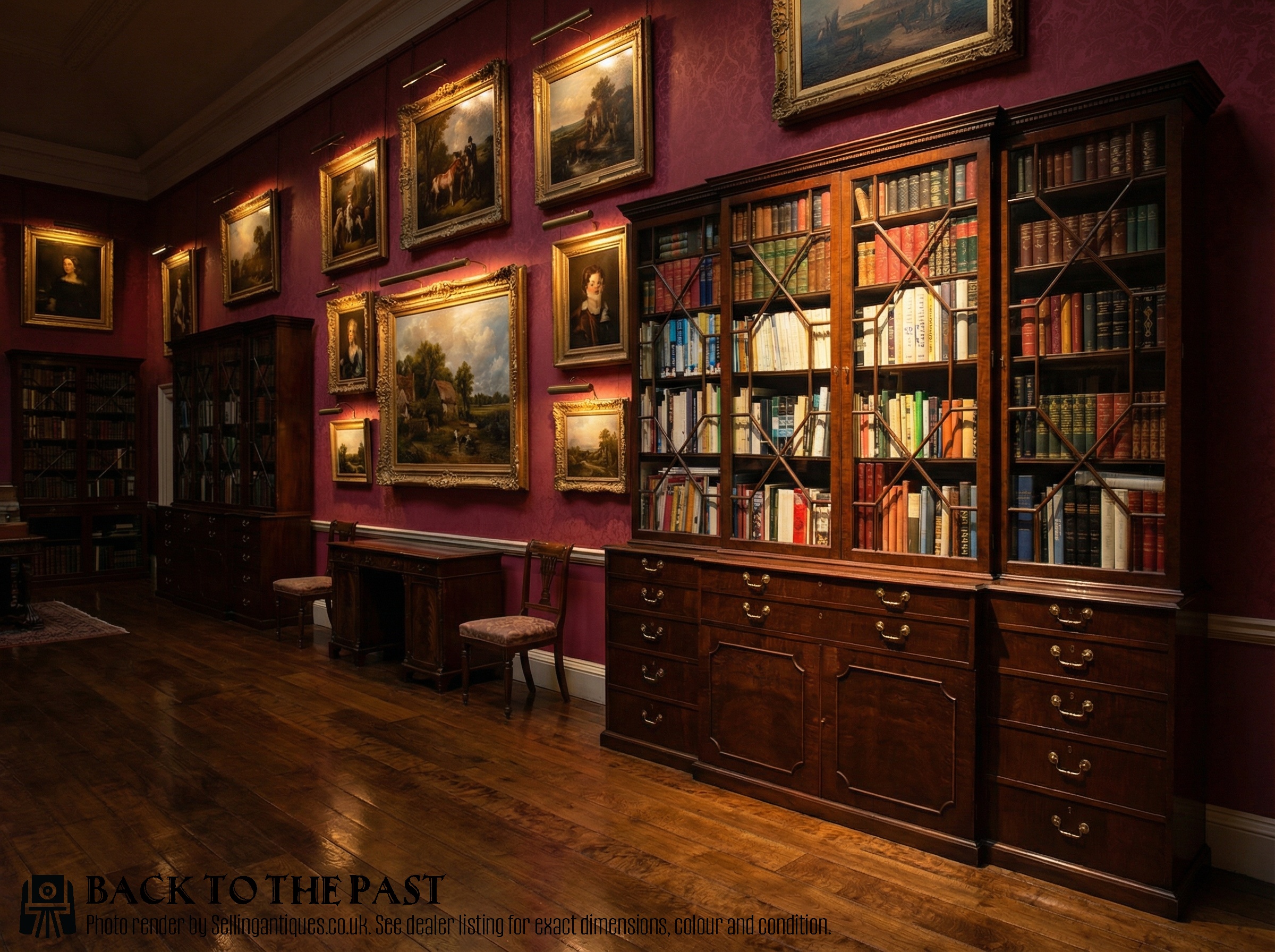
When you search for a chippendale library cabinet, you are looking at substantial breakfront bookcases, glazed display cabinets, and secretaire forms designed for serious collections. These architectural pieces dominate a room with their height and presence, offering generous storage behind glass doors.
The versions you are most likely to meet on this page span the eighteenth century through to later revival periods. They range from authentic Georgian originals down to early twentieth-century interpretations built in mahogany.
The forms vary from grand breakfronts with four doors down to simpler long bookcases and country house double bookcases in pine. Many adopt the signature glazing patterns and carved details associated with the style.
Materials and Construction
These cabinets rely primarily on solid and veneered mahogany, alongside occasional country house pine carcases. The timber selection dictates the grain pattern and the warm brown tone of the finished piece.
Glazing is a defining structural element, utilising delicate timber glazing bars to form astragal patterns that protect the books within. Brass hardware secures the doors and drawers while providing functional contrast to the dark wood.
Carving defines the ornamentation, appearing along cornices and friezes with motifs borrowed from Chinese Chippendale and classical vocabularies. Joinery is robust, designed to support the immense weight of heavy volumes.
The selection spans eighteenth-century Georgian originals through to twentieth-century revival interpretations.
Judging Quality and Execution
The distinction between ordinary and exceptional pieces lies in the crispness of the carving and the choice of timber figures. Superior cabinets display hand-carved details with sharp relief, whereas lesser examples rely on mechanical moulding or flat surfaces.
Proportion and architectural balance separate ambitious workshop productions from utilitarian storage. The finest examples maintain harmonious sightlines across breakfront projections and complex cornices without appearing heavy or clumsy.
Internal construction reveals the maker's hand through secondary woods, drawer linings, and the weight of the glass used in the doors. Original brassware and well-fitted secretaire drawers elevate the standing of a piece.
Hille
The Chippendale Library Cabinet Glossary
- Breakfront
- A cabinet front where the central section projects forward from the flanking wings. This configuration adds architectural depth and visual weight to large bookcases.
- Astragal
- A moulded bar of timber dividing panes of glass within a glazed door. These delicate divisions form geometric or Gothic tracery patterns.
- Secretaire
- A desk drawer that pulls out and drops down to reveal a fitted writing surface and small pigeonholes. It combines the function of a bureau with a bookcase.
- Revival
- A later period of design that consciously copies an earlier historical style. Pieces from these later movements adapt eighteenth-century forms for Edwardian and interwar interiors.
Chippendale Library Cabinet: Frequently Asked Questions
What is a chippendale library cabinet?
A chippendale library cabinet is a tall timber bookcase or display unit built to store books securely behind glazed doors. These pieces often feature breakfront configurations and classical carved ornament.
Originating in large townhouses and country estates, they serve as both architectural furniture and functional storage for extensive libraries.
How do I date a mahogany bookcase?
Dating relies on examining the construction methods, secondary timbers, and hardware used in the carcase. Eighteenth-century pieces show hand-cut dovetails and native timber framing.
Revival pieces from later periods often feature machine-sawn elements, standard screw types, and different secondary woods behind the primary mahogany surfaces.
Where should I place a large breakfront?
Large breakfront bookcases require a substantial wall with adequate clearance from direct sunlight and heat sources. Their considerable height and depth mean they anchor a room and dictate the surrounding scale.
Ensure floor strength is sufficient before loading heavy shelves with volumes, as these timber assemblies carry significant weight.
What is the difference between original and revival pieces?
Original pieces date from the eighteenth-century Georgian era when the design style first emerged. They carry the patination and structural quirks of their period.
Revival pieces date from later centuries, such as the Victorian era or the nineteen-twenties, recreating earlier aesthetics using the manufacturing techniques of their own time.