



Mahogany Bureau on Stand
Mahogany bureau on stand pieces are compact writing desks raised on supportive frames, offering handsome timber grain and smart storage for modern rooms.
Mahogany Bureau on Stand
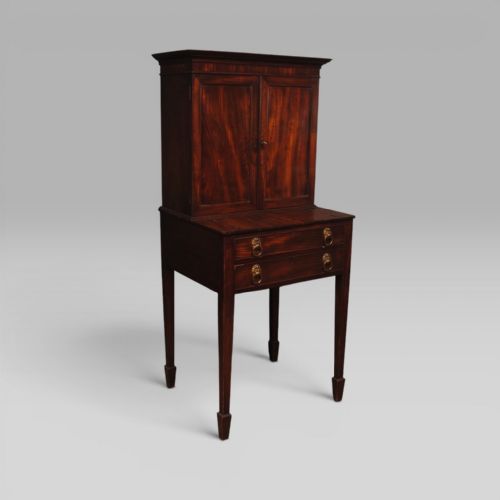
A mahogany bureau on stand combines a sloping writing flap and internal drawers with a raised base or frame. You meet these primarily in Georgian, Victorian, and Edwardian iterations across the listings.
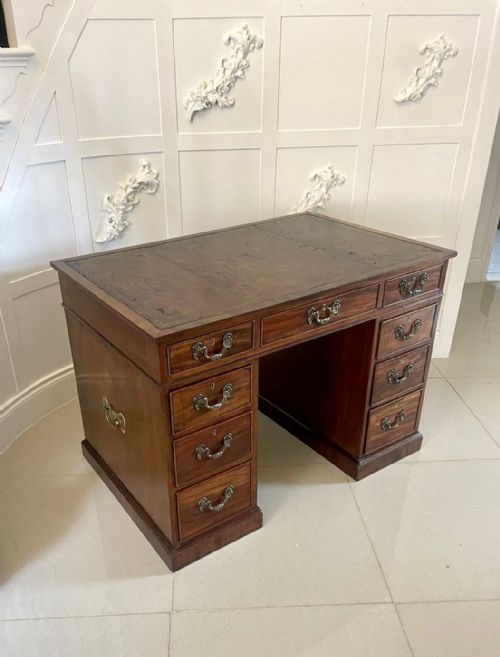
The form shifts from grand George II and George III country house pieces to later Victorian, Edwardian, and Art Nouveau variations. These desks function as striking writing cabinets and writing desks within domestic spaces.
Makers and workshops across Ireland, Edinburgh, and Glasgow produced notable examples in Cuban mahogany and deal. Such regional variations provide distinct character to each individual cabinet.
Materials and construction
Makers constructed these cabinets using dense mahogany timbers alongside oak and deal for internal secondary woods. Craftsmen applied satinwood inlay, marquetry inlay, and general wood inlay to enrich the primary surfaces.
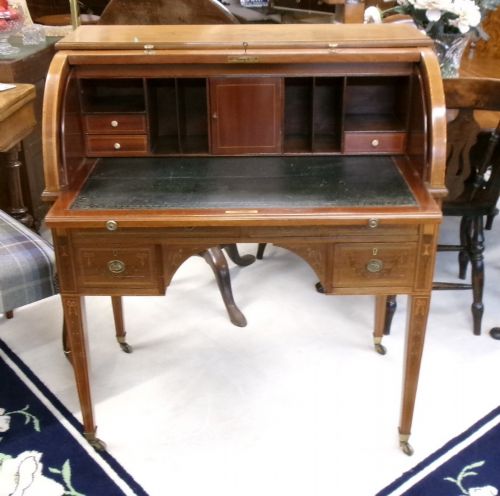
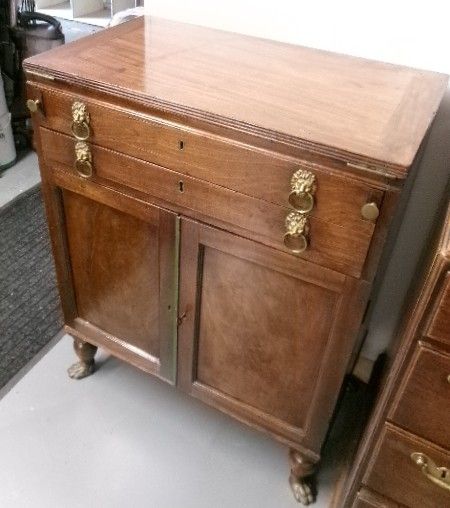
Fine hardware like brass paw feet and brass handles complete the structural composition. Fall-front writing flaps conceal fitted nests of drawers and pigeonholes designed for correspondence.
Object forms span standard kneehole desks and cylinder top writing desks to elaborate secretaire bookcases and standing workstations.
Assessing quality in a mahogany bureau on stand
Quality rests in the choice of timber figure, such as richly grained Cuban mahogany, and the crispness of any satinwood inlay. The integration between the upper writing cabinet and its supporting stand reveals the maker's discipline.
Subtle details like patination, the condition of internal pigeonholes, and original brass fittings elevate certain examples. Pieces with balanced proportions and restrained decorative work stand apart from simpler iterations.
Muirhead and Moffat of Glasgow·Thomas Chippendale
The Mahogany Bureau on Stand Glossary
- Bureau on stand
- A writing cabinet with a sloping fall-front lid placed upon a raised frame or legs. This form lifts the workspace off the floor for a lighter visual presence.
- Cuban mahogany
- A dense, richly figured tropical timber prized by eighteenth-century cabinet makers. It develops a deep, dark patination over centuries of use.
- Fall front
- A hinged writing flap that drops forward to create a flat desk surface. It conceals internal compartments for papers and stationery when closed.
- Kneehole desk
- A writing table featuring a central recess for the user's legs flanked by banks of drawers. This layout became prominent during the Georgian period.
- Marquetry inlay
- Decorative patterns formed by fitting contrasting veneers into a prepared wooden ground. It adds pictorial or geometric interest to drawer fronts and writing flaps.
Mahogany Bureau on Stand: Frequently Asked Questions
What is a bureau on stand?
A bureau on stand is a compact writing cabinet featuring a sloping lid that lowers for correspondence, supported entirely by an open frame or legs.
This raised construction gives the heavy mahogany timber a lighter, more graceful silhouette compared to traditional box desks resting flat on the floor.
How do I date a mahogany bureau?
Dating relies on examining the secondary woods, carcass construction, handle styles, and overall decorative vocabulary like inlay work.
Georgian pieces show hand-cut dovetails and restrained timber selection, while later Victorian and Edwardian examples incorporate machine-sawn elements and distinct aesthetic influences.
Where were these desks used?
These pieces served as private writing cabinets in principal rooms, country house studies, and bedrooms for managing personal correspondence.
Their compact footprint allowed them to sit comfortably in smaller spaces where a full-sized partner desk would overwhelm the room.
How do I maintain mahogany furniture?
Keep mahogany furniture away from direct sunlight and sudden temperature shifts to prevent timber shrinkage and veneer cracking.
Regular dusting with a dry cloth preserves the natural wax finish without building up heavy silicone residues that dull the antique patination.