
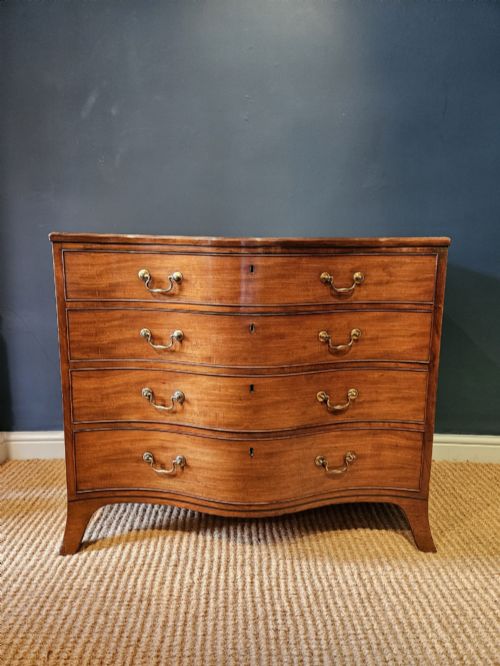
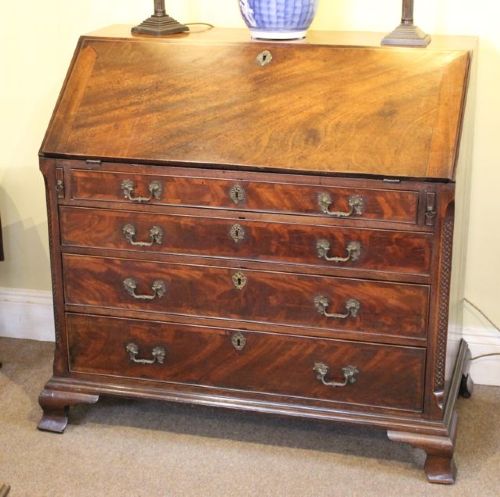
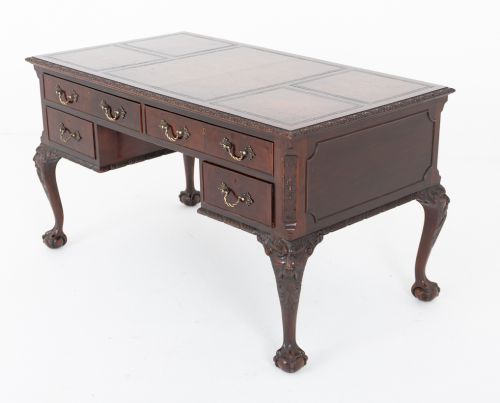
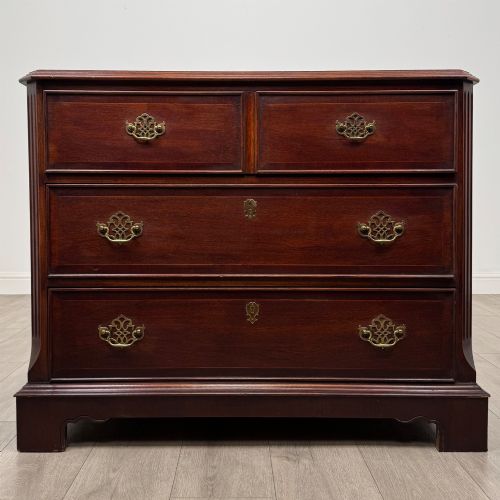

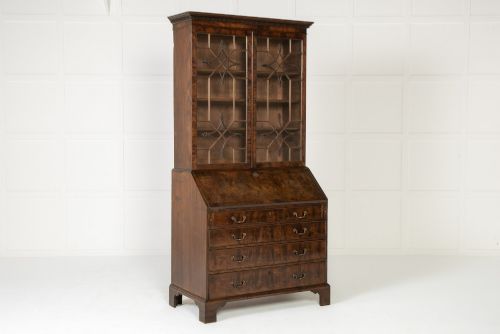


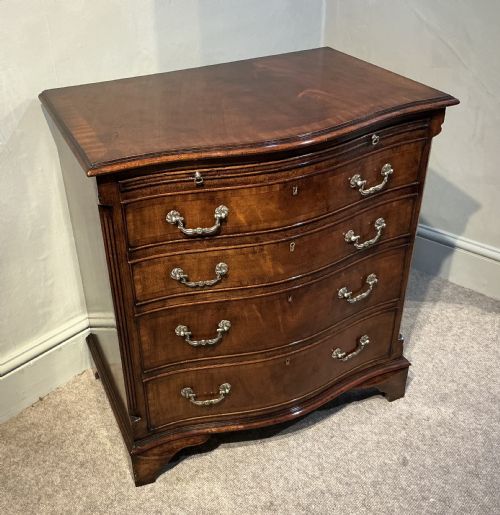


Chippendale Style Bureau
These chippendale style bureau pieces offer practical writing workspaces and substantial storage with classic mid eighteenth century proportions.
What a Chippendale Style Bureau Is
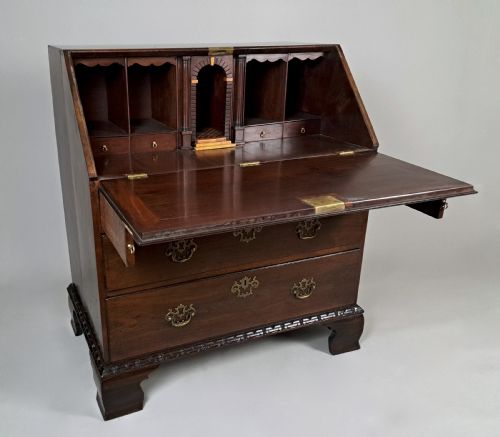
A chippendale style bureau is a practical writing cabinet designed with a sloping fall front that opens to reveal internal compartments and drawers. These pieces combine a slanted desk surface with stacked drawer storage below, creating a functional writing station for the home.
The versions met on this page span the eighteenth century and the chippendale revival period. Survivors range from compact desks to towering bureau bookcases and bureau bookcases featuring glazed upper cabinets.
Makers produced these forms in variations including bureau on stand designs and ladies cylinder bureau pieces. English examples from the georgian era sit alongside later revival desks.
Materials and Construction
Makers constructed these pieces primarily using mahogany timber, occasionally incorporating satinwood details for contrast. Secondary materials include brass for drawer pulls and key escutcheons, alongside glass panels fitted into upper bookcase doors.
Internal compartments often feature fitted leather writing surfaces inset into the fold down fall front. Cabinetmakers joined structural elements using traditional woodworking joints to support the weight of heavy book cabinets and fitted desk interiors.
Retail Price Guide 2026
Typical UK retail prices for chippendale style bureau, calculated from the Sellingantiques database of over a million retail prices indexed since 2003. This retail price guide relies exclusively on Sellingantiques data; no external sources or auction records are used, so the figures do not describe the wider market.
Listings feature mahogany, satinwood, brass, glass, and leather across eighteenth century and revival periods.
Distinctions in Quality
Quality in a chippendale style bureau rests on the selection of timber grain and the precision of the cabinetwork. Finer examples display carefully figured mahogany surfaces and well executed brass hardware rather than plain timber boards.
The complexity of the interior layout and the integration of upper bookcase sections distinguish exceptional pieces from simpler desks. Superior revival pieces and eighteenth century originals demonstrate refined proportions and meticulous joinery throughout the desk and cabinet components.
Gillows·Giles Grendy
The Chippendale Style Bureau Glossary
- Fall front
- The hinged sloping panel that pulls down to create a writing surface. It conceals the internal drawers and pigeonholes when closed.
- Bureau bookcase
- A combination furniture form featuring a sloping desk base with an enclosed shelving cabinet mounted on top. Glass doors typically protect the upper section.
- Secretaire
- A dedicated writing cabinet or desk. The term often describes pieces with fitted internal drawers behind a pull down front.
- Chippendale revival
- A stylistic movement dating around nineteen hundred that reinterpreted eighteenth century cabinet designs. Makers produced faithful copies of earlier forms during this era.
- Bureau on stand
- A writing cabinet supported by an open frame or low table base with legs. This form lifts the main desk body off the floor.
Frequently Asked Questions
What is a chippendale style bureau?
A chippendale style bureau is a wooden writing desk featuring a sloping fall front that conceals small drawers and pigeonholes. Below the writing surface, stacked drawers provide enclosed storage for papers and household items.
These pieces originate from both the eighteenth century and later revival periods around nineteen hundred. They range from compact desks to large bureau bookcases with glass upper doors.
How do I use a bureau daily?
The fall front folds down to create a flat writing surface supported by sliding wooden lopers. You can use the internal compartments to organise stationery and letters.
The lower drawers offer substantial storage space for documents or household goods. Closing the front keeps the workspace tidy and conceals paperwork.
How do I date a bureau?
Dating relies on examining the timber species, construction methods, and hardware styles present on the piece. Eighteenth century examples show period specific joinery and timber patination.
Revival pieces from around nineteen hundred often replicate earlier georgian forms while exhibiting nineteenth or twentieth century structural traits. Recorded makers and construction details help narrow the manufacturing period.