


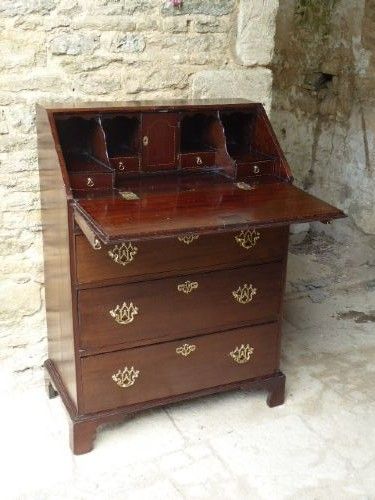
Antique Slant Top Bureau
These antique slant top bureau pieces are practical writing desks with sloping lids, offering refined storage and a fold-down workspace for the home.
What an antique slant top bureau is
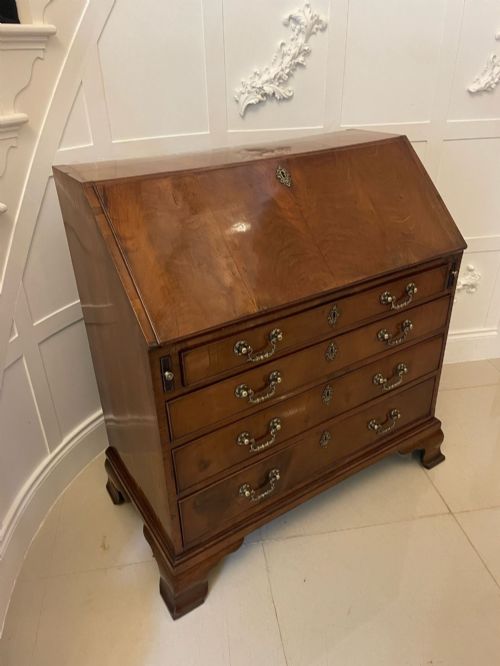
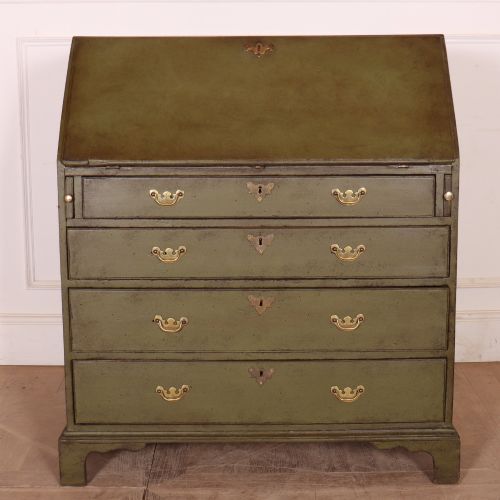
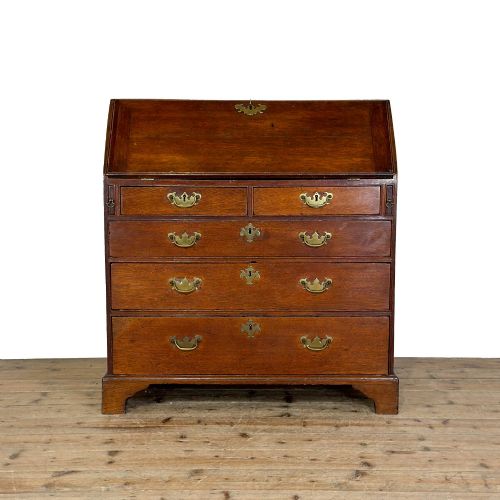
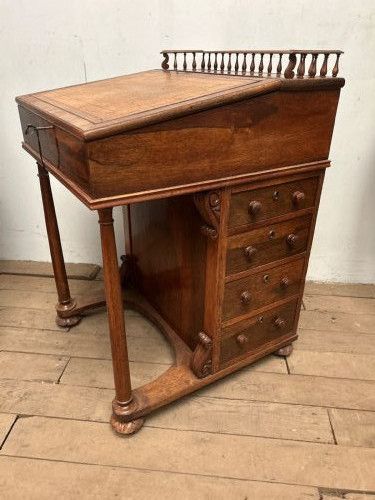
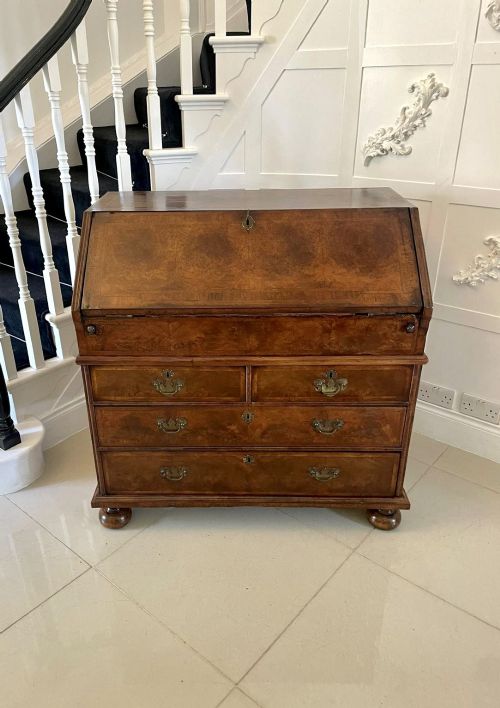
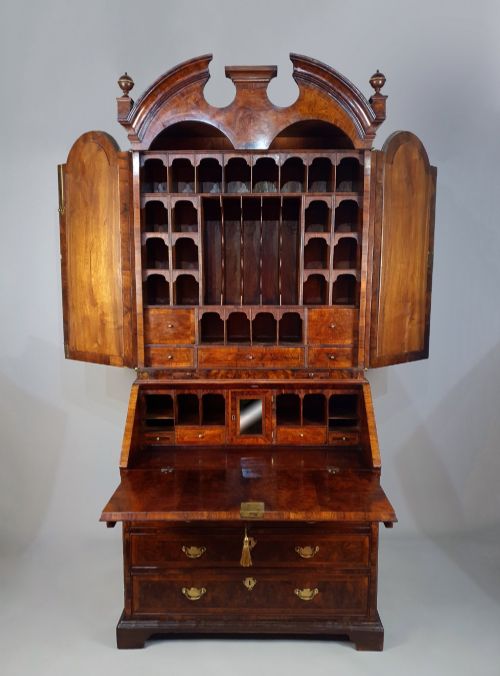
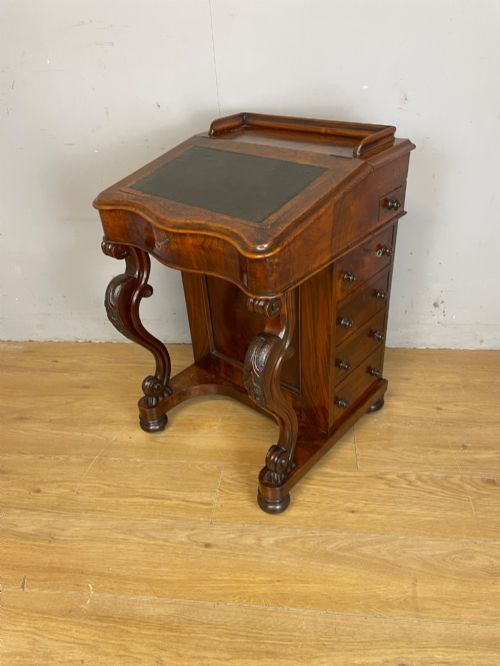
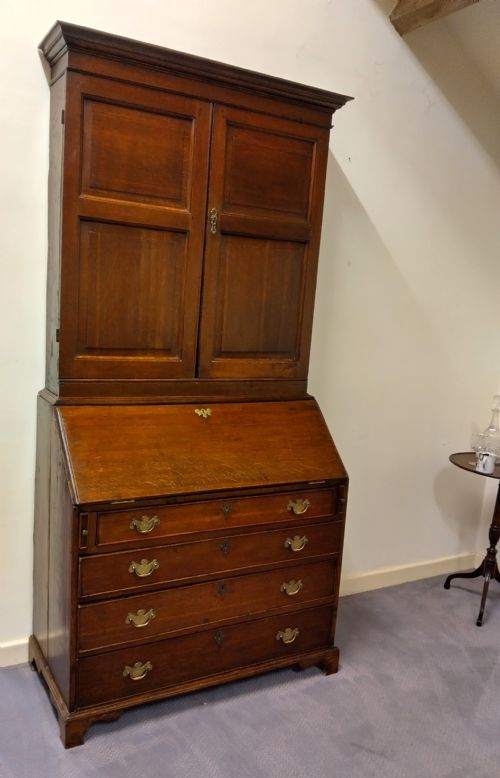
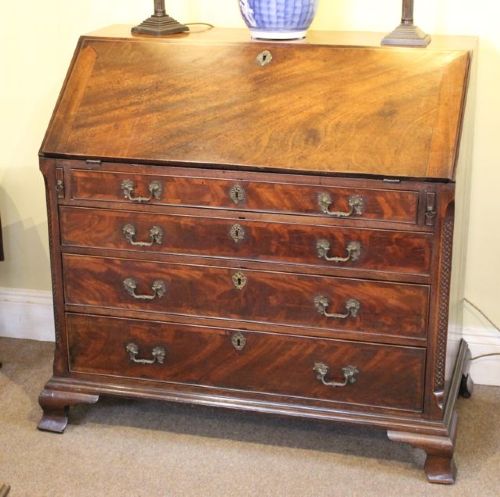
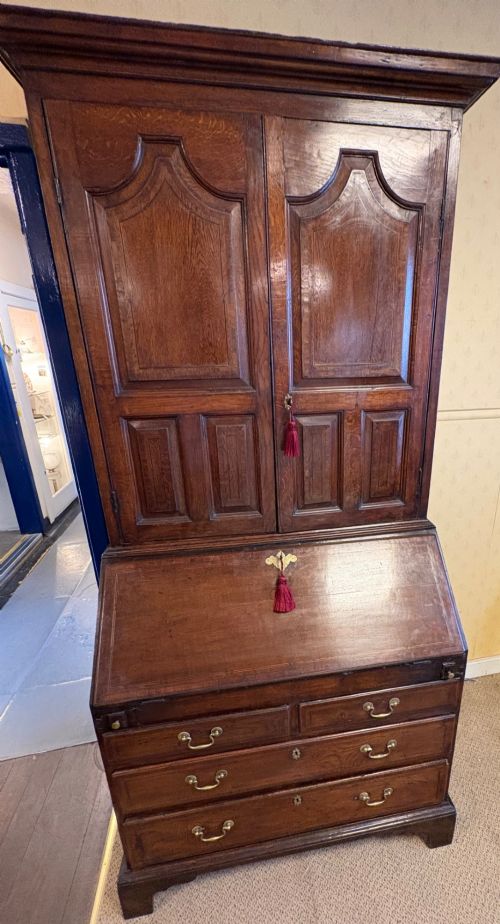
The antique slant top bureau category comprises writing desks featuring a sloping fall-front lid that opens to reveal a fitted interior of pigeonholes and small drawers. These pieces provide concealed workspace storage while maintaining a formal cabinet profile.
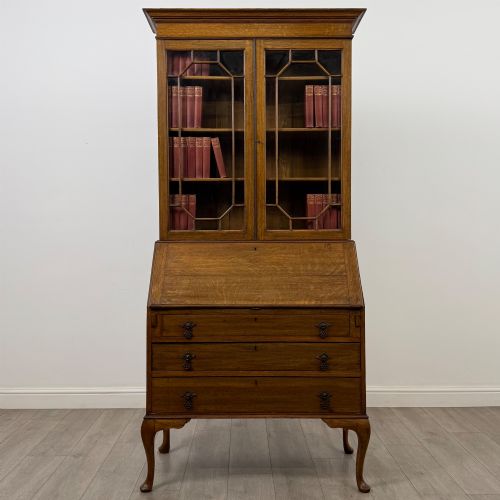
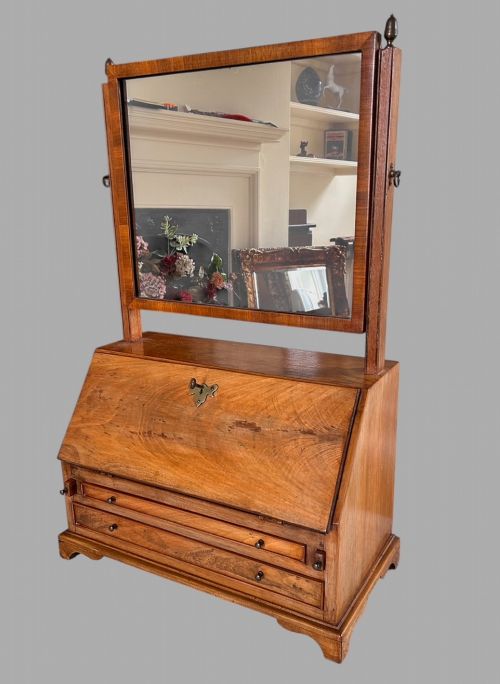
The pieces listed here span the Georgian period, the eighteenth century, and the nineteenth century, including specific styles like George II, Louis XV Revival, Queen Anne, and Chippendale. Forms range from compact proportions to bureau on stand designs and the bureau de dame format.
Buyers will encounter various structural formats within this selection, including standalone cabinet desks and raised forms supported on legs or stands. Each piece reflects the functional writing needs of past domestic interiors.

How they were made
Cabinetmakers constructed these desks using timbers such as mahogany, solid walnut, burr walnut, rosewood, and satinwood. These woods were chosen for their rich grain patterns and structural stability.
Hardware components include brass handles and escutcheons fitted to drawer fronts and internal compartments. Joinery techniques connect the solid timber panels and internal pigeonhole assemblies.
Retail Price Guide 2026
Typical UK retail prices for slant top bureau, calculated from the Sellingantiques database of over a million retail prices indexed since 2003. This retail price guide relies exclusively on Sellingantiques data; no external sources or auction records are used, so the figures do not describe the wider market.
The listings show pieces constructed from mahogany, walnut, burr walnut, rosewood, and satinwood across the Georgian and nineteenth-century periods.
What varies in quality
Quality differences emerge in the selection and application of timber veneers, such as burr walnut or figured mahogany, where decorative grain creates visual depth. Superior examples display careful timber matching across the fall-front lid and drawer facades.
The complexity and execution of the internal arrangement also distinguish pieces, with finer desks featuring intricate nested drawers and secret compartments behind sliding partitions.
Giles Grendey
The Antique Slant Top Bureau Glossary
- Fall-front
- The hinged sloping lid of a bureau that folds down to serve as a writing surface. It conceals the internal drawers and pigeonholes when closed.
- Bureau de dame
- A lady's writing desk, often of refined proportions and delicate construction from the nineteenth century. These pieces combine compact dimensions with decorative veneers.
- Pigeonhole
- A small open compartment within the interior of the desk used for sorting letters and papers. These compartments are often flanked by miniature drawers.
- Bureau on stand
- A form where the main writing cabinet rests upon a separate support frame with legs rather than sitting on a chest of drawers. This elevates the writing surface and lightens the overall visual mass.
Frequently Asked Questions
What is an antique slant top bureau?
An antique slant top bureau is a writing desk featuring a hinged, sloping lid that folds down to create a writing surface. Inside, the desk typically contains an arrangement of small drawers and pigeonholes for correspondence.
These pieces combine enclosed storage with a functional workspace, making them practical items of furniture for domestic use.
How were these desks used historically?
These desks served as private writing stations for correspondence, record-keeping, and the storage of important documents. The sloping lid provided a convenient angle for writing when open and protected the contents when locked.
Internal compartments allowed owners to organise letters, account books, and small personal valuables securely out of sight.
How do I care for a wood bureau?
Maintain the timber by keeping the desk away from direct heat sources and strong sunlight, which can dry out and fade the wood finish. Regular dusting with a soft, dry cloth preserves the polished surface.
Apply traditional wax polish occasionally to nourish the timber and protect the grain without building up heavy residues.
How do I identify the period of a bureau?
Period identification relies on observing the timber choices, construction methods, hardware styles, and overall proportions of the piece. Earlier examples from the eighteenth century often utilise solid walnut or mahogany with specific cabinet-making details.
Later nineteenth-century pieces may incorporate exotic veneers like rosewood or satinwood, alongside distinct revival stylistic elements.