
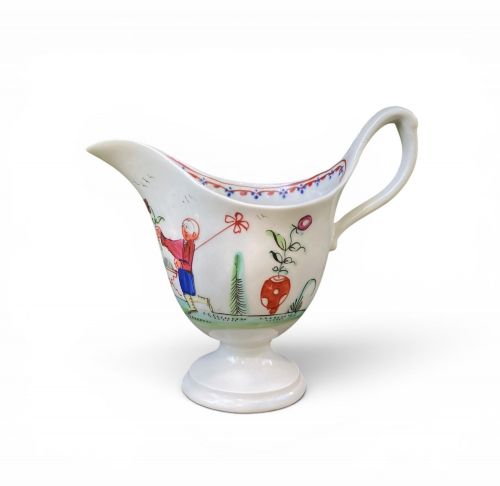
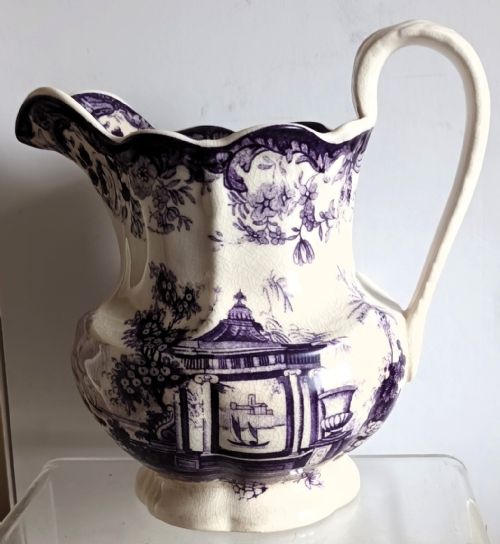


Chinoiserie Ceramic Jug
These chinoiserie ceramic jugs bring together European pottery forms and oriental scenes across centuries of production.
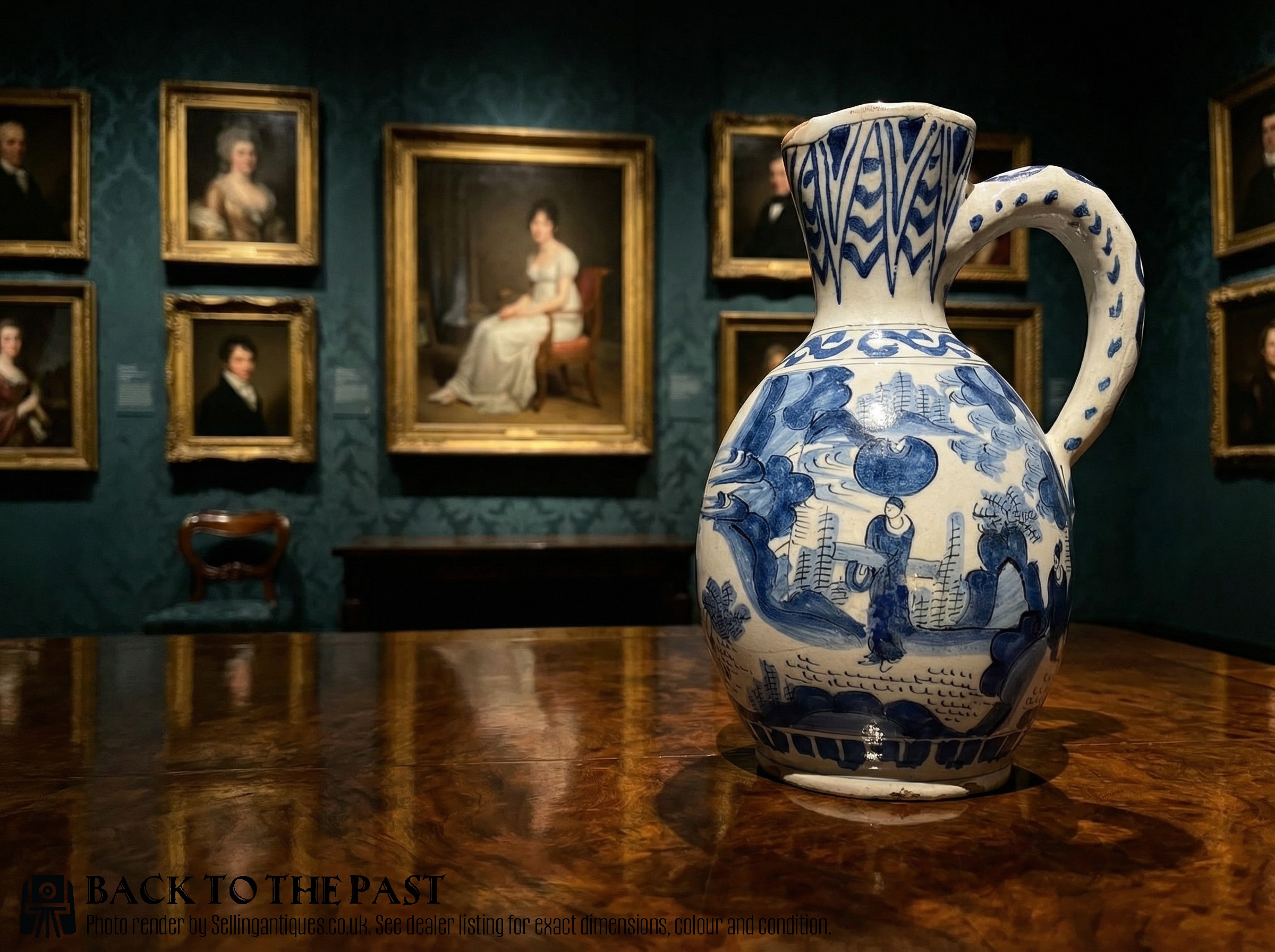
Chinoiserie Ceramic Jug
A chinoiserie ceramic jug represents a meeting point between domestic European utility and imaginative eastern motifs, spanning periods from the late seventeenth century through the early twentieth century. When searching for a chinoiserie ceramic jug, buyers encounter forms ranging from small clip-handled vessels to large washbasin sets and hydra pitchers.
The selection on this page demonstrates the wide chronological spread of these objects, moving from Dutch Delftware examples dated to the sixteen-nineties up to Edwardian basin sets. Forms appear as individual decorative jugs, ewer pitchers, and paired basin sets, reflecting how makers adapted oriental scenes to functional vessels.
Makers working within Georgian, Victorian, and Edwardian periods utilised distinct regional interpretations, creating everything from cobalt blue ground ewers to magenta transfer pieces and red scale patterns. Buyers meet both porcelain and ironstone bodies decorated with figures, pavilions, and botanical landscapes.

How they were made
Potters constructed these vessels using ceramic materials such as porcelain, earthenware, ironstone, and tin-glazed earthenware, shaping them into faceted, bulbous, or hydra profiles with grotesque or clip handles. Bodies were formed and fired before receiving hand-painted or transfer-printed decoration.
Decoration relied upon cobalt blue ground, magenta transfer, and enamel pigments, occasionally accented with gold leaf. Glaze seals the surface, while tin-glazes provide the characteristic opaque white background seen on early Dutch delftware pieces.
Listings span from the late seventeenth century through the Edwardian era, featuring ironstone, porcelain, and tin-glazed earthenware.
What varies in quality
Quality rests in the crispness of the transfer print or the brushwork control in hand-painted oriental scenes, alongside the preservation of gold leaf accents and enamel colours. Superior examples maintain sharp detail in moulded elements such as serpent or grotesque handles.
The weight and density of the ceramic body also distinguish standard domestic wares from robust ironstone and fine porcelain productions. Early tin-glazed pieces show variation in the purity of the white glaze and the depth of the cobalt blue pigments.
Mason's·New Hall
The Chinoiserie Ceramic Jug Glossary
- Hydra jug
- A specific ceramic jug form featuring a serpent-shaped handle, often associated with nineteenth-century ironstone production. These vessels typically display faceted bodies and oriental transfer scenes.
- Ironstone
- A dense, durable ceramic body patented in the nineteenth century to rival porcelain. It provides a heavy substrate suitable for large washbasin sets and robust ewers.
- Tin-glazed earthenware
- Pottery covered with a lead glaze made opaque by the addition of tin oxide. This technique allows for vibrant blue painting directly onto the unfired white surface.
- Transfer printing
- A mechanical method of applying complex decorative patterns to ceramics by transferring ink from a copperplate onto paper and then onto the clay body. This technique enabled intricate oriental scenes to be reproduced consistently.
- Ewer
- A large pitcher with a flared spout and an ornate handle, originally intended for pouring water at the table or washstand. In chinoiserie ceramics, ewers often feature prominent cobalt blue grounds and sculptural handles.
Chinoiserie Ceramic Jug: Frequently Asked Questions
What were these jugs used for?
Many of these vessels served practical domestic roles in washing and pouring, forming part of larger toilet sets alongside basins. Others functioned as decorative display pieces on mantelpieces and sideboards.
Larger ironstone examples and washbasin sets catered to bedroom hygiene before indoor plumbing became standard. Smaller handled jugs handled table service or stood as ornamental items in parlours.
How do I date a ceramic jug?
Dating relies on identifying the material, such as distinguishing early tin-glazed earthenware from nineteenth-century ironstone or porcelain. Handle shapes and decorative techniques like transfer printing also point to specific manufacturing eras.
Period styles noted in the titles, from Georgian geometric facets to Edwardian floral sets, provide a framework for narrowing down the decade of production.
Are these jugs dishwasher safe?
Historic ceramics with hand-painted enamels and gold leaf require careful hand washing in lukewarm water. Agitation and modern detergents can damage fragile glazes and wear away delicate surface decoration.
Because many pieces date from the seventeenth to the early twentieth century, treating them as display or gentle use items preserves their material integrity.