
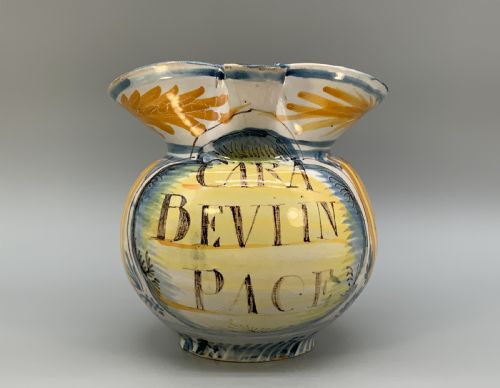


Antique Tin Glazed Jug
An antique tin glazed jug brings brilliant tin-glazed earthenware and tin glaze to a collection, offering centuries of ceramic artistry.
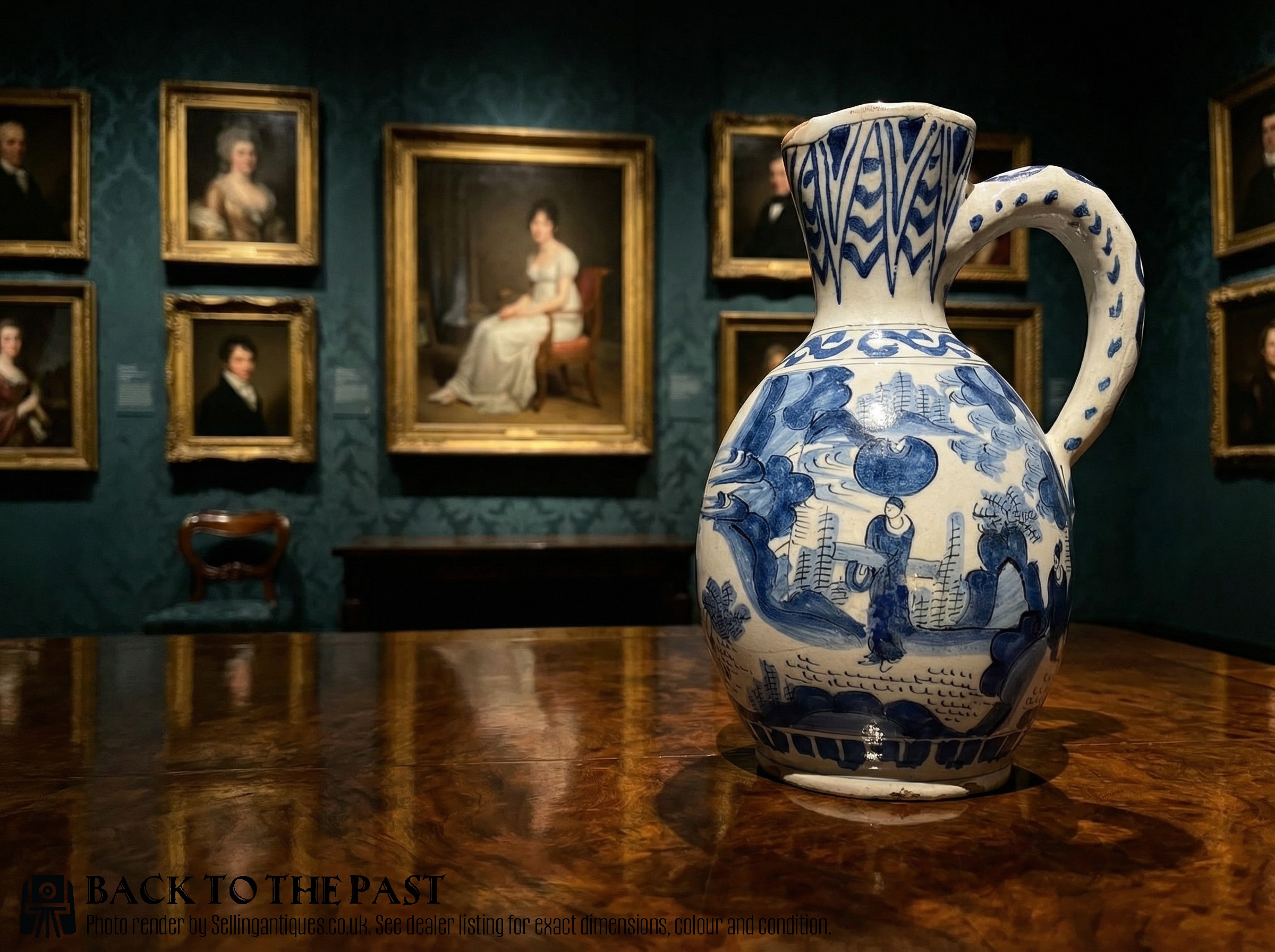
Antique Tin Glazed Jug
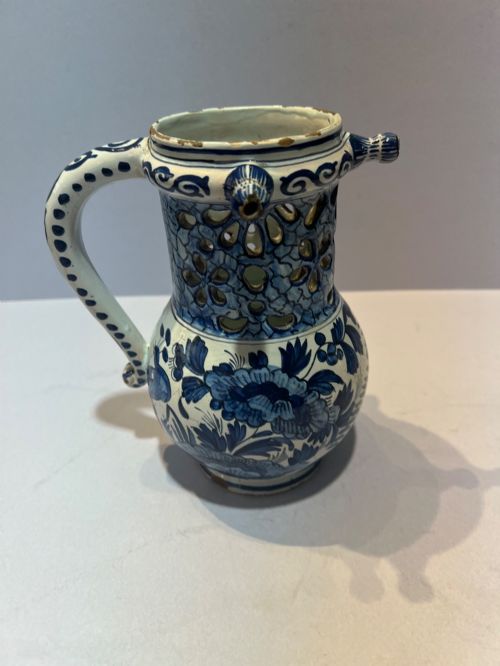
An antique tin glazed jug is a ceramic vessel shaped for pouring liquids, surfacing across the seventeenth, eighteenth, and nineteenth centuries. These pieces appear in forms ranging from apothecary drug jars and pharmacy jugs to Toby jugs, puzzle jugs, and water pitchers.
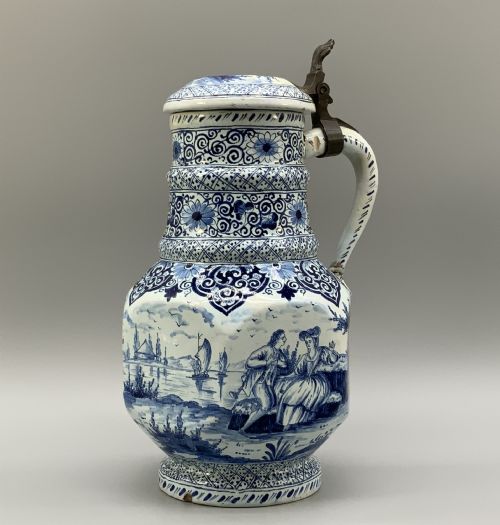
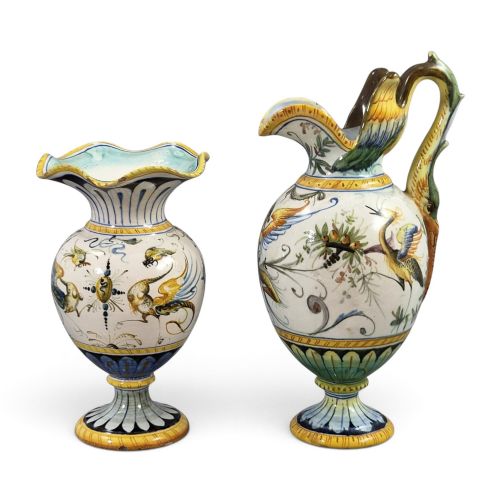
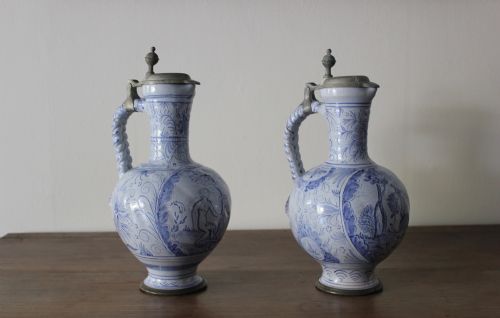
Dutch Delftware and Italian majolica dominate the styles available, alongside pieces from French Gien, Brussels, and English production. The most common version met on this page is the eighteenth-century Dutch Delft blue and white pottery jug, often fitted with a pewter lid.
Makers and potteries such as Cantagalli Florence and individual figures like Pieter Verburg contribute to the historical depth of these objects. Collectors seek out these jugs for their distinctive tin-glazed earthenware bodies and hand-painted blue and white or polychrome decoration.
Materials and construction
Potters formed these vessels from earthenware clay, applying an opaque white tin glaze that created a smooth surface for painting. Artisans then painted directly onto this porous unfired glaze using metallic oxides like cobalt for blue or manganese and yellow for polychrome effects.
Many historical examples received a final kiln firing to fuse the pigments into the glaze, locking in the colours. Some eighteenth-century Dutch vessels were completed with fitted pewter lidded mounts attached by metalworkers to the ceramic handle and rim.
Evaluating quality and execution
Quality in these ceramics rests upon the crispness of the hand-painted decoration and the fluidity of the brushwork across the tin glaze. Fine examples display confident Chinoiserie scenes, mythological figures, or floral motifs that sit well balanced across the curved earthenware body.
The stability and brilliance of the tin glaze itself distinguish superior pieces, along with the precise retention of form in specialised types like pilgrim flasks, puzzle jugs, and mask spout ewers. Intricate polychrome palettes featuring manganese and yellow require greater technical control than standard blue and white designs.
Cantagalli Florence·Pieter Verburg
The Antique Tin Glazed Jug Glossary
- Tin glaze
- An opaque white ceramic glaze containing tin oxide, providing a smooth canvas for painted decoration. This technique defines European faience, majolica, and delftware.
- Majolica
- A type of Italian tin-glazed earthenware decorated with colourful metallic oxide pigments. It gained prominence during the Renaissance and inspired later revival pieces.
- Delftware
- Tin-glazed earthenware originating in the Netherlands, particularly associated with blue and white designs imitating Chinese porcelain. English potteries also produced local variants.
- Earthenware
- Porous ceramic pottery fired at lower temperatures than stoneware or porcelain. It forms the structural body beneath the tin glaze of these jugs.
- Polychrome
- Decoration utilising multiple distinct colours rather than a single monochromatic pigment. These glazes often incorporate manganese, yellow, and green alongside blue.
Antique Tin Glazed Jug: Frequently Asked Questions
What is an antique tin glazed jug?
An antique tin glazed jug is a ceramic pouring vessel coated in an opaque white tin glaze, produced across European potteries from the seventeenth century onwards.
These pieces encompass functional tableware, apothecary vessels, and decorative display items decorated in blue and white or polychrome palettes.
How were these jugs used originally?
Many served practical household roles for pouring water, beer, wine, or coffee at the table. Others functioned in apothecaries to store dry drugs and wet medical syrups.
Specialist forms like puzzle jugs and Toby jugs additionally provided communal entertainment or served as novelty drinking vessels.
How do I care for tin glazed earthenware?
Keep these fragile earthenware vessels away from moisture and harsh cleaning chemicals to protect the historic tin glaze. Dust them gently with a soft dry cloth and display them safely out of reach of heavy traffic.
Avoid using them for liquids today, as centuries-old ceramic bodies and glazes can degrade when exposed to modern detergents.
How do I tell Dutch Delftware from Italian majolica?
Dutch Delftware typically leans towards cobalt blue and white painting influenced by Chinese porcelain, often featuring Chinoiserie landscapes or floral designs. Italian majolica frequently employs vibrant polychrome glazes including manganese, yellow, and green within Renaissance revival or traditional styles.
The underlying clay body, glaze texture, and painting technique also offer clues to the regional origin of the workshop.