


Antique Delftware Pitcher
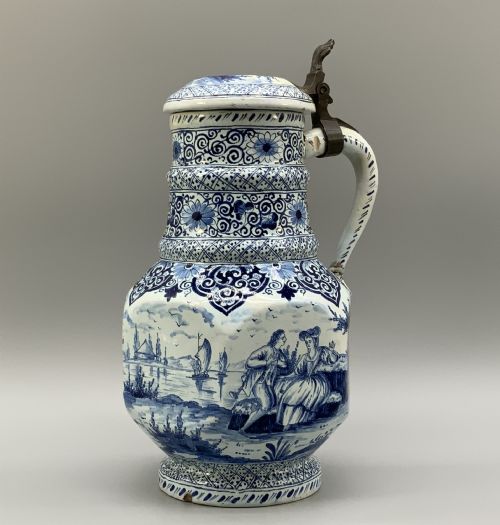
These antique delftware pitcher pieces are tin-glazed ceramic vessels offering traditional blue and white painting alongside vibrant polychrome decoration.
Antique Delftware Pitcher
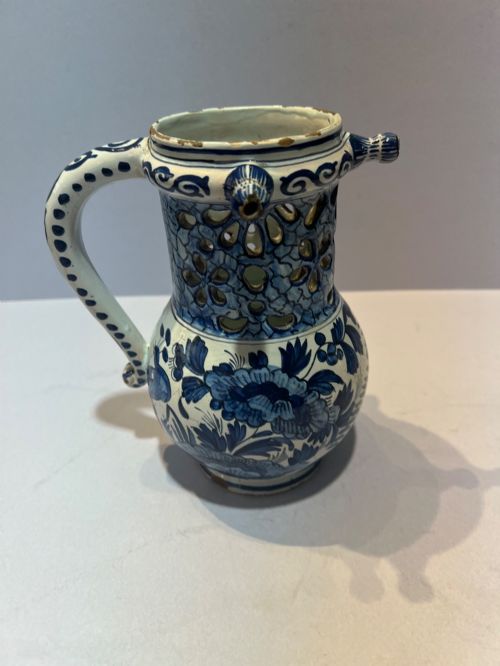
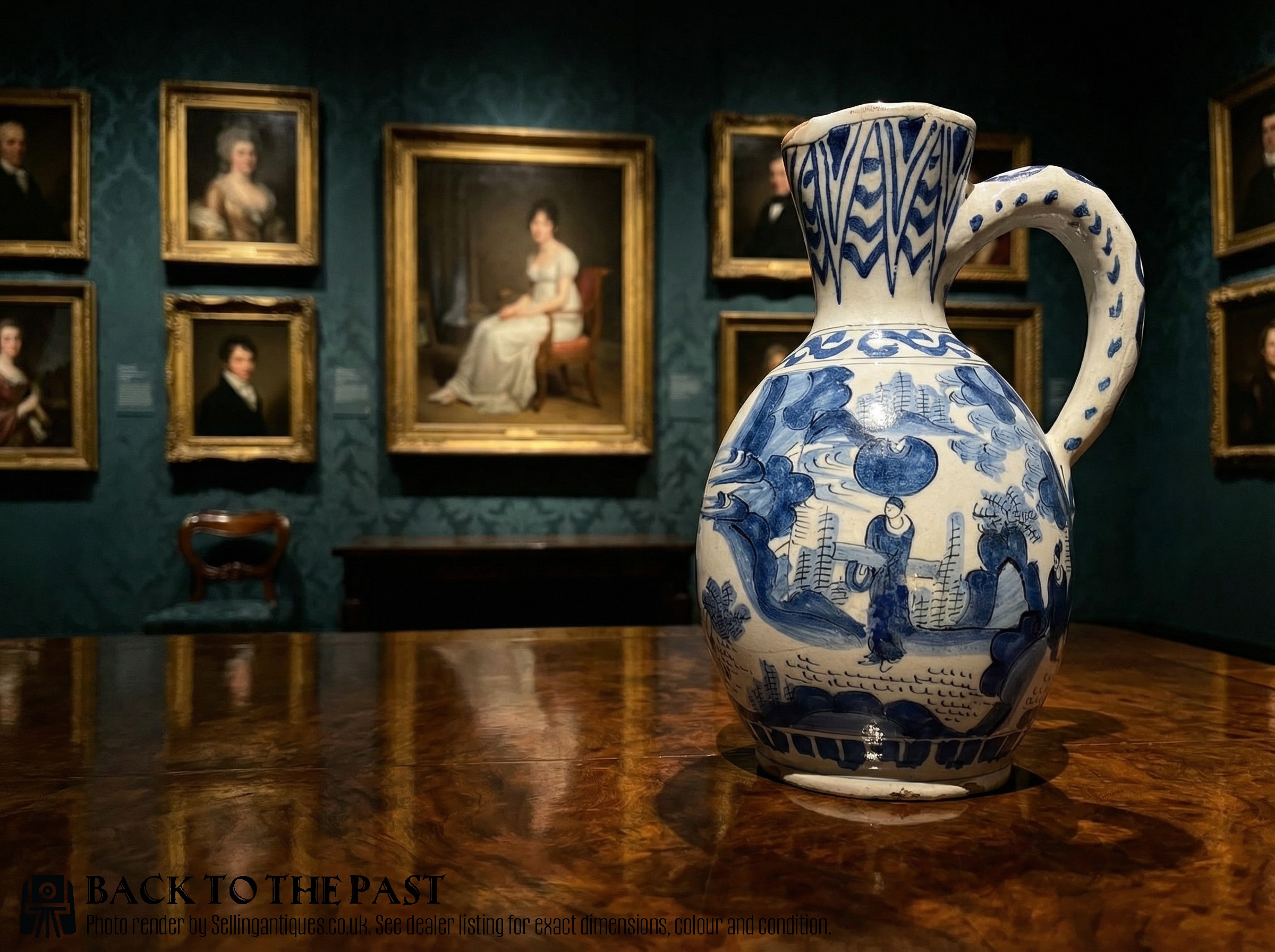
An antique delftware pitcher brings tin-glazed earthenware into domestic spaces through forms spanning the seventeenth, eighteenth, and nineteenth centuries. Collectors encounter Dutch baroque examples alongside Toby jugs and puzzle jugs.
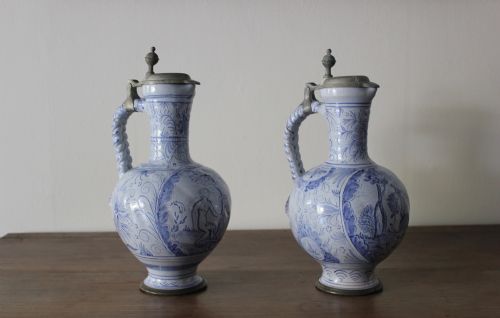
The selection here encompasses vessels ranging from small floral decorated pairs to lidded jugs mounted with pewter hardware. Coffee pots and ewers also appear among the broader category of jugs and pitchers.
Most pieces display either classic cobalt pigment blue and white schemes or manganese and polychrome finishes. Origins trace primarily to Dutch workshops, supplemented by English production.
How they were made
Potters shaped ceramic earthenware bodies before applying an opaque tin glaze that provided a smooth white surface for painting. Artisans then brushed cobalt pigment and polychrome colours directly onto the unfired glaze.
Metalworking skill joined ceramic production when craftsmen fitted pewter lids onto jug rims. Firing transformed the tin-glazed earthenware and fixed the hand-painted chinoiserie or floral motifs permanently into the surface.
Listings span the seventeenth, eighteenth, and nineteenth centuries, featuring earthenware bodies finished with tin glaze, cobalt pigment, and pewter mounts.
What varies in quality
Quality rests upon the crispness of the painted brushwork and the control demonstrated during the high-temperature firing. Finer examples show precise chinoiserie detailing or vibrant polychrome pigments that sit evenly within the tin glaze.
The survival of original pewter mounts and lids alters the desirability of a jug. Potter execution also distinguishes standard utilitarian vessels from sculptural Toby jugs and puzzle jugs requiring complex internal channels.
Pieter Verburg
The Antique Delftware Pitcher Glossary
- Tin Glaze
- An opaque white ceramic glaze containing tin oxide that accepts painted decoration. This coating forms the distinctive smooth surface characteristic of delftware.
- Cobalt Pigment
- A metallic colorant producing deep blue tones under high heat. Painters used this oxide extensively for traditional delftware floral and landscape scenes.
- Polychrome
- Decoration utilising multiple colours rather than a single pigment. These palettes on delftware often include manganese purple alongside greens, yellows, and reds.
- Chinoiserie
- European artistic interpretation of Chinese decorative motifs. Potters painted these imaginary oriental scenes onto seventeenth and eighteenth-century vessels.
- Pewter Mount
- Metal hardware comprising lids and thumbpieces attached to ceramic vessels. These fittings protect rims and provide functional pouring covers.
Antique Delftware Pitcher: Frequently Asked Questions
What is an antique delftware pitcher?
An antique delftware pitcher is a tin-glazed ceramic jug used historically for serving liquids or as a decorative object. These pieces date from the seventeenth to the nineteenth centuries and feature hand-painted blue and white or polychrome designs.
Craftsmen shaped these vessels from earthenware before applying an opaque white glaze. Many examples originate from Dutch workshops, whilst others reflect English production.
How do I date an old pitcher?
Dating relies upon stylistic clues, painting palettes, and physical construction methods. Seventeenth and early eighteenth-century pieces often display cobalt blue chinoiserie designs, whereas later nineteenth-century examples incorporate polychrome figures like Toby jugs.
Pewter lidded mounts and marked bases help establish specific manufacturing periods. Comparing the glaze opacity and brushwork style against dated comparative examples clarifies age.
Were these jugs used daily?
Many pitchers served practical functions at table for pouring liquids or holding beverages. Over time, handling and washing caused expected surface wear to the soft tin glaze.
Finer decorative ewers and puzzle jugs served more specialised social or display roles. Surviving examples demonstrate both utilitarian service and ornamental preservation in domestic interiors.
How do I care for tin glaze?
Tin-glazed earthenware requires gentle handling due to the porous ceramic body beneath the surface glaze. Cleaning should involve soft dry dusting or careful wiping with a damp cloth rather than complete submersion in water.
Displaying pieces away from damp environments and sudden temperature fluctuations protects the glaze from crazing. Careful placement prevents impact damage to fragile ceramic rims and applied handles.