
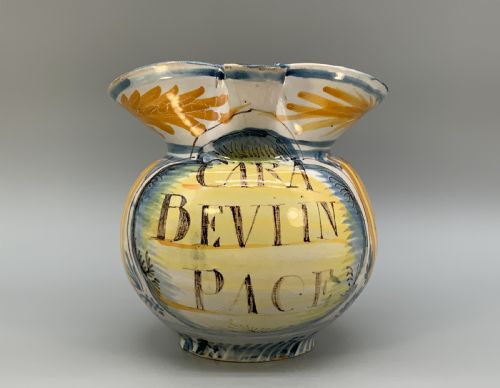


Antique Tin Glaze Pitcher
An antique tin glaze pitcher brings centuries of painterly ceramic tradition into a room, offering tactile earthen bodies dressed in bright tin-opacified glazes.
Antique Tin Glaze Pitcher
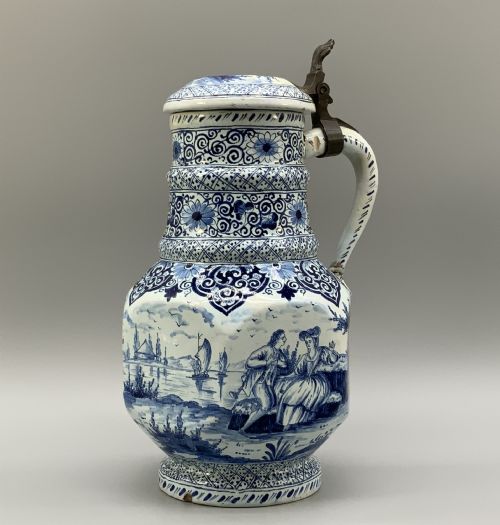
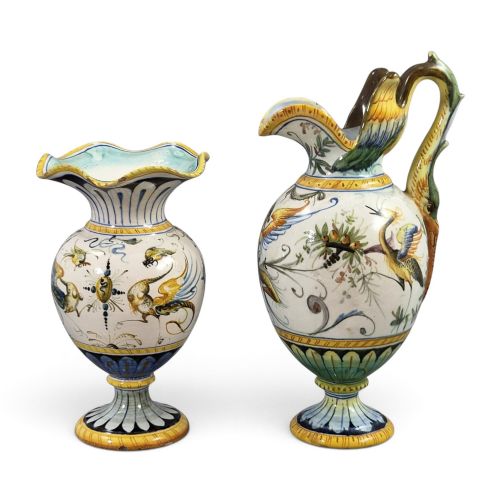
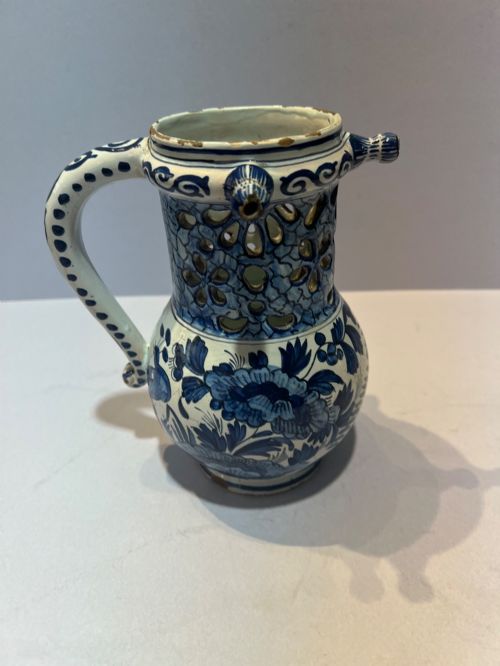
An antique tin glaze pitcher is a poured ceramic vessel designed for domestic use, pharmaceutical storage, or table service, appearing primarily in forms such as jugs, ewers, and pharmacy jars. The selection spans earthenware bodies coated in tin glazes, originating from Dutch, Italian, French, and English potteries across the seventeenth, eighteenth, and nineteenth centuries. Buyers frequently encounter Dutch Delftware pieces decorated in blue and white or polychrome palettes, alongside Italian majolica and French faience.
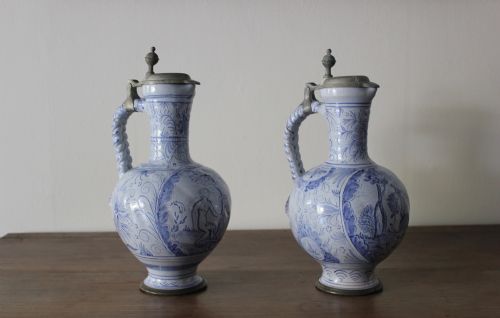
The objects take diverse shapes, ranging from stout lidded jugs fitted with pewter mounts to slender apothecary vessels and sculptural Toby jugs. Many display hand-painted floral motifs, Chinoiserie scenes, or mythological figures rendered in manganese, yellow, and cobalt pigments. These vessels bridge utilitarian service and decorative display, reflecting the distinct aesthetic preferences of European ceramic centres through successive eras.
What varies in quality
The standard of an antique tin glaze pitcher rests upon the crispness of the painted decoration and the stability of the glaze application. Superior examples display confident, fluid brushwork in the hand-painted motifs, whether executing intricate Chinoiserie landscapes or bold polychrome portraits.
The harmonious control of the kiln firing dictates the clarity of the cobalt, manganese, and yellow pigments against the opaque white background. Furthermore, the finesse of the original potting, the balance of the handle and spout, and the preservation of any original pewter mounts define the standing of a piece within its tradition.
A monkey wearing eighteenth-century attire cheerfully peers out from the glaze of a Toby jug, reminding us that potters enjoyed a sense of humour.
Cantagalli Florence·Pieter Verburg
The Antique Tin Glaze Pitcher Glossary
- Tin glaze
- An opaque white ceramic glaze containing tin oxide that provides a smooth, pale ground for painted decoration. This coating defines the appearance of faience, majolica, and Delftware.
- Delftware
- Tin-glazed earthenware produced in the Netherlands, particularly associated with blue and white or polychrome painted designs. Production centres around Delft and surrounding towns.
- Majolica
- Tin-glazed earthenware originating in Italy and later adopted in other European regions, typically characterised by vibrant polychrome decoration. Pieces often depict historical, mythological, or botanical subjects.
- Faience
- European tin-glazed pottery produced outside Italy, widely used to describe tin-glazed earthenwares from French and continental workshops. The term encompasses both utility wares and decorative vessels.
- Chinoiserie
- European interpretations of Chinese artistic motifs, popular on seventeenth and eighteenth-century ceramics. Painters rendered imagined Eastern landscapes, figures, and flora in cobalt blue.
Antique Tin Glaze Pitcher: Frequently Asked Questions
How do I clean an antique tin glaze pitcher?
Clean these fragile earthenware vessels using only a soft, dry cloth or a very gently dampened sponge to remove surface dust. Avoid submerging them in water or using modern detergents, as moisture can penetrate old glaze fractures and damage the porous body.
Harsh scrubbing or abrasive cleaners will permanently wear away the historic hand-painted pigments sitting on the tin glaze surface. Gentle handling ensures the preservation of both the ceramic body and its centuries-old decoration.
Were these pitchers used for daily dining?
Many of these vessels served practical functions in period households, holding water, wine, beer, or medicinal liquids at the table or in the apothecary. Utilitarian forms like pharmacy jars and lidded beer jugs were made for active service rather than mere display.
Over time, the porous nature of earthenware and the vulnerability of tin glaze led to staining or wear from liquid contents. Today, surviving examples are treated primarily as decorative objects or collection pieces due to their age.
How do I distinguish Dutch Delft from Italian majolica?
Dutch Delft typically relies on a distinct palette of cobalt blue against a bright white tin glaze, frequently drawing inspiration from Chinese porcelain or local European floral motifs. The clay bodies and potting styles also reflect Northern European ceramic traditions of the seventeenth and eighteenth centuries.
Italian majolica tends to feature warmer polychrome tones, including manganese, yellow, and green pigments, often depicting narrative historical or mythological scenes. The regional painting styles and glaze formulations vary noticeably between Italian workshops and Dutch potteries.