


Antique Faience Jugs
These antique faience jugs bring tin-glazed earthenware into domestic spaces, offering distinct painted forms from seventeenth to nineteenth century workshops.
Antique Faience Jugs
When searching for antique faience jugs, collectors encounter tin-glazed earthenware vessels ranging from Dutch Delftware to Italian majolica and French regional productions. These pieces span the seventeenth, eighteenth, and nineteenth centuries, taking the form of pitchers, pharmacy vessels, beer steins, and Toby jugs.
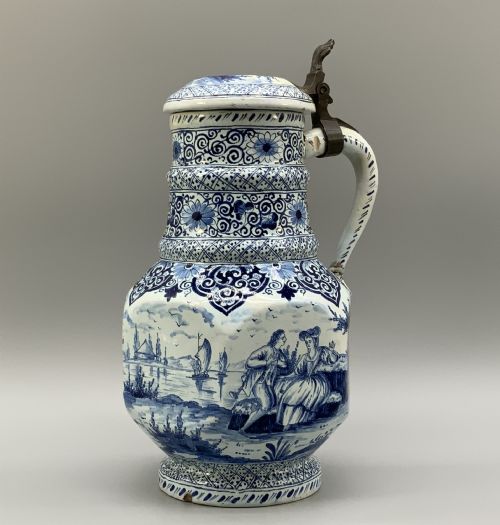
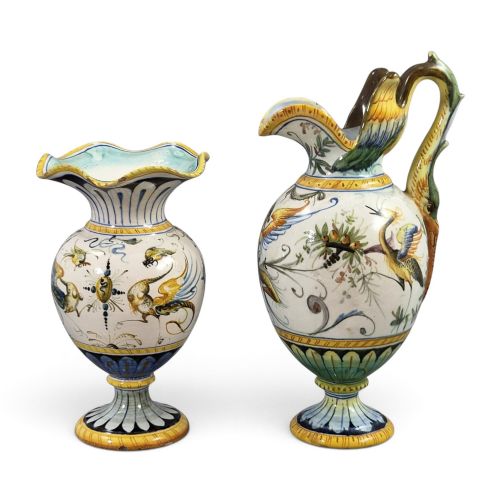
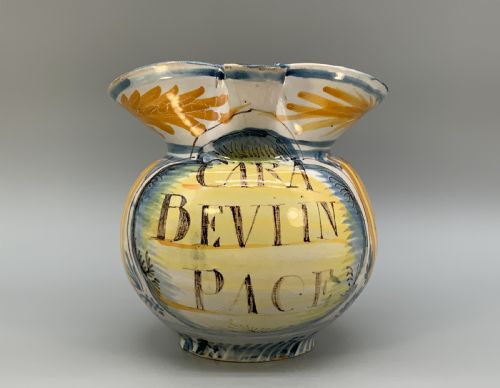
The most common examples on this page are eighteenth-century Dutch Delft blue and white jugs, often featuring botanical or floral motifs. Alongside these sit nineteenth-century revival pieces and Italian polychrome pharmacy vessels with manganese and yellow decoration.
Forms vary from apothecary drug jars with covers to pilgrim flask jugs and mask-spouted ewers. Each piece reflects the specific ceramic traditions of its European origin, whether Dutch, Italian, French, or German.
How they were made
Makers shaped these jugs from earthenware clay before applying an opaque tin glaze that provided a smooth, white surface for painting. Artisans then brushed cobalt blue, manganese, or polychrome enamel pigments directly onto the porous unfired glaze.
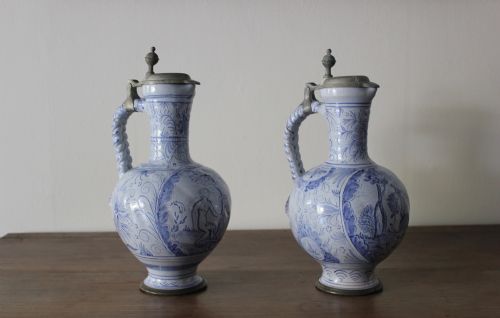
Some Dutch examples incorporated fitted pewter lids mounted to the ceramic handle and rim. Higher-temperature firing fixed the mineral colours into the glaze, producing the characteristic gloss and tonal depth seen across these periods.
One eighteenth-century pottery artist immortalised a monkey in the shape of a Toby jug.
What varies in quality
Quality in these jugs rests upon the crispness of the hand-painted decoration and the stability of the tin glaze. Early pieces demonstrate confident brushwork in cobalt blue or complex polychrome palettes, while later revival items often rely on moulded relief and transfer-influenced designs.
The sophistication of the form, such as sculpted mask spouts or shell shapes, distinguishes standard utility vessels from ambitious workshop productions. Preservation of the glaze and the presence of original components like pewter covers further separate finer examples from heavily restored pieces.
Cantagalli Florence·Gien Faience·Pieter Verburg
The Antique Faience Jugs Glossary
- Faience
- Tin-glazed earthenware produced in Europe, particularly in France, Germany, and the Netherlands. The technique uses a lead glaze made opaque with tin oxide.
- Delftware
- Tin-glazed earthenware made in the Netherlands, famous for its blue and white decoration inspired by imported Chinese porcelain.
- Manganese
- A purple-brown metallic oxide pigment used by ceramic painters for outlining and shading. It produces a distinctive warm dark tone.
- Toby jug
- A pottery jug shaped as a seated person, typically a stout man wearing eighteenth-century attire. These figures often hold a mug of beer or a pipe.
Antique Faience Jugs: Frequently Asked Questions
What is an apothecary jug?
Apothecary jugs were utilised in pharmacies and dispensaries to store liquid medicines, syrups, and herbal extracts. They frequently featured painted labels or inscriptions denoting specific contents.
These vessels often included spouts and covers to protect the medical preparations inside from dust and evaporation.
How do I identify Dutch Delft?
Dutch Delft pieces typically display white tin glaze painted with cobalt blue motifs inspired by Asian trade porcelain. Look for botanical decoration, mythological scenes, or Chinoiserie figures.
Many bear historical or pseudo maker marks on the base, though dating relies heavily on stylistic execution and glaze characteristics.
Were these jugs used daily?
Many examples served practical roles in households as water pitchers, beer steins, or coffee pots. Others held dry goods or liquids in commercial apothecary settings.
Decorative versions, such as pilgrim flasks or sculptural Toby jugs, functioned more often as ornamental display items.
What is polychrome decoration?
Polychrome decoration involves the use of multiple colours beyond standard blue and white. Painters applied yellow, green, manganese, and orange pigments to create rich pictorial scenes.
This technique appears frequently on Italian majolica and eighteenth-century Dutch or German faience.
How should I clean antique faience?
Tin-glazed earthenware requires gentle handling due to the fragile nature of the historic glaze. Dusting with a dry, soft cloth prevents the accumulation of particles.
Avoid immersing old earthenware in water, particularly pieces with hairline cracks or structural repairs.