



English Ironstone Pitcher
These robust english ironstone pitcher examples bring sturdy utility and striking patterns to a room, offering both practical service and display presence.

English Ironstone Pitcher
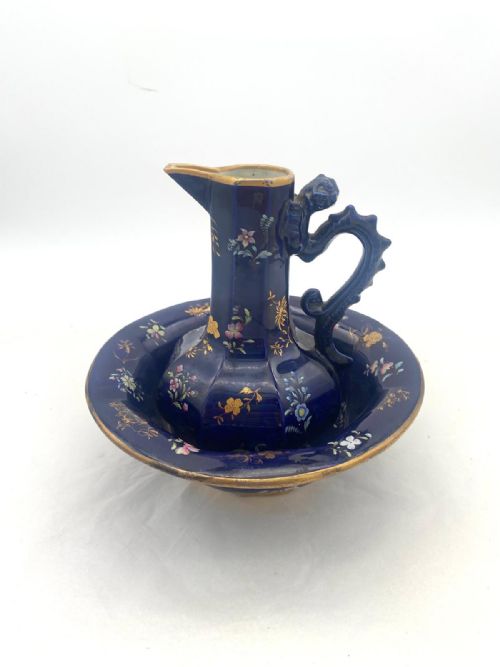
When you search for an english ironstone pitcher, you are looking at utilitarian ceramic vessels produced primarily during the nineteenth century. The examples on this page span the Georgian, Regency, and Victorian periods, taking forms such as jugs, pitchers, and washbasin sets.
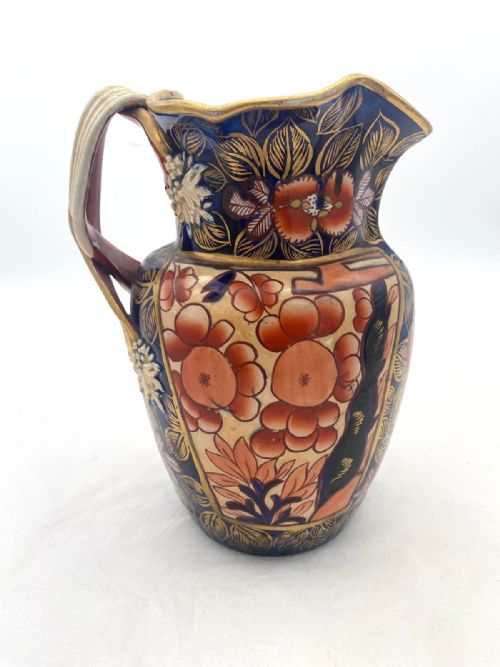
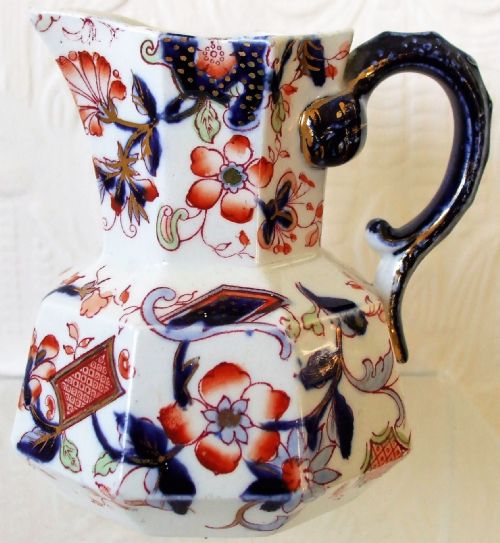
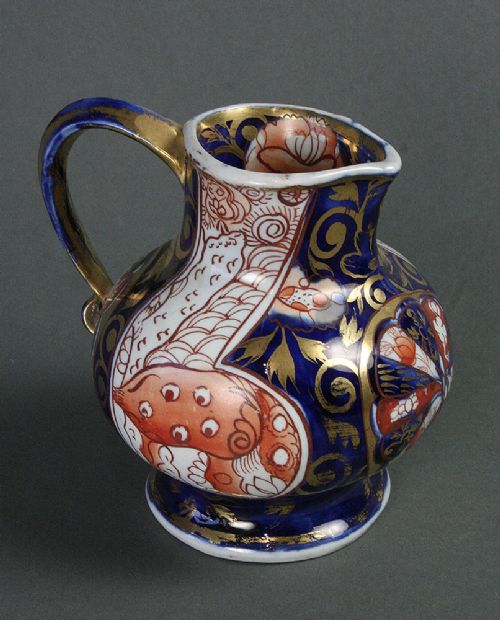
The most common forms you will meet here include octagonal jugs, Hydra jugs with distinctive serpent handles, and botanical pattern pieces. Makers utilised specific regional styles including Chinoiserie and Imari motifs alongside named patterns like Bethesda and Schoolhouse.
These vessels range from diminutive miniature jugs to large washbasin sets and graduated sets of three or four pieces. They originate from notable potteries of the era, combining heavy ceramic bodies with vibrant hand-painted or transfer-printed decoration.
Materials and construction
Potters constructed these pieces from heavy ironstone ceramic, a dense and durable earthenware designed to resist chipping and wear. This material provided a sturdy base capable of supporting repeated daily use in domestic settings.
Listings feature nineteenth-century pieces spanning the Georgian, Regency, and Victorian periods in ironstone, ceramic, and glaze.
Assessing quality
Quality rests in the crispness of the moulding and the complexity of the painted or printed patterns. Sharp details on serpent handles and well-defined octagonal facets distinguish finer examples from simpler utilitarian wares.
The application of enamel colours, gold leaf, and gilt highlights also separates standard production from superior pieces. Intricate motifs like Imari palettes or Chinoiserie scenes demand greater skill from the decorator, elevating the visual weight of the pitcher.
Keeling & Co·Livesley Powell & Co·Davenport
The English Ironstone Pitcher Glossary
- Ironstone ceramic
- A dense, durable type of earthenware patented in the nineteenth century to imitate porcelain. It provides heavy structural integrity for pitchers and jugs.
- Hydra jug
- A vessel featuring a handle modelled in the form of a mythical serpent or dragon. This specific handle shape appears frequently on nineteenth-century pieces.
- Gilt
- A thin layer of gold applied to the ceramic surface or moulded relief details. It provides metallic highlights that catch the light.
- Imari
- A decorative style borrowing from Japanese export porcelain traditions. It utilises rich iron-red, cobalt blue, and gold leaf on the ceramic body.
English Ironstone Pitcher: Frequently Asked Questions
What is an ironstone pitcher?
An ironstone pitcher is a heavy ceramic jug made from a durable earthenware body developed in the nineteenth century. These vessels were designed for functional domestic tasks such as pouring liquids or holding water in washbasins.
Over time, many of these pitchers evolved from purely utilitarian items into decorative display pieces. Their robust construction allowed them to survive centuries of use while retaining their structural form.
How do I date an english ironstone pitcher?
Dating relies on examining the specific stylistic period, form, and maker's marks recorded on the base of the vessel. Pieces from the Georgian and Regency eras often feature distinct neoclassical shapes like the Hydra handle, while Victorian examples introduce bolder botanical and Chinoiserie patterns.
Matching the pattern name and ceramic body characteristics to known nineteenth-century production periods helps narrow down the timeframe. Graduated sets and washbasin suites typically reflect the manufacturing standards of the mid to late nineteenth century.
Were these pitchers used daily?
These vessels were created for active service in nineteenth-century households, functioning as water jugs, table pitchers, and washbasin set components. Their dense ceramic composition made them resistant to the demands of everyday domestic life.
Today, collectors appreciate this dual heritage of practical utility and decorative craftsmanship. They serve as functional vessels or as standalone display items on sideboards and shelves.
How do I clean an antique pitcher?
Cleaning requires gentle washing with warm water and mild soap using a soft cloth or sponge. Avoid harsh scrubbing pads or abrasive cleaners that can damage the delicate enamel colours and gold leaf highlights.
Careful handling protects the glazed ceramic surface and any fragile moulded elements like serpent handles. Thorough drying prevents moisture retention in any historical hairline cracks or crazing within the glaze.