


Chinese Rosewood Plant Stand
A chinese rosewood plant stand elevates a ceramic jardiniere or vase, bringing sculptural timber and cool stone into an interior.
Chinese Rosewood Plant Stand
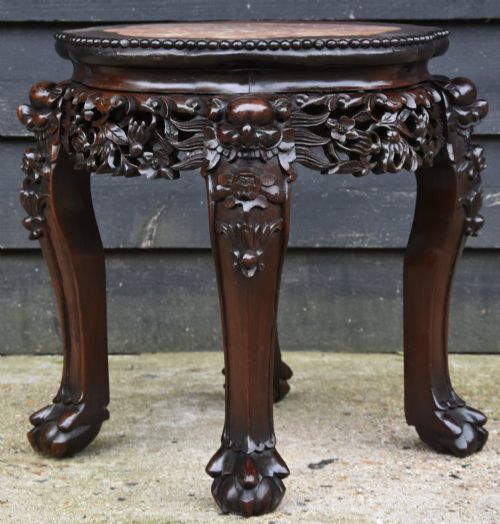
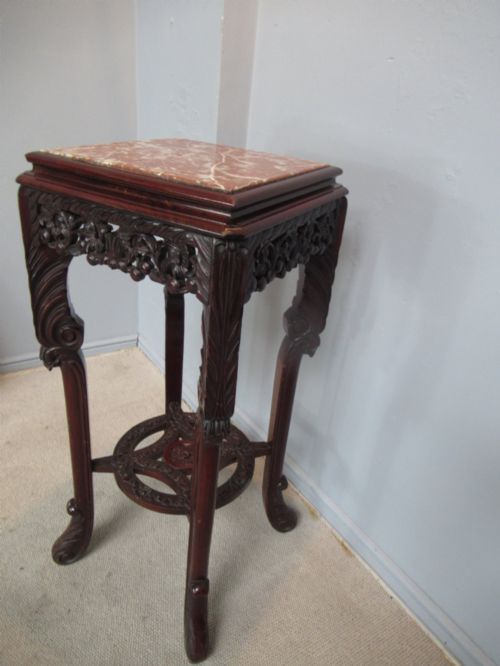
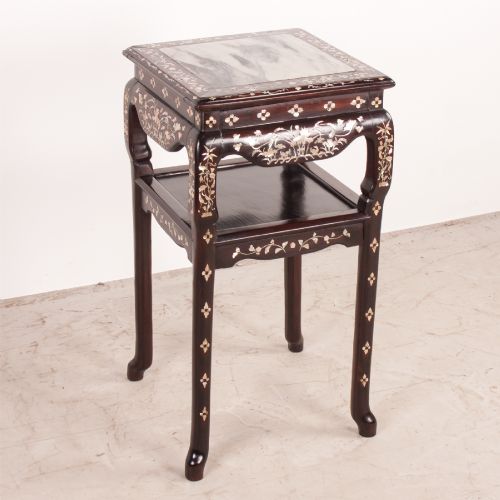
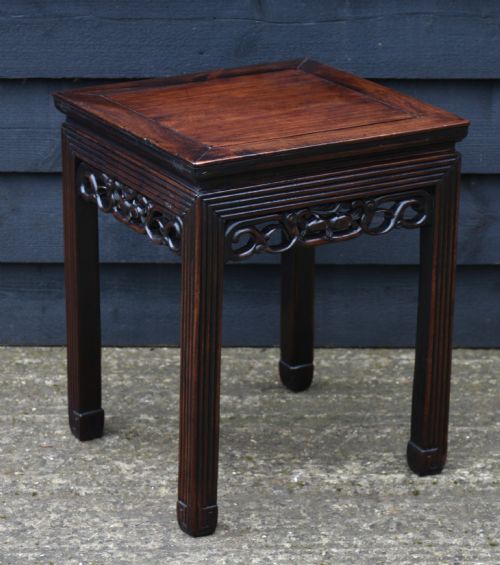
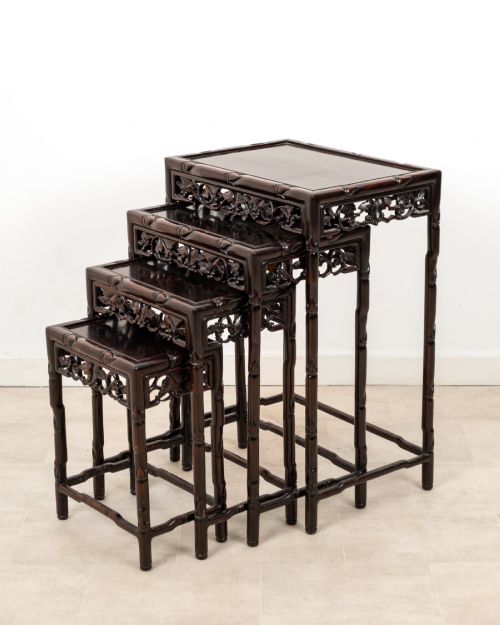
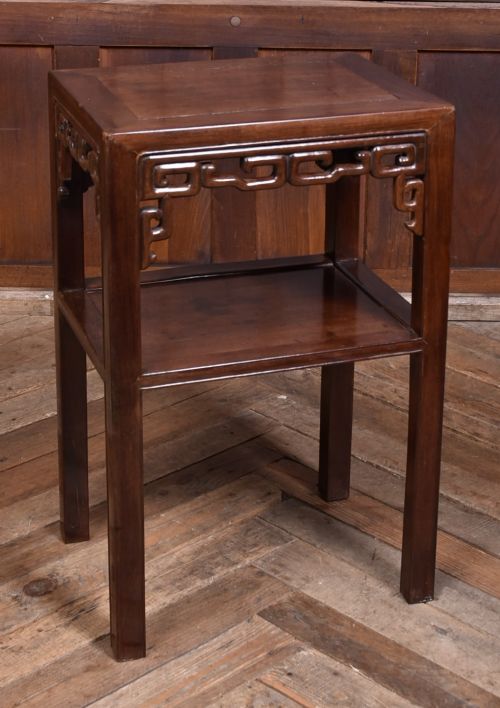
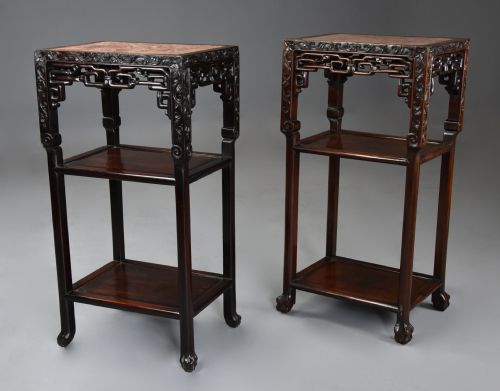
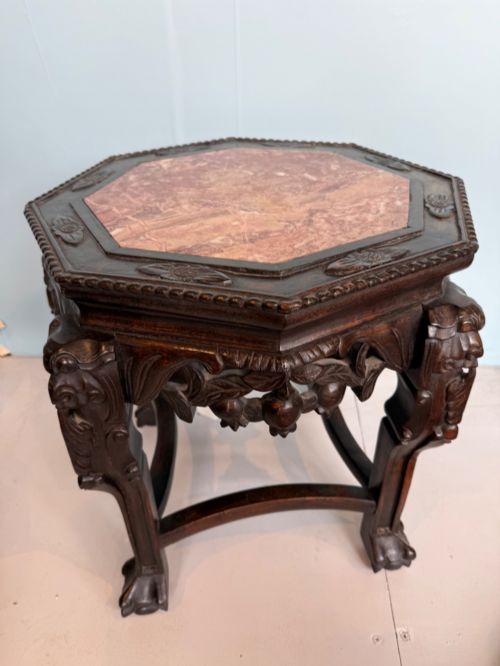
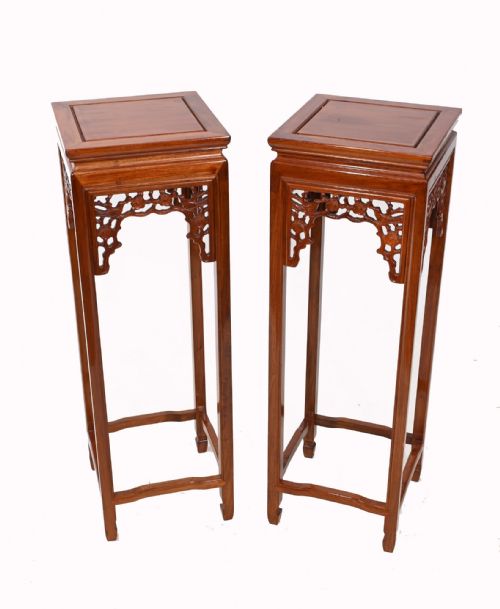
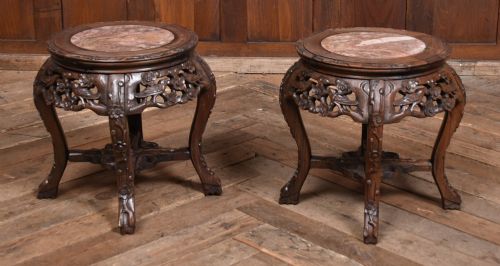
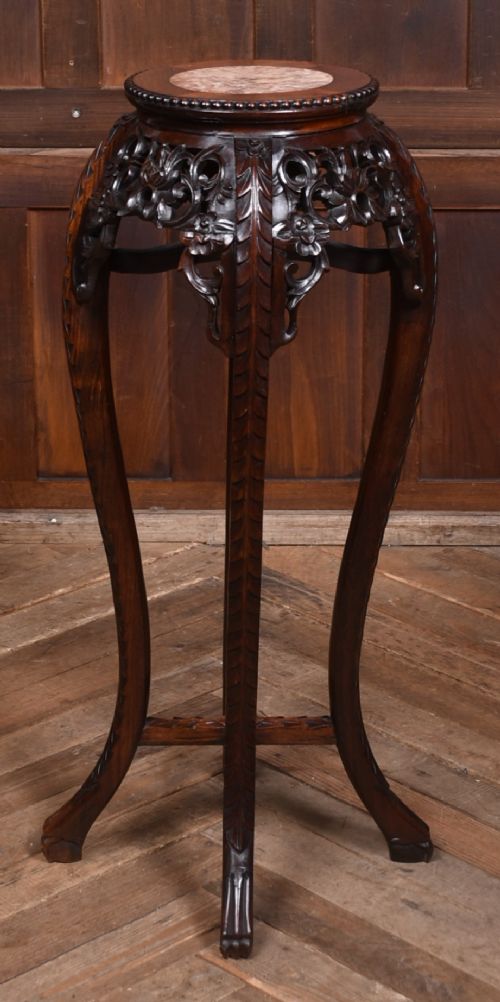
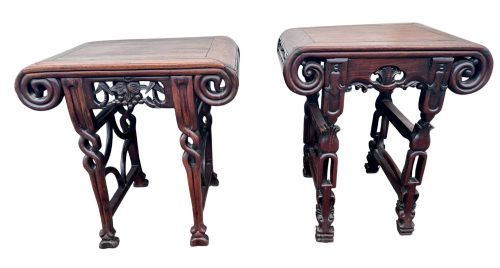
When you examine a chinese rosewood plant stand, you look at a specialised piece of furniture built to display decorative porcelain, bronzes or heavy planters. The form ranges from squat low tables and square jardiniere supports to tall, slender torchere pedestals and nests of graduated side tables.
Most examples you encounter on this page date from the nineteenth century through to the early twentieth century, spanning the late Qing dynasty and the Edwardian period. Makers constructed these stands not merely as utility surfaces, but as decorative focal points rooted in traditional Chinese craftsmanship and export markets.
Materials and construction
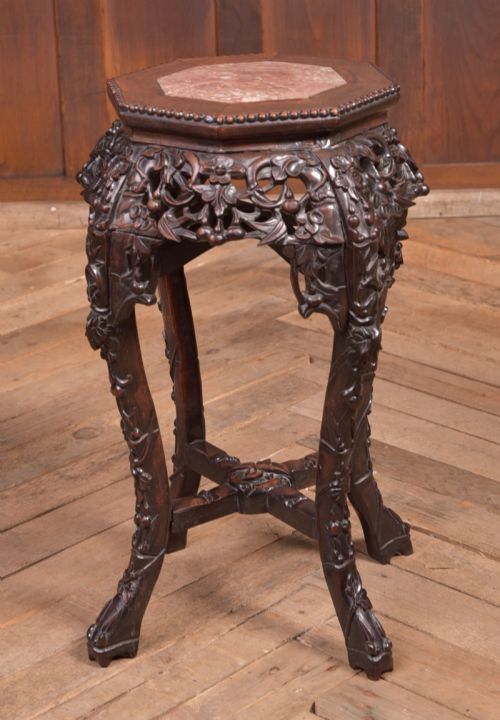
Carpenters utilised dense tropical timbers such as rosewood, hongmu, padouk and huali wood, which provided the structural strength required for heavy stone inserts. These durable hardwoods allowed artisans to execute deep, intricate carvings of floral motifs, dragons and structural lattices without compromising the integrity of the frame.
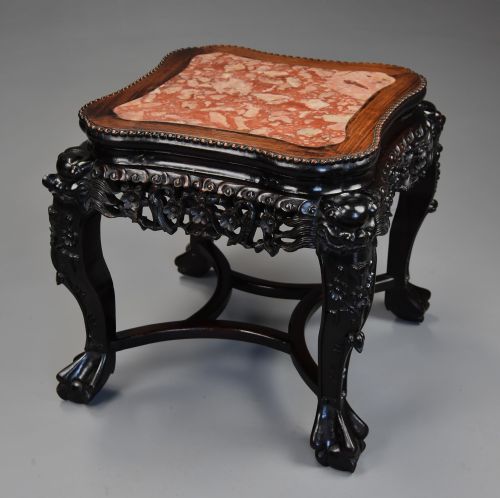
Many tabletops incorporate inset panels of rouge or white marble, ceramic, or mother-of-pearl inlay contrasting against the dark grain of the wood. These contrasting materials were fitted precisely into channeled frames to accommodate the natural expansion and contraction of timber over time.
Listings feature pieces spanning the nineteenth century, the Victorian era, and the Edwardian period.
Judging quality
The distinction between ordinary and superior pieces rests upon the crispness and depth of the woodcarving. Finer stands exhibit undercut relief work with distinct spatial separation, whereas lesser examples show shallow, mechanical detailing.
Selection of the timber and the integration of the inset stone dictate the tier of the piece. A well-chosen marble top sits flush with the surrounding hardwood frame, displaying balanced natural veining that complements the polish of the timber.
The Chinese Rosewood Plant Stand Glossary
- Hongmu
- A traditional Chinese term denoting dense, dark hardwoods used in quality furniture making. It translates literally to red wood and covers several distinct species with heavy, durable properties.
- Jardiniere
- A large ornamental pot or stand for holding plants or flowers. These vessels require sturdy, flat-topped tables to support their substantial weight.
- Torchere
- A tall stand or pedestal originally designed to hold a torch or candle, later adapted to support lamps and tall vases. They provide vertical emphasis within an interior scheme.
- Huali wood
- A prized fragrant hardwood utilised in classical Chinese furniture. It possesses a distinctive grain pattern that responds well to traditional hand-polishing techniques.
- Padouk
- A heavy, durable timber featuring reddish-brown tones frequently employed in nineteenth-century export pieces. It provides exceptional stability for carved supports.
Chinese Rosewood Plant Stand: Frequently Asked Questions
What is a chinese rosewood plant stand used for?
These pieces function primarily to elevate heavy ceramic planters, bronze vessels, and decorative vases to a convenient viewing height.
Beyond botanical displays, they serve flexibly as small lamp tables, occasional side tables, or solitary pedestals in a room.
How do I identify a qing dynasty stand?
Look for traditional joinery methods, deep hand-carved motifs reflecting historic dynasties, and dense indigenous hardwoods like hongmu or huali.
Many period examples also feature inset marble panels or mother-of-pearl inlay characteristic of nineteenth-century export production.
Are these stands sturdy enough for daily use?
The dense tropical hardwoods utilised in their construction provide immense structural rigidity and weight capacity.
Their robust timber frames easily withstand the load of heavy planters, lamps, or everyday objects placed upon them.
How should I care for the marble top?
Wipe the stone insert gently with a damp cloth and mild soap, avoiding acidic cleaners that might etch the polished surface.
Apply a neutral paste wax to the surrounding hardwood frame periodically to maintain the lustre of the timber.