




Central Asian Ikat
Central Asian ikat textiles are dynamic patterned panels and garments woven from rich materials, bringing vibrant colour and historic textile art directly into modern interiors.
Central Asian Ikat
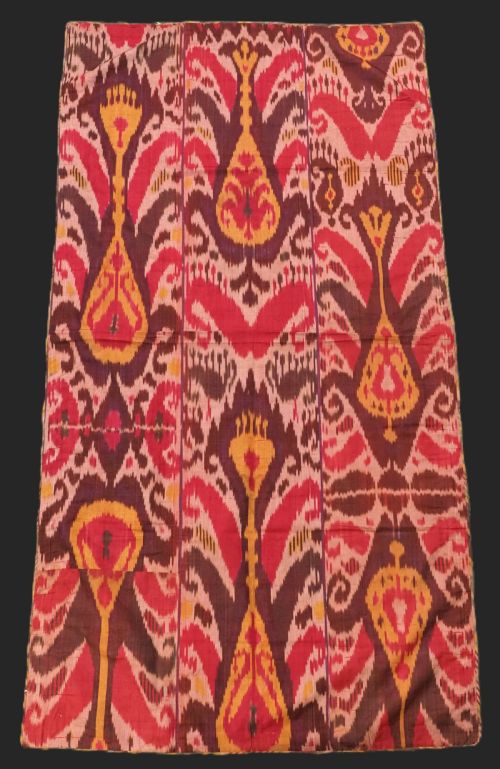
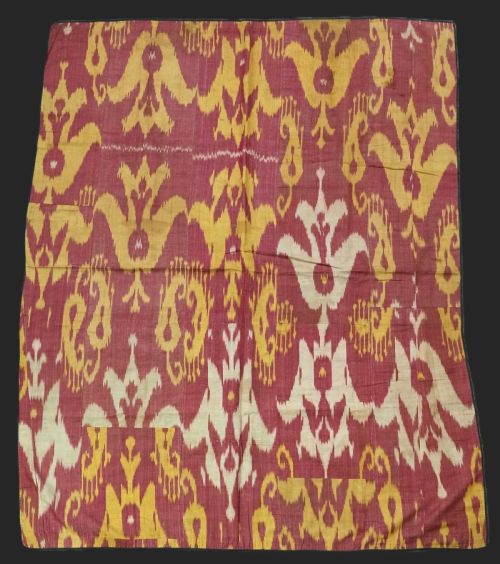
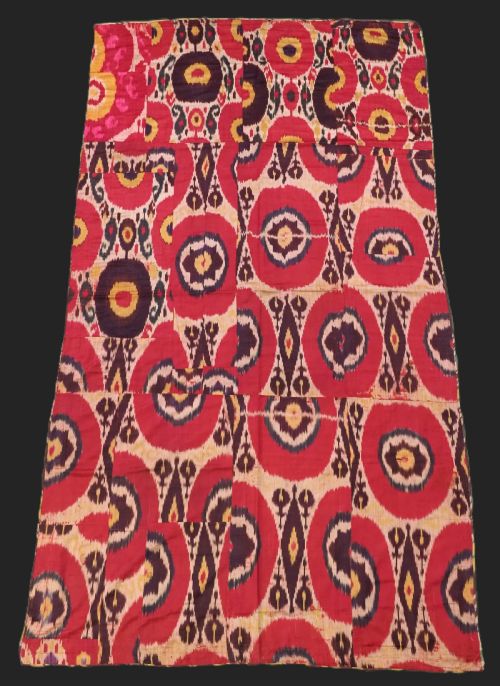
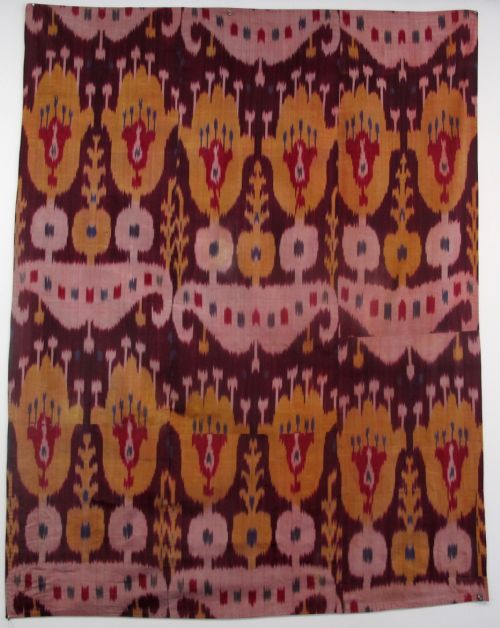
When you search for central asian ikat, you encounter textiles originating from regions including Uzbekistan and Turkmenistan, created during the late nineteenth century. These items manifest primarily as large fabric panels, wall hangings, and traditional garments such as chapan coats and khalat robes.
The selection includes specific regional formats, notably Ersari Beshir Turkmen torba bags and chuval faces incorporating ikat designs, alongside smaller items like double-sided purses. Pieces span periods around eighteen eighty to nineteen hundred, showing the distinct aesthetic of nineteenth century Central Asian craft.
Materials and construction
Maker construction relies heavily on silk, cotton, wool, and hand-spun wool fibres, frequently combined to form semi silk adras fabrics. Natural dyes provide the palette for the complex resist-dyed patterns before weaving takes place.
Garments like winter coats receive quilted and padded construction for warmth, while certain items incorporate glass beads for added detail. Textile panels and purses demonstrate the skilful translation of these woven designs across various utilitarian and decorative formats.
Gentlemen in nineteenth century Bukhara stepped out in heavily padded ikat coats that doubled as portable duvets against the winter chill.
Assessing the examples
Quality rests upon the intricacy of the resist-dyeing process and the clarity of the pattern definition across the silk or semi silk surface. Greater skill produces sharper motifs and richer saturation from natural dyes.
The integrity of the physical construction, whether in the heavy quilting of a winter chapan coat or the structural weave of a large fabric panel, distinguishes the standard of preservation and craftsmanship.
The Central Asian Ikat Glossary
- Ikat
- A dyeing technique where yarn is resist-dyed prior to weaving to create characteristic blurred pattern edges. This method demands immense precision from the artisan.
- Adras
- A traditional fabric woven with a silk warp and cotton weft. It combines the lustre of silk with the durability of cotton.
- Khalat
- A long, loose-fitting outer robe or coat worn traditionally by men across Central Asia. These garments are often richly padded and lined.
- Torba
- A small storage bag produced by Turkmen tribes, frequently featuring tribal designs or integrated ikat patterns. They served practical domestic functions within nomadic or settled households.
- Chuval
- A large tent bag used for storage by Turkmen communities. The face of the bag typically displays significant decorative weaving.
Central Asian Ikat: Frequently Asked Questions
What is an ikat coat?
An ikat coat is a traditional outer garment, such as a chapan or khalat, tailored from patterned silk or semi silk fabric originating from regions like Bukhara and Samarkand.
These garments were frequently quilted and padded for winter use, combining practical warmth with striking visual presence.
How are ikat panels used?
Ikat panels function primarily as wall hangings or decorative textiles within domestic spaces. Their substantial scale allows the complex patterns and natural dye colours to dominate a room.
Historically, these textiles served both ornamental purposes and as significant household items in nineteenth century Central Asian societies.
What is a semi silk adras?
Semi silk adras is a textile woven using a combination of silk and cotton threads. This blend provides a smooth surface texture while maintaining structural stability.
It appears frequently in fabric panels and garments from the Bukhara region.
How do I date these textiles?
Dating relies on stylistic markers, material analysis, and regional attribution pointing towards the late nineteenth century, specifically around eighteen eighty to nineteen hundred.
Examining the use of natural dyes and hand-spun wool helps establish the historical period of manufacture.
Where were these textiles made?
Production centred in historic trading hubs and tribal regions across Central Asia, notably Uzbekistan and Turkmenistan. Specific towns like Bukhara and Samarkand developed renowned textile traditions.
Turkmen groups, including the Ersari, also incorporated these visual elements into traditional torba and chuval items.