
Antique Uzbek Textile
An antique uzbek textile brings vibrant Central Asian colour and bold tribal pattern into a room through historic embroidered wall hangings and woven panels.
Antique Uzbek Textile
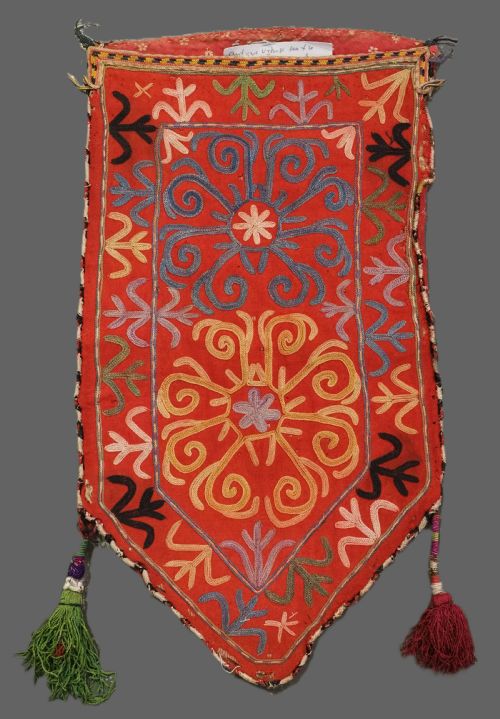
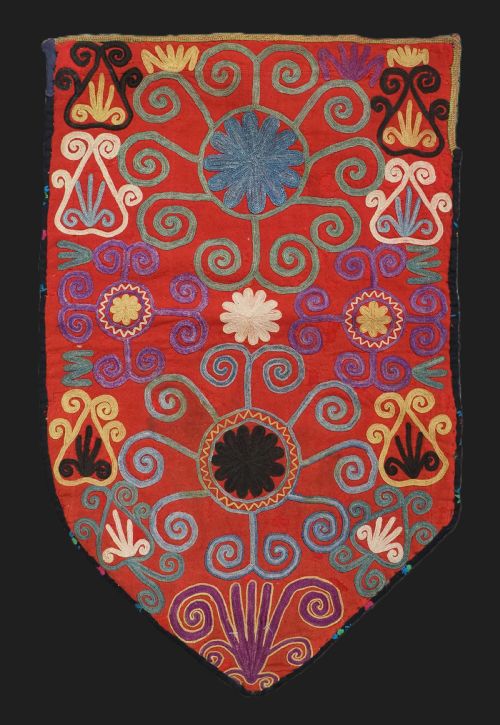
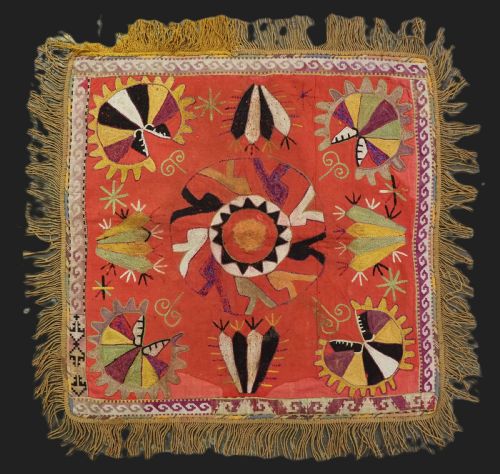
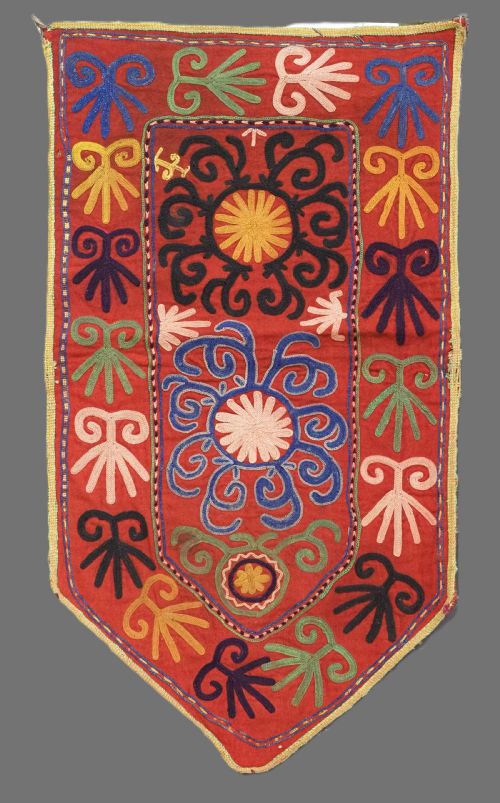
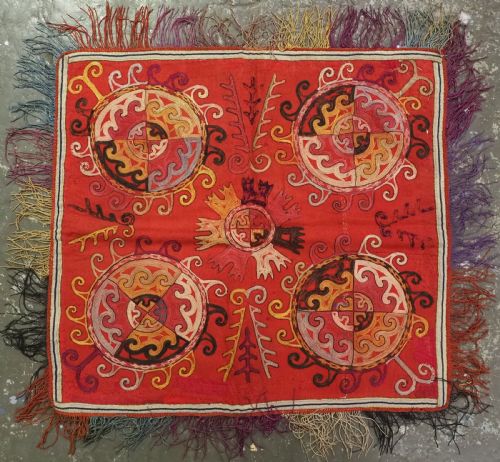
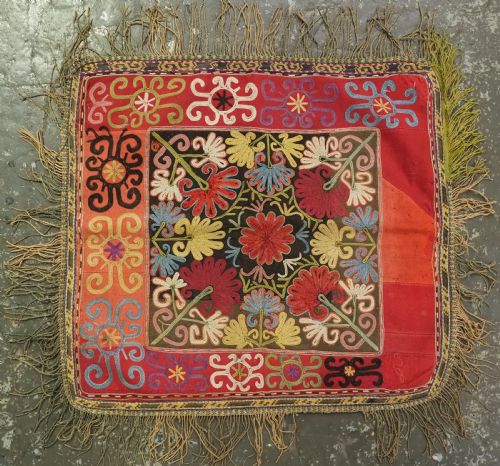
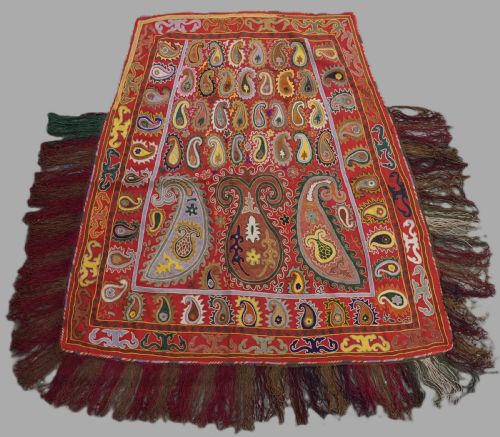
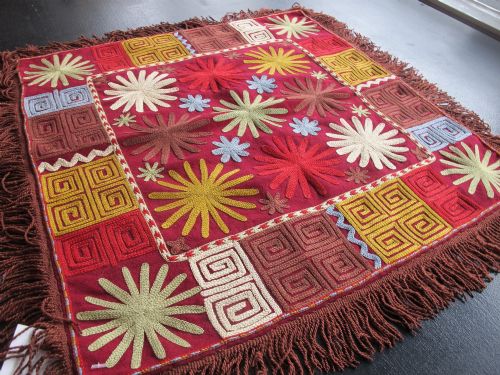
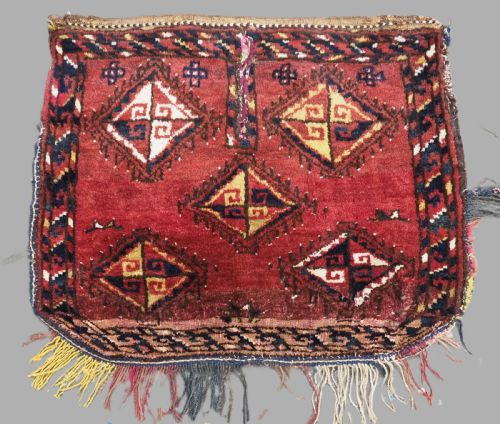
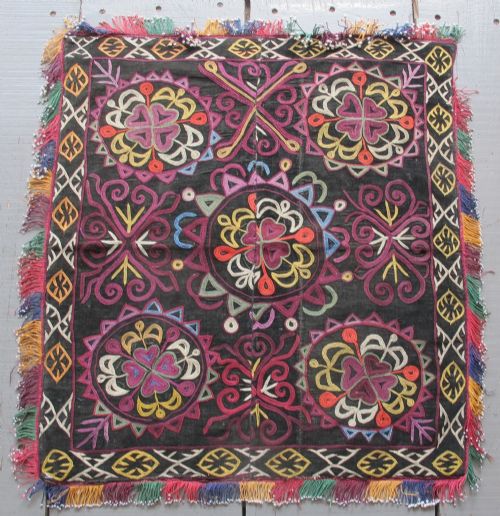
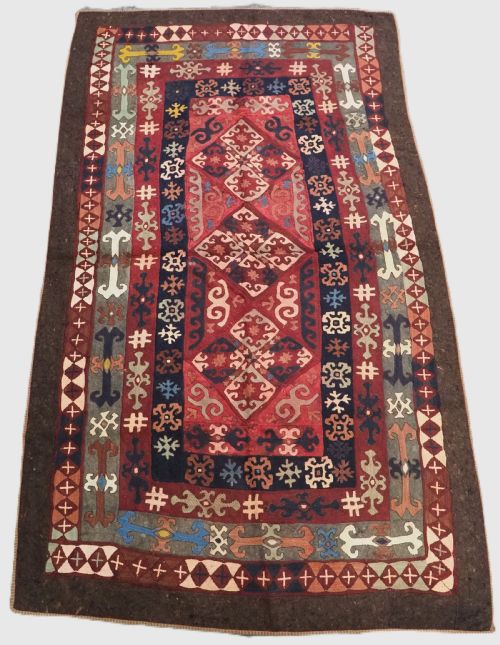
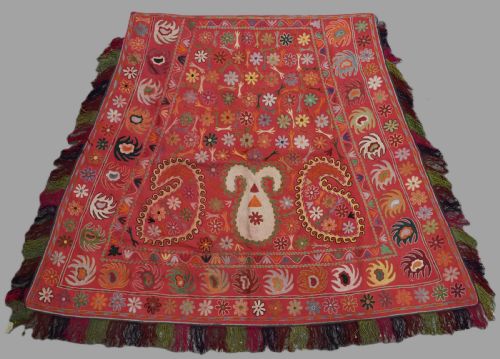
Buyers will encounter specific functional items such as the ilgich, uut kap, and ceremonial horse covers, alongside large decorative panels and gentleman's coats known as khalat. These objects reflect the rich nomadic and sedentary heritage of the region, utilising traditional formats designed for domestic use or ceremonial display.
The objects date from various periods across the nineteenth and early twentieth centuries, capturing traditional Central Asian folk art. Surviving pieces demonstrate the distinct aesthetic traditions of regions including Bukhara, Samarkand, and Shakrisabz.
What Varies in Quality
The visual impact of an antique uzbek textile relies heavily on the vibrancy of the dyes and the complexity of the design layout. Finer examples display meticulous stitch density and harmonious colour combinations that elevate the piece from domestic craft to high art.
Condition and integrity of the base materials dictate the standing of an individual piece. Items retaining their original scale, rich silk threads, and structural stability command greater appreciation among collectors.
Antique Uzbek Textile Retail Price Guide 2026
Typical asking prices for uzbek textile among the pieces listed under this phrase on Sellingantiques today, from the lower quarter to the upper quarter. They describe what is for sale here now, not the wider market.
Listings feature textiles spanning the nineteenth and early twentieth centuries, utilising silk, cotton, wool, velvet, and felt.
The Antique Uzbek Textile Glossary
- Suzani
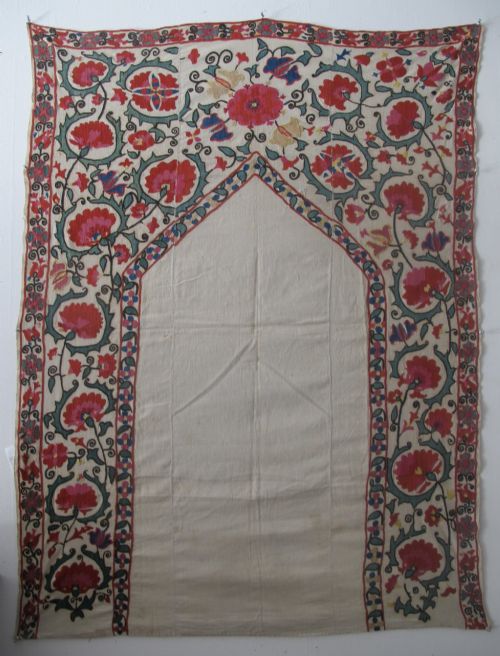
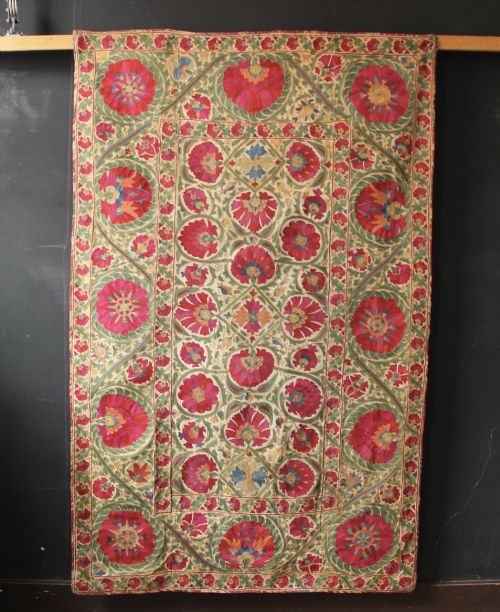
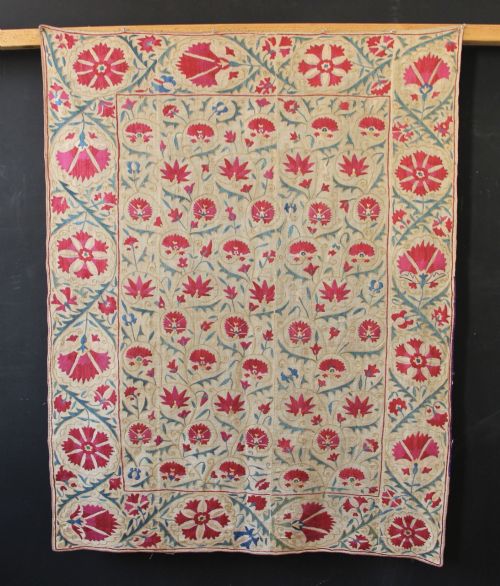
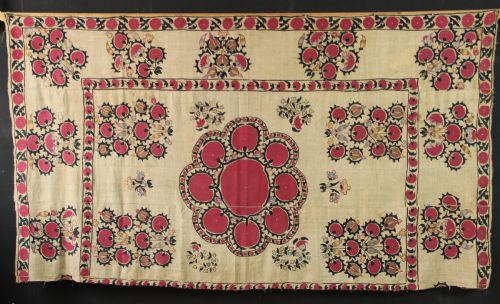
- A large embroidered tribal wall hanging originating from Central Asia, traditionally worked in silk on a cotton or linen ground. These panels often feature elaborate floral and medallion designs produced as part of a bride's dowry.
- Ikat
- A dyeing and weaving technique where threads are resist-dyed before being woven into cloth, producing characteristic feathered pattern edges. Silk ikat panels and coats represent high achievements of urban workshops in regions like Bukhara.
- Ilgich
- A specific type of Central Asian embroidery used for wall hanging, frequently associated with the Lakai tribe. These pieces often display energetic geometric motifs and dynamic compositions.
- Khalat
- A traditional long robe or coat worn by men in Central Asia, often tailored from rich silk ikat fabric. These garments demonstrate the sophisticated tailoring and textile arts of urban centres like Samarkand.
Antique Uzbek Textile: Frequently Asked Questions
What is an antique uzbek textile used for?
These historical pieces served various practical and ceremonial functions in Central Asian domestic life, acting as wall decorations, dowry furnishings, storage bags, or garments.
Today, collectors primarily display them as wall hangings or decorative panels to introduce rich textures and historic patterns into modern interiors.
How do I hang a textile safely?
Hanging delicate historic textiles requires careful weight distribution to prevent pulling or tearing the fragile ground fabric.
Conservation mounting methods, such as stitching the piece to a supportive fabric backing or using a padded Velcro system, protect the fibres from direct stress.
How are different regional styles told apart?
Regional styles are distinguished by specific colour palettes, motif preferences, and embroidery techniques characteristic of particular towns or nomadic groups.
Urban centres like Bukhara produced symmetrical floral Suzanis, whereas tribal groups like the Lakai favored energetic, geometric compositions and specific felt or wool foundations.
How do I care for silk embroidery?
Silk embroidery requires protection from direct sunlight to prevent natural dyes from fading and weakening the delicate protein fibres over time.
Gentle vacuuming through a mesh screen can remove dust, while professional textile conservators should handle any necessary cleaning or structural repairs.