
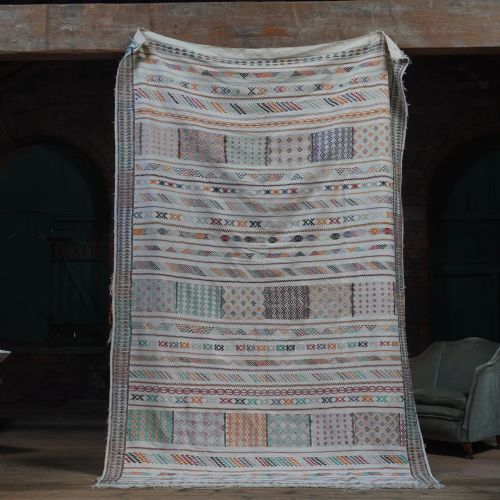
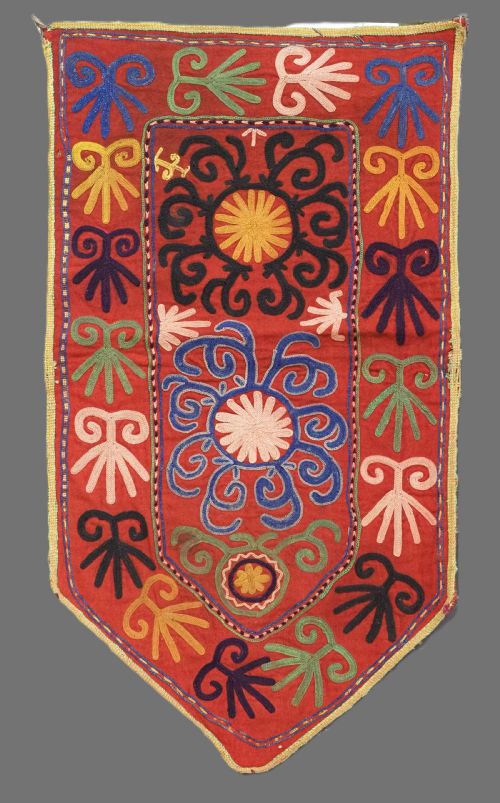
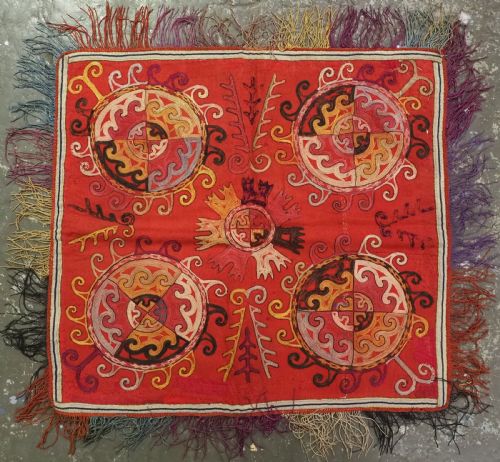
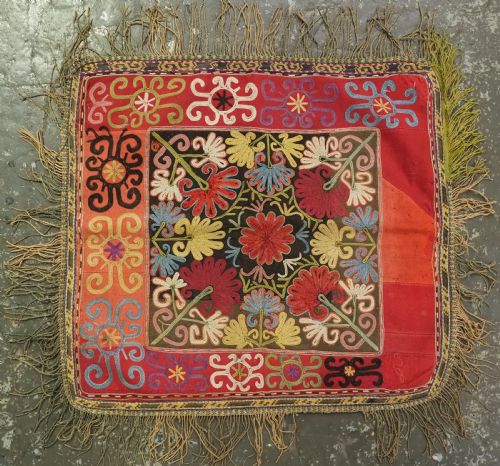

Silk Embroidered Textile
These silk embroidered textile pieces bring centuries of needlework skill into your home, offering vibrant cultural history through every threaded panel.
What They Are
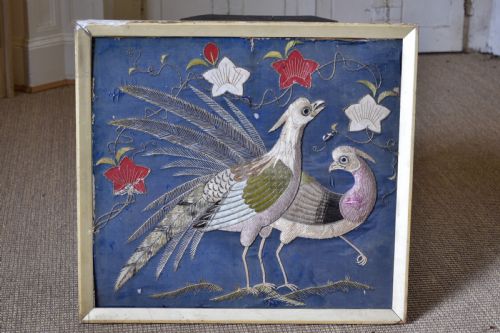
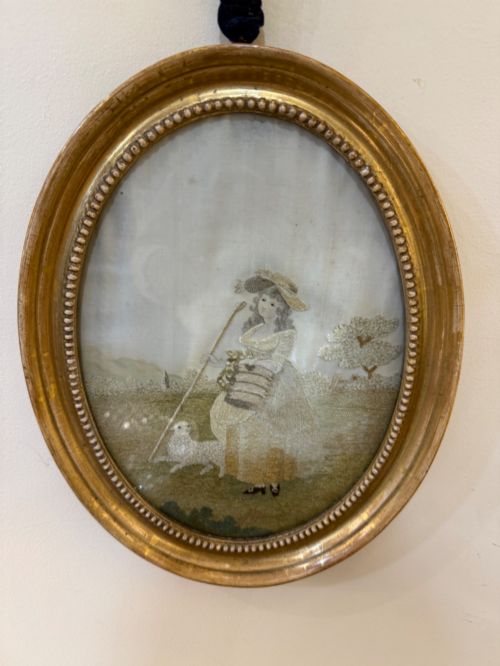
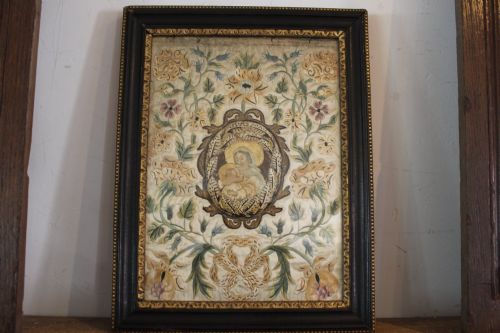
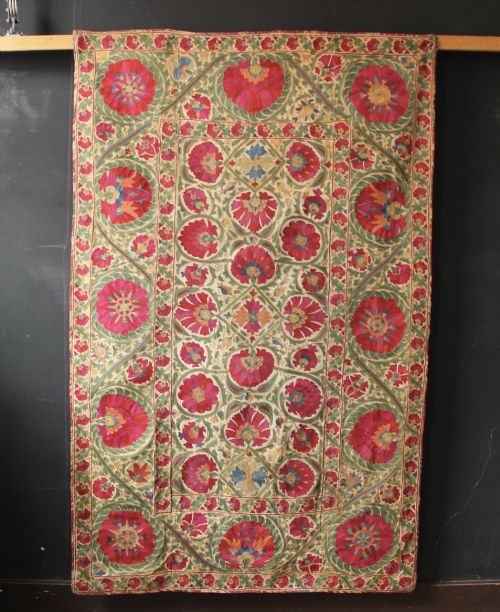
A silk embroidered textile represents traditional needlework traditions ranging from Central Asian folk art to Greek regional pieces. Buyers searching this phrase encounter nineteenth-century Suzanis alongside eighteenth-century Greek island work.
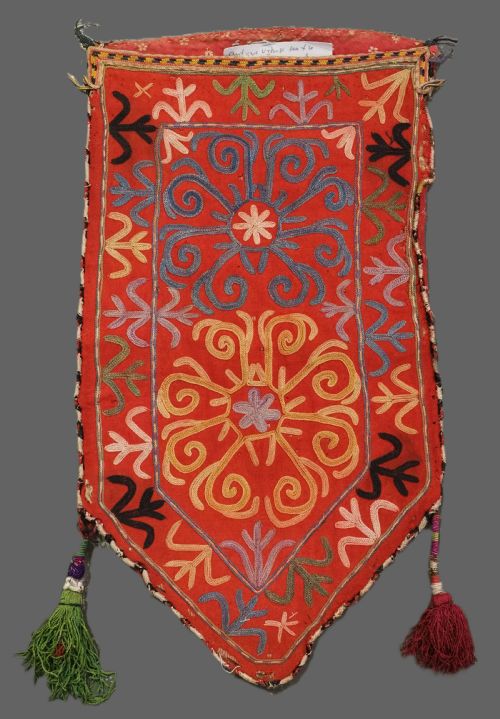
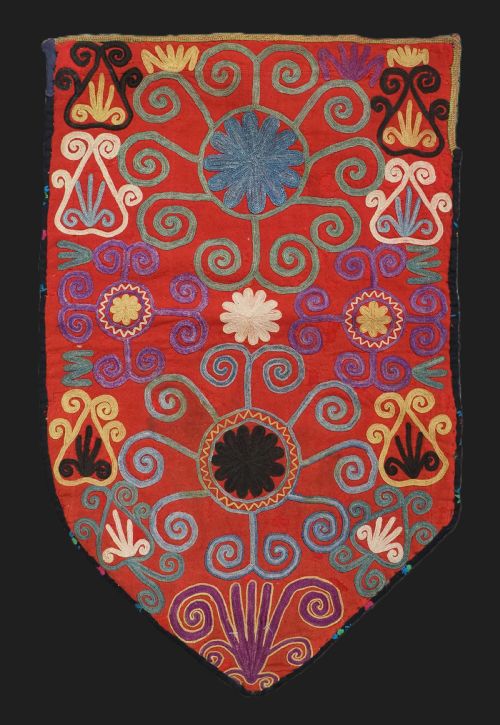
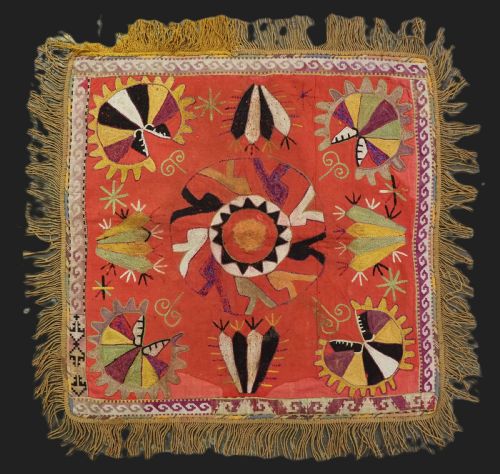
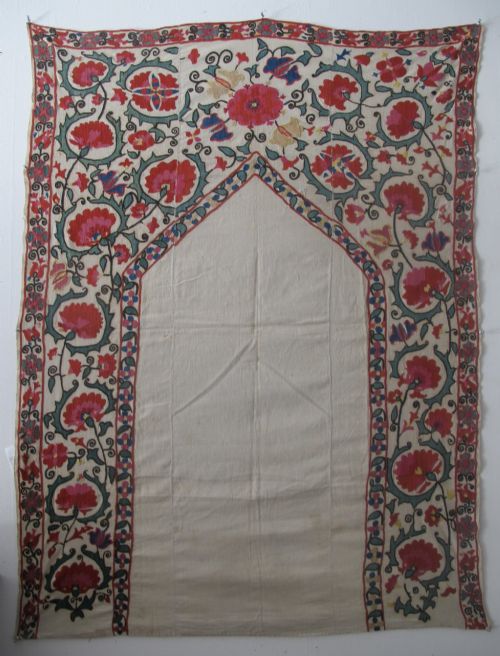
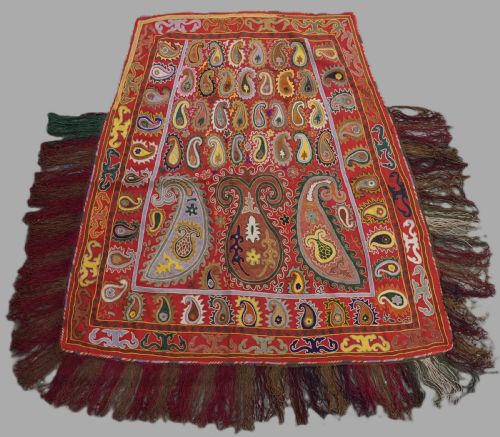
The regional variety spans Uzbek tribal pieces, including prayer designs and fully embroidered palak panels, alongside Greek hand towel end panels from Epirus. These textiles served domestic, ceremonial, and decorative purposes within their original communities.
Most examples found here combine silk thread with supportive foundations of wool, cotton, or linen. The forms vary from wall hangings and textile panels to specific domestic furnishings.
How They Were Made
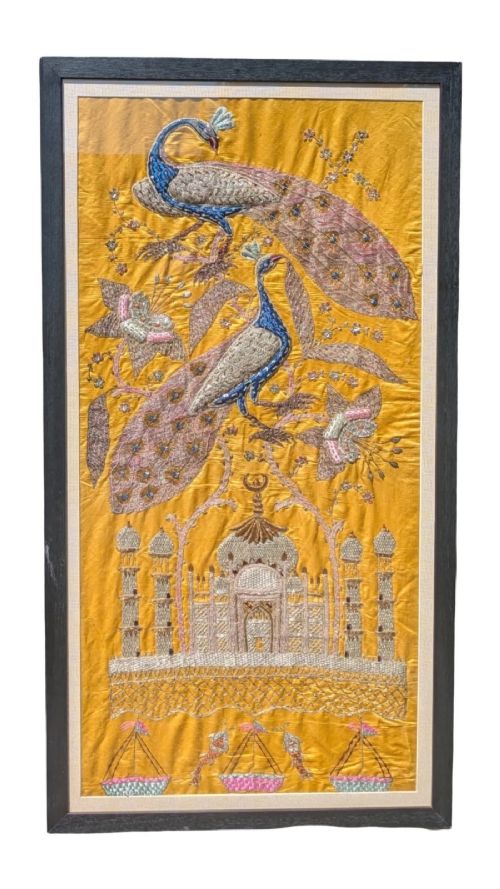
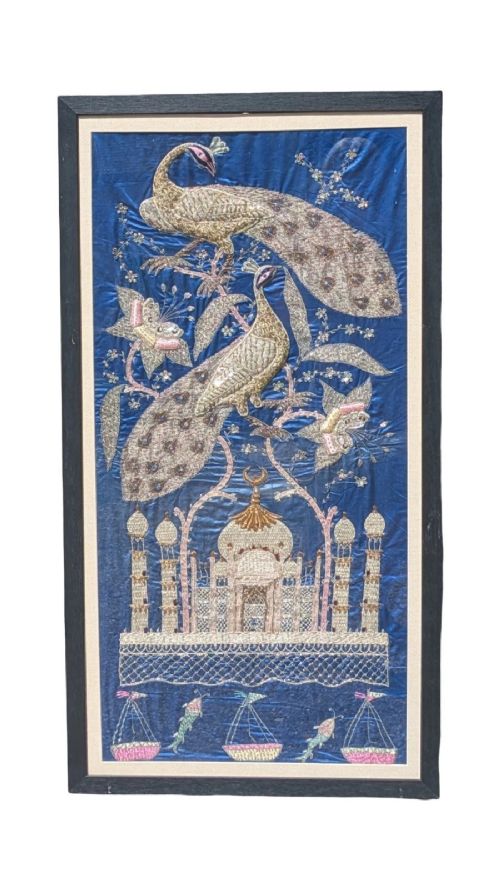
Maker communities worked silk threads onto foundation grounds made of woven wool, cotton, linen, or combinations thereof. Metallic thread also appears in specific regional compositions, adding lustre to the stitched motifs.
Needleworkers executed dense surface embroidery, covering grounds either partially in floral and geometric patterns or completely, as seen in fully embroidered palak types. The base fabrics provided stability for intricate hand-worked designs.
Retail Price Guide 2026
Typical UK retail prices for silk embroidered textile, calculated from the Sellingantiques database of over a million retail prices indexed since 2003. This retail price guide relies exclusively on Sellingantiques data; no external sources or auction records are used, so the figures do not describe the wider market.
Current listings span periods from the mid-eighteenth century to the early twentieth century, incorporating silk, wool, cotton, linen, and metallic thread.
What Varies in Quality
Density of stitchwork distinguishes simpler regional examples from fully covered masterpieces. The choice of ground material, from humble cotton to rich red wool, shapes the visual weight of the textile.
Complexity of composition and clarity of regional design motifs determine the standing of individual panels. Pieces featuring comprehensive silk coverage require substantially greater labour than open linear patterns.
The Silk Embroidered Textile Glossary
- Suzani
- A traditional embroidered tribal textile originating from Central Asia, typically worked in silk on a cotton or wool ground. These large wall hangings often feature bold floral and botanical motifs.
- Palak
- A specific variety of Suzani where the ground fabric is fully concealed by dense silk embroidery. This intensive technique creates a rich, tapestry-like surface.
- Uut Kap Ilgich
- A specialised hanging bag or panel from Central Asian nomadic traditions, embroidered with symbolic patterns. These items formed part of traditional yurt furnishings.
- Ground
- The base fabric upon which the embroidery threads are applied. Common materials in this group include cotton, wool, linen, and silk.
Frequently Asked Questions
How were these textiles used originally?
Original uses varied by region and culture, ranging from decorative wall hangings in Central Asian homes to domestic furnishings like hand towel end panels in Greece. Some specialised pieces functioned as ceremonial items or storage bag faces.
Over time, these textiles transitioned from functional household objects to collectible works of decorative art. Today, collectors display them mounted on walls or draped over furniture.
How do I care for an antique textile?
Antique textiles require protection from direct sunlight to prevent silk and cotton threads from fading. Displaying them away from moisture and heat sources preserves the integrity of the natural fibres.
Professional mounting provides structural support for heavier wall hangings. Gentle cleaning should be left to textile conservation specialists rather than standard washing.
How can I tell regions apart?
Regional attribution relies on identifying specific design vocabulary, stitch techniques, and ground materials. Central Asian pieces often feature large medallions and bold floral sprays on cotton or wool.
Greek island and mainland works, such as those from Epirus, display distinct geometric or stylized motifs characteristic of local folk traditions. Comparing the palette and fibre choices helps clarify the origin.