



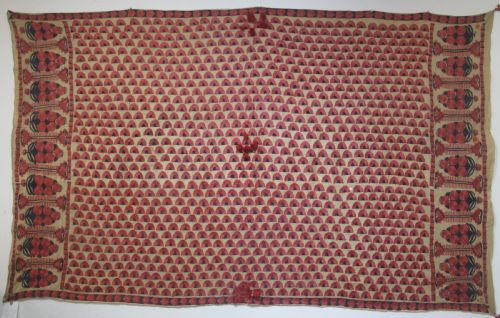


Nineteenth Century Textile
Nineteenth century textile works bring together tribal weavings, framed samplers, and embroidered panels shaped by Victorian and Central Asian hands.
Nineteenth Century Textile
A nineteenth century textile covers a broad spectrum of woven, embroidered, and needleworked objects spanning nomadic tribal gear and domestic European pieces. Buyers encountering this selection will find structural pieces such as wall hangings, framed samplers, and decorative panels alongside utilitarian bags and garments.
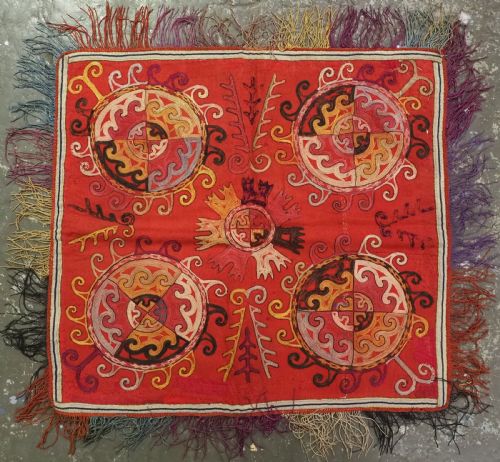
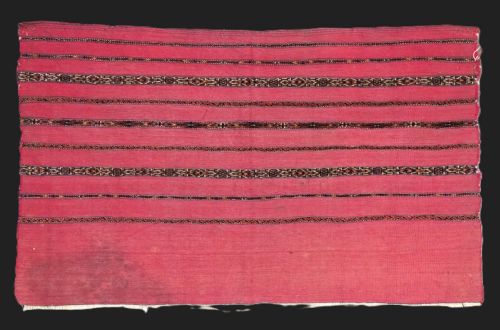
The material record divides clearly between domestic European handwork and Central Asian or Middle Eastern tribal weaving. English samplers, French lace, and wool tapestries sit alongside Turkmen chuval faces, Uzbek Suzanis, and Shahsavan soumak bags.
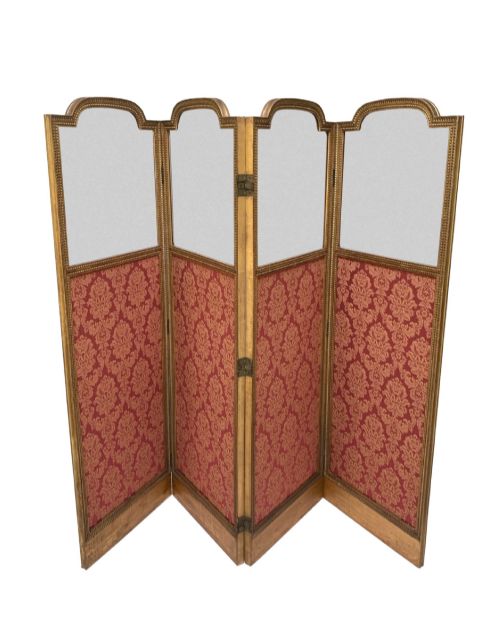
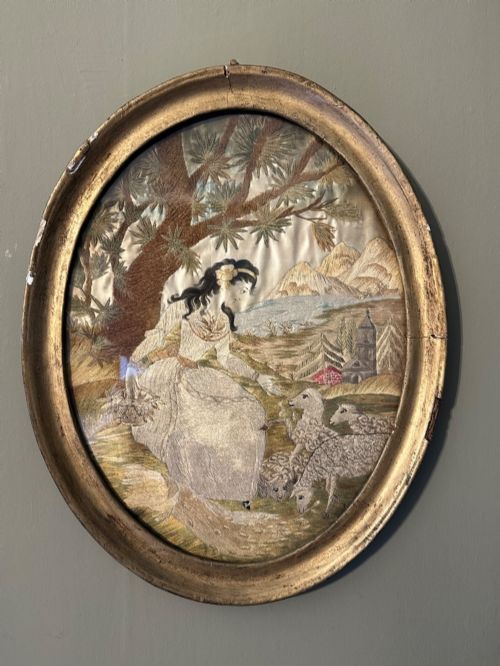
Forms range from large multi-fold decorative screens fitted with giltwood frames to intricate silk coats and domestic needlepoint portraits. Each piece reflects the functional or decorative traditions of its period, whether created in a Victorian parlour or a nomadic encampment.
Materials and Construction Methods
Makers utilised natural fibres including wool, silk, cotton, and linen, often combining them within a single composition. Silk embroidery threads provide high sheen on cotton or linen grounds, while heavy wool forms the dense pile of tribal rugs and bag faces.
Needlework techniques vary from precise cross-stitch and gros-point on samplers to complex embroidery and ikat dyeing on garments and wall hangings. Specialised weaving structures such as soumak work and fine pile knots define the Central Asian and Persian pieces.
Supporting elements integrate wood, maple wood, giltwood, and glass to frame, mount, or display the textiles. Screens incorporate carved wooden panels to hold large fabric sections, while samplers rely on traditional linen foundations.
Materials recorded across the selection include wool, silk, cotton, linen, glass, giltwood, wood, and maple wood.
Assessing Standard and Execution
The fineness of the weave or the density of the stitch work dictates the primary tier of execution. Tightly knotted tribal chuvals and meticulously counted thread samplers represent a higher level of maker discipline than loose or irregular stitching.
Colour retention and the complexity of the design layout distinguish superior examples from standard ones. Natural dyes yielding deep, stable tones and sophisticated medallion arrangements elevate a piece above simpler, repetitive patterns.
The structural integrity of the fabric base and the completeness of original borders or backs influence the overall standard. Pieces retaining their original backing textiles or matching pairs maintain greater historical cohesion.
The Nineteenth Century Textile Glossary
- Sampler
- A piece of needlework produced by a maker to demonstrate proficiency in various stitches and patterns. These often include alphabets, dates, and names.
- Chuval
- A large tent bag made by Turkmen tribes, typically used for storage. The faces are frequently collected independently as decorative wall panels.
- Suzani
- A type of embroidered and decorative tribal textile from Tajikistan, Uzbekistan, and other Central Asian nations. They are usually worked with silk thread on a cotton ground.
- Soumak
- A flat-weave textile technique producing a sturdy structure with a braided appearance on the face. It is commonly found on bags and saddle pieces.
- Torba
- A small Turkmen bag used for household storage inside a tent. They often display primary guls and secondary border motifs.
- Ikat
- A dyeing technique where yarns are tie-dyed prior to weaving to create distinct patterns with characteristic blurred edges. This method appears on coats and wall hangings.
Nineteenth Century Textile: Frequently Asked Questions
How should I hang a textile?
Heavy rugs and wall hangings require professional mounting using non-damaging sleeve systems or conservation Velcro to distribute the weight evenly across the upper edge. Smaller framed items like samplers need stable hanging wire secured to sturdy wooden frames.
Keep fabric pieces away from direct sunlight and high moisture environments to prevent fibre degradation and fading of natural dyes over time.
What is a chuval face?
A chuval face is the decorative front panel of a large storage bag made by nomadic Turkmen tribes. These panels were cut from their original utilitarian backs when the bags wore out, preserved for their intricate secondary designs and tribal motifs.
Collectors prize them today as wall art due to their dense knotting and balanced geometric layouts.
How do I identify a sampler?
Samplers are characterised by rows of alphabets, numbers, motifs, and maker signatures worked in thread upon a linen or canvas foundation. English examples from the nineteenth century frequently record the maker's name, age, and a specific date alongside religious or domestic verses.
They serve as historical records of domestic needlework education during the Victorian era.
Are these pieces cleaned?
Maintenance depends entirely on the specific material composition, as silk, wool, and antique cotton react differently to cleaning agents. Light surface dust can be removed using gentle suction through a mesh screen, but washing should be left to textile conservators.
Harsh chemical treatments will damage fragile nineteenth-century fibres and discharge natural dyes.