


Traditional Uzbek Suzani
Traditional Uzbek suzani textiles are heavy embroidered wall hangings and covers that bring vibrant Central Asian folk art into modern interiors.
Traditional Uzbek Suzani
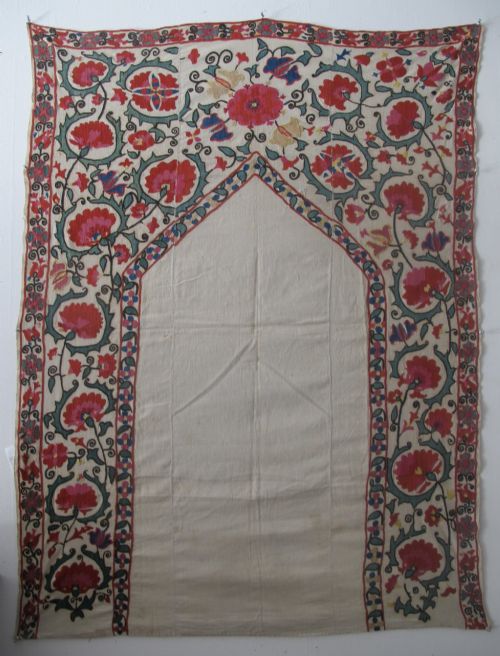
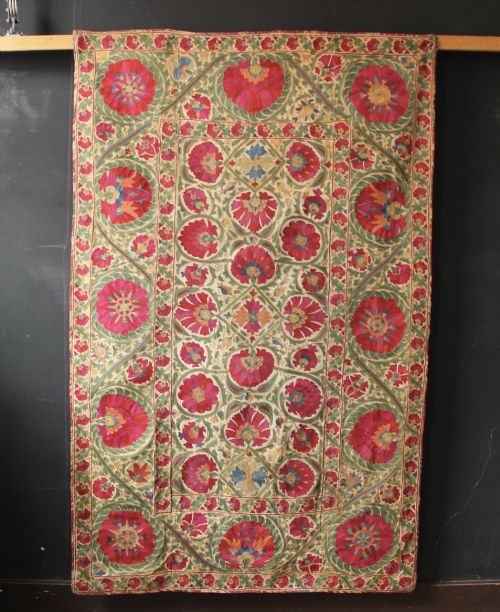
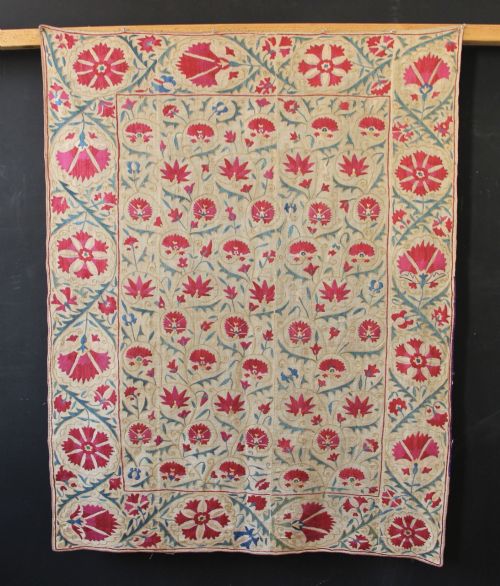
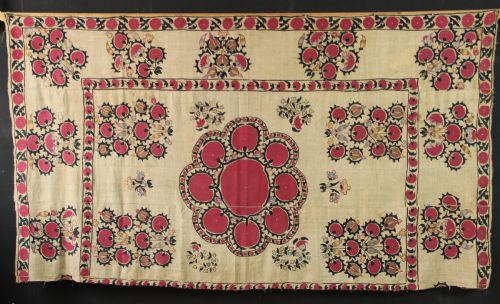
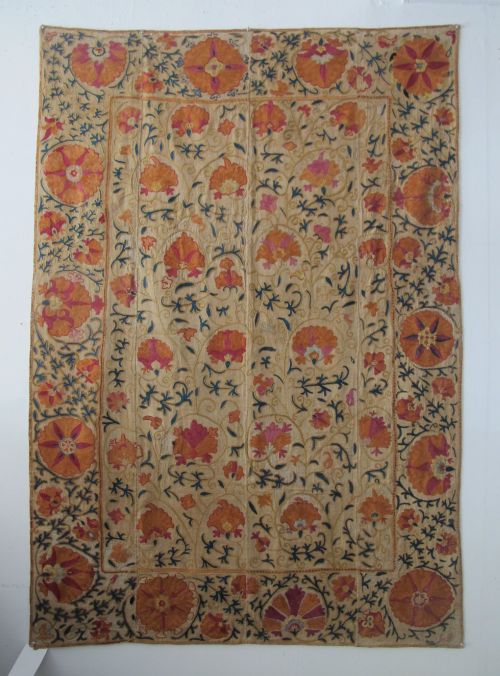
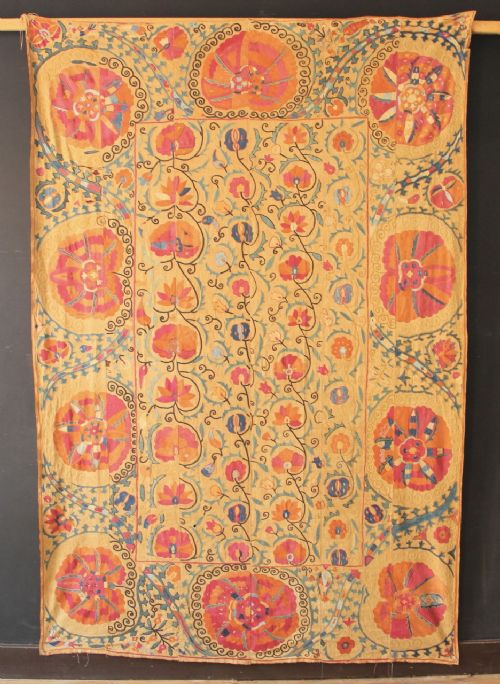
Traditional Uzbek suzani items are large embroidered panels created for domestic use, weddings, and ceremonial purposes across Central Asia. These textiles take the form of wall hangings, bed covers, mirror covers, and prayer panels originating from historical centres such as Bokhara, Nurata, Shakrisabz, and Tashkent. Pieces range from grand medallion variants down to smaller nim suzani formats produced across the nineteenth and early twentieth centuries.
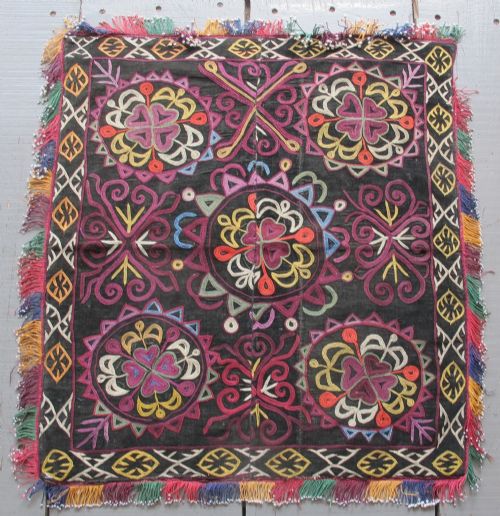
Most examples encountered on this page display dense needlework on woven grounds, encompassing regional variants like Ura Tube panels and Lakai tribal works. They present distinct layouts, including architectural motifs, floral sprays, prayer arches, and repeat geometric patterns rooted in Central Asian tribal and folk art traditions.
Materials and construction methods
The foundation fabrics of these textiles rely principally on natural fibres, utilising hand-woven cotton, linen, wool, and adras, which is a local silk and cotton blended cloth. Grounds appear in various hues, with dyed red, yellow, and black cloths supporting the heavy needlework. Certain formats incorporate kilim weaving techniques alongside the primary embroidery.
Makers utilised fine silk thread to execute dense surface stitching across the ground cloth, occasionally combining glass beads into the decorative scheme. Needlework traditions varied by region, resulting in full-work panels where the ground cloth disappears beneath the stitches, as well as lighter compositions where the foundation fabric remains visible.
Traditional Uzbek Suzani Retail Price Guide 2026
Typical asking prices for traditional uzbek suzani among the pieces listed under this phrase on Sellingantiques today, from the lower quarter to the upper quarter. They describe what is for sale here now, not the wider market.
Regional styles represented include works from Bokhara, Nurata, Shakrisabz, and Tashkent, alongside Lakai tribal textile productions.
Assessing traditional uzbek suzani quality
Quality rests upon the density and precision of the needlework, separating full-work panels where stitches completely cover the ground from sparsely embroidered examples. The harmony and saturation of the natural and early synthetic dyes also dictate the visual strength of the piece, with certain backgrounds retaining deep colour across decades.
Compositional balance and regional authenticity distinguish superior examples, particularly in regional designs like Palak or architectural Bokhara layouts. The integrity of the foundation fabric, whether cotton, wool, or adras silk, alongside the fineness of the silk thread embroidery, determines the overarching standard of each textile.
The Traditional Uzbek Suzani Glossary
- Suzani
- An embroidered textile panel originating from Central Asia, traditionally worked in silk thread on a cotton or linen ground.
- Nim Suzani
- A smaller half-scale version of a full-size suzani panel, often utilised for specific domestic or ceremonial coverings.
- Adras
- A traditional Central Asian mixed fabric woven from a combination of silk warp and cotton weft yarns.
- Palak
- A major suzani type characterised by a fully embroidered ground featuring large medallion or sunburst motifs.
- At Torba Ilgich
- A specialised Central Asian hanging or bag fragment associated with Lakai tribal embroidery traditions.
Traditional Uzbek Suzani: Frequently Asked Questions
How were traditional suzanis used?
These textiles served practical and ceremonial roles within Central Asian households, functioning as wedding bed covers, wall hangings, and decorative furnishings.
Families also utilised specific smaller formats as mirror covers, prayer mats, and threshold hangings for domestic protection.
How do I hang a suzani safely?
Mounting a textile requires distributing the weight evenly across the entire upper edge to prevent strain on the historical fabric.
Conservation methods typically involve applying a cotton sleeve or Velcro heading to the reverse so the piece hangs flat against a wall.
How can I identify regional suzani styles?
Regional attribution relies on examining the specific colour palette, ground fabric, and structural motifs inherent to centres like Nurata or Bokhara.
Lakai tribal pieces often display distinct geometric or zoomorphic elements executed on wool or red cotton grounds.