




Antique Silk Ikat
Antique silk ikat pieces are striking Central Asian textiles possessing incredible depth of colour and pattern, prized by collectors for their luminous dyed threads.
Antique Silk Ikat
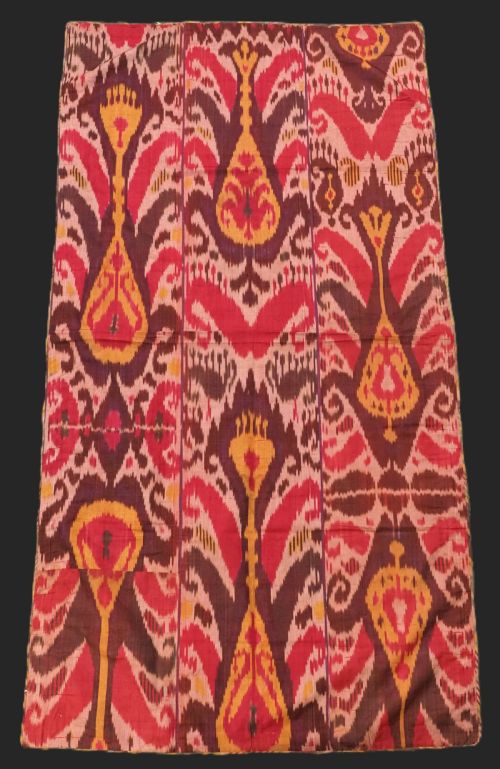
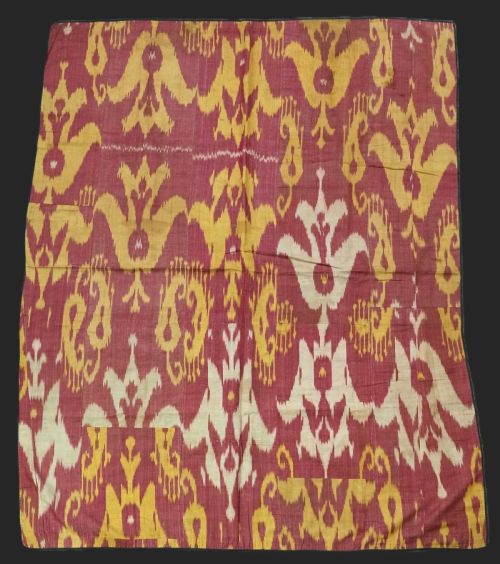
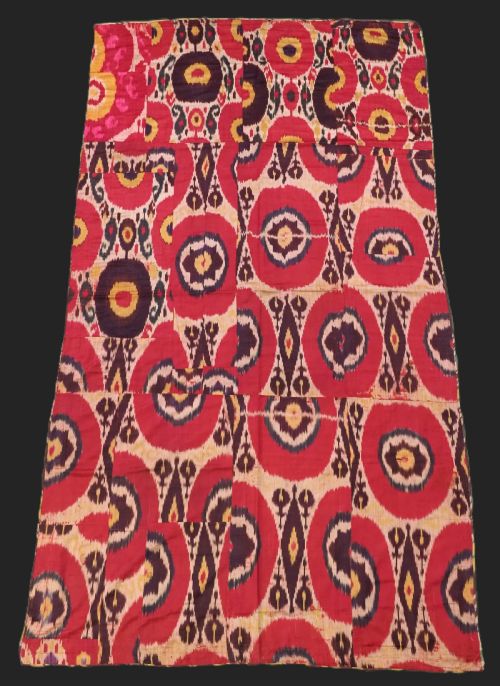
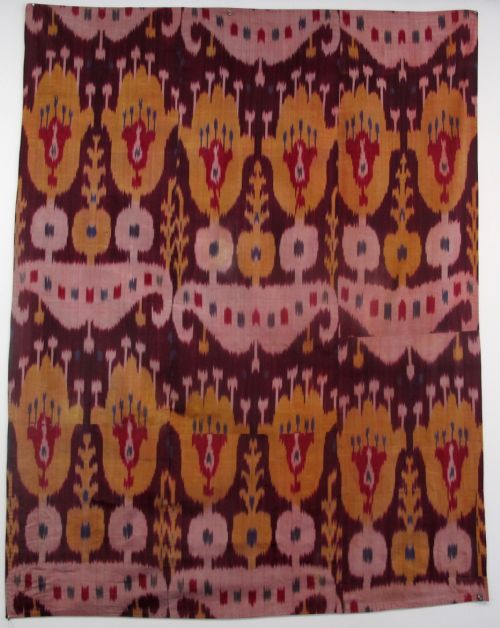
When you search for antique silk ikat, you encounter textiles originating from Central Asia, specifically Uzbekistan, created during the late nineteenth century around eighteen eighty to nineteen hundred. These items include large fabric panels intended as wall hangings or covers, alongside gentlemen's coats known as khalats or chapan robes.
You are most likely to meet fabric panels and coats from regions such as Bukhara and Samarkand. Smaller items such as double-sided purses also appear in the selection.
The aesthetic falls under traditional Uzbek and Central Asian ethnographic styles, defined by bold patterns and rich dye work.
How they were made
The construction relies on silk and cotton materials, frequently combined as semi-silk adras fabrics, woven into panels and garments. Some pieces incorporate glass beads for additional detail.
Coats such as the chapan were quilted and padded for winter use, demonstrating practical tailoring alongside decorative textile art. The defining characteristic is the resist-dyeing technique applied to the threads before weaving, which creates the signature blurred outlines of the motifs.
Listings feature items dated across the late nineteenth century, specifically eighteen eighty, eighteen ninety, and nineteen hundred.
What varies in quality
Quality separates along the complexity of the dye patterns and the integrity of the woven structure, whether pure silk or semi-silk adras. Pieces that retain vibrant colour saturation and precise yet characteristic resist blur show superior execution.
The scale and condition of the textile panels or the tailoring of gentlemen's coats and robes define the upper tiers of the range.
The Antique Silk Ikat Glossary
- Ikat
- A dyeing technique where threads are resist-dyed before weaving to create intricate patterned fabrics with characteristic hazy edges. This method requires immense skill from the dyer and weaver to align the design correctly.
- Adras
- A traditional fabric woven from a combination of silk and cotton yarns. It provides a sturdy yet lustrous ground for complex ikat patterns.
- Khalat
- A traditional long, loose gentleman's coat worn across Central Asia. These garments are frequently fashioned from striking ikat textiles.
- Chapan
- A padded and quilted outer robe worn during colder months. They serve as substantial examples of wearable textile art.
- Bukhara
- A historic Central Asian region and major centre for silk production and textile trade. Pieces attributed to this area often display distinctive regional colour palettes.
Antique Silk Ikat: Frequently Asked Questions
What is an antique silk ikat?
An antique silk ikat is a Central Asian textile made using a resist-dyeing method on the threads prior to weaving. These pieces date from the nineteenth century and originate primarily from regions like Uzbekistan.
They encompass large decorative wall panels, covers, purses, and tailored garments such as gentlemen's coats and robes.
How were ikat coats worn?
Coats like the khalat and chapan functioned as traditional outer garments worn by men across Central Asia. Some versions were quilted and padded specifically for warmth during winter use.
Today, collectors often display these garments as textile art or wear them carefully as statement pieces.
How do I care for an antique textile panel?
Protect delicate nineteenth-century silk and cotton panels from direct sunlight to prevent dye fading. Keep them away from high humidity and excessive moisture.
Mounting them properly behind glass or supporting them evenly across a wall hanging system prevents strain on the ancient fibres.
What is semi-silk adras?
Semi-silk adras is a traditional hybrid textile woven using both silk and cotton yarns. This combination offered durability while retaining the lustrous sheen of pure silk.
It formed a common ground for the complex dyed patterns seen in panels from Bukhara and surrounding regions.
How can I tell regions apart?
Regional attribution relies on documented provenance and specific stylistic traits associated with centres like Bukhara and Samarkand. Different workshops utilised distinct dye combinations and motif structures.
Comparing pattern density and colour choices helps contextualise pieces within nineteenth-century Central Asian tradition.