




Uzbek Ikat Textile
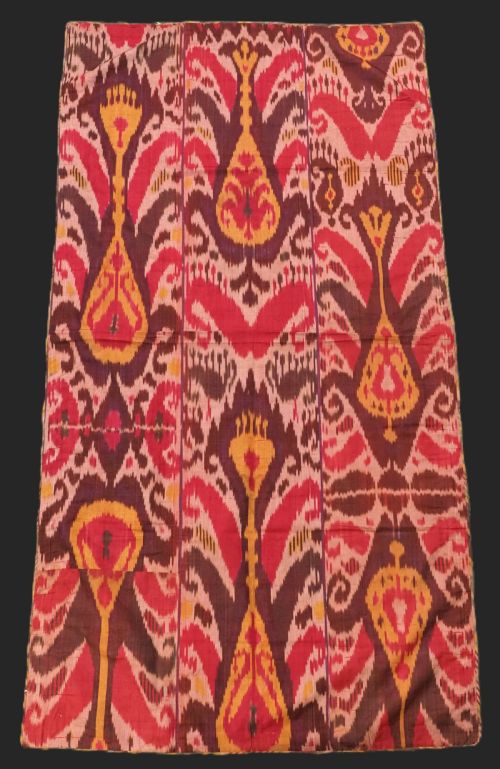
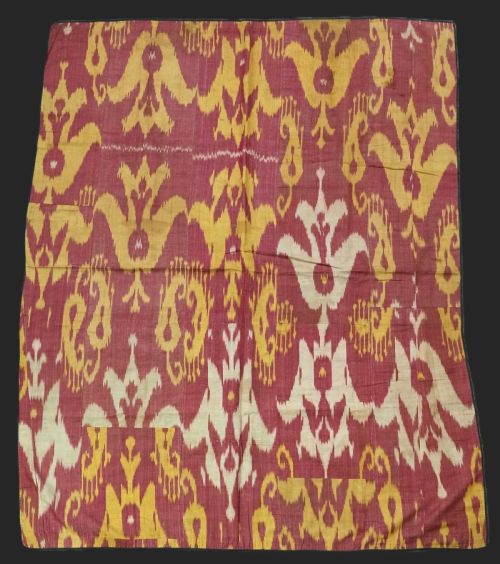
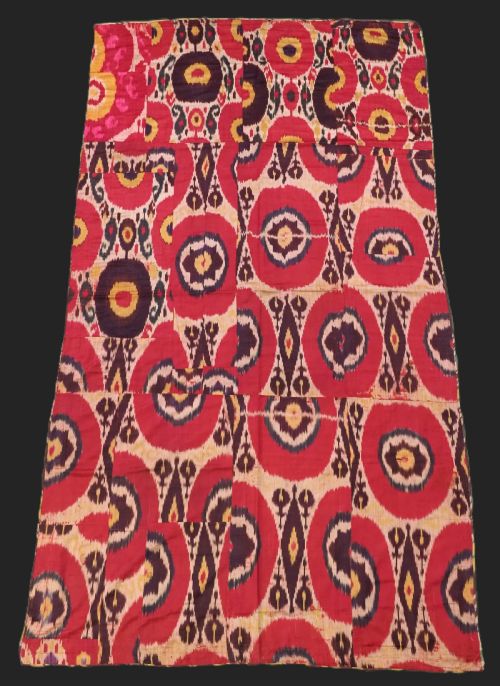
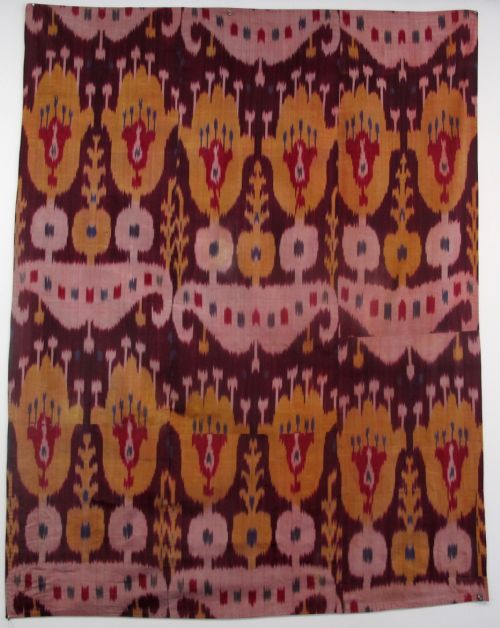
These striking uzbek ikat textile pieces bring vivid Central Asian colour and pattern into modern interiors.
Uzbek Ikat Textile
An uzbek ikat textile encompasses hand-woven panels, wall hangings and traditional garments originating from Central Asia. These items capture the rich textile heritage of regions such as Bukhara and Samarkand during the late nineteenth and early twentieth centuries.
The pieces appearing here include large fabric panels alongside gentleman's coats known as khalats or chapan coats. Smaller items like double-sided purses also surface, showcasing the versatility of these patterned cloths.
Most examples date from the decades around eighteen-ninety and nineteen-hundred, representing traditional Uzbek craftsmanship. Collectors seek them for their bold visual impact and historical depth.
How They Were Made
The creation of these textiles relies on the complex resist-dyeing technique known as ikat, where warp threads are bound and dyed prior to weaving. This method produces the characteristic blurred edges along the pattern motifs.
Weavers utilised silk, cotton, and semi-silk adras blends to construct the cloth, often incorporating quilted padding for winter coats. Glass beads also appear on certain items, adding tactile detail to the woven surfaces.
Craftsmen occasionally incorporated glass beads onto textile accessories, adding tiny flashes of texture to daily wear.
What Varies in Quality
The complexity of the dye work and the crispness of the pattern alignment distinguish superior examples from simpler ones. Precision in the resist-dyeing process requires immense skill to control the characteristic colour bleeds.
Material composition also influences the character of the piece, with pure silk panels offering a finer lustre compared to mixed cotton adras weaves. The integrity of the surviving fabric and stitching across coats and wall hangings further defines the grade.
The Uzbek Ikat Textile Glossary
- Adras
- A traditional hybrid fabric woven with a silk warp and a cotton weft. This combination provides both durability and a lustrous sheen.
- Khalat
- A traditional long coat worn by men across Central Asia. These garments feature striking patterned exteriors and often include quilted linings.
- Chapan
- Another term for a traditional quilted coat from the region. They were heavily padded for winter use.
- Ikat
- A dyeing and weaving technique where threads are tied and dyed in patterns before weaving begins. The resulting designs display characteristic feathered edges.
- Bukhara
- A historic centre of trade and textile production in Uzbekistan. Many fine panels and coats originate from this specific region.
Uzbek Ikat Textile: Frequently Asked Questions
How should I hang a textile panel?
Large fabric panels work best when mounted professionally on a padded backing board or supported evenly across a hidden sleeve. This prevents undue stress on the historic fibres.
Avoid hanging textiles in direct sunlight to protect the natural dyes from fading over time.
Were these coats worn daily?
Gentleman's coats served as outer garments for daily wear, formal occasions, and protection against winter weather. Quilted and padded versions provided warmth during colder months.
Their substantial construction allowed them to endure regular use while displaying the wearer's status through bold patterns.
How do I date these textiles?
Dating relies on stylistic analysis, material assessment, and structural traits typical of late nineteenth and early twentieth-century production. Pieces from this era generally show traditional regional dye palettes and hand-spun fibres.
Comparing pattern complexity with known dated examples helps narrow the period of origin.
Can I wear a vintage khalat?
Wearing these garments requires caution due to the fragile nature of historic silk and cotton fabrics. Many owners prefer to display them as textile art rather than risk wear.
If worn, they should be handled gently and kept away from friction and heavy strain.